Straight rows and a plain knotless box set sit at the easy end of this list, while triangle parts, curved partings and a fade with braids left long on top ask for a more skilled braider and more time in the chair.
How much precision you can book decides the style: a first set belongs in knotless box braids or straight rows, while triangle parts, curved partings and a fade want a braider who has done them before.
Color is the one add-on that changes the bill, so ask for a price before you sit down.
1. Knotless Box Braids
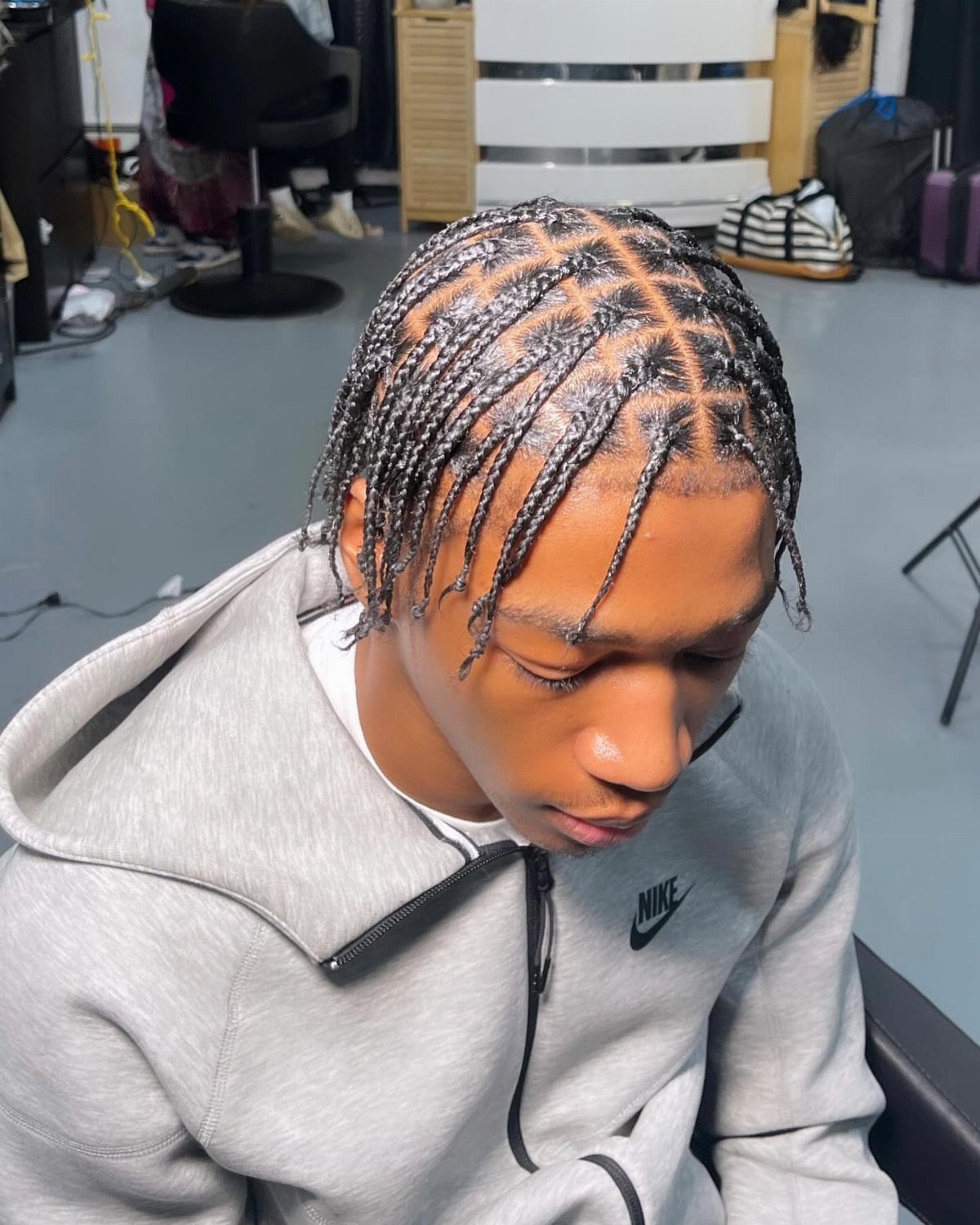
Knotless box braids start with the natural hair alone at the root, and the extension is fed in gradually as the braid goes down.
That is why the base looks flat and sits lightly on the scalp, with no hard bump at each part.
For a man starting out, I would pick this over the classic knotted version because less weight pulls at the hairline.
Ask a braider for "knotless box braids" by name, and book a long appointment, since the feed-in method is slower than knotting.
Knotless box braids has easily become one of the most popular box braids styles out right now. Using the feed-in braid technique, it lets you sport box braids sans the little knot that confirms that you have braiding hair added to your roots.
2. Box Braids with a Fade
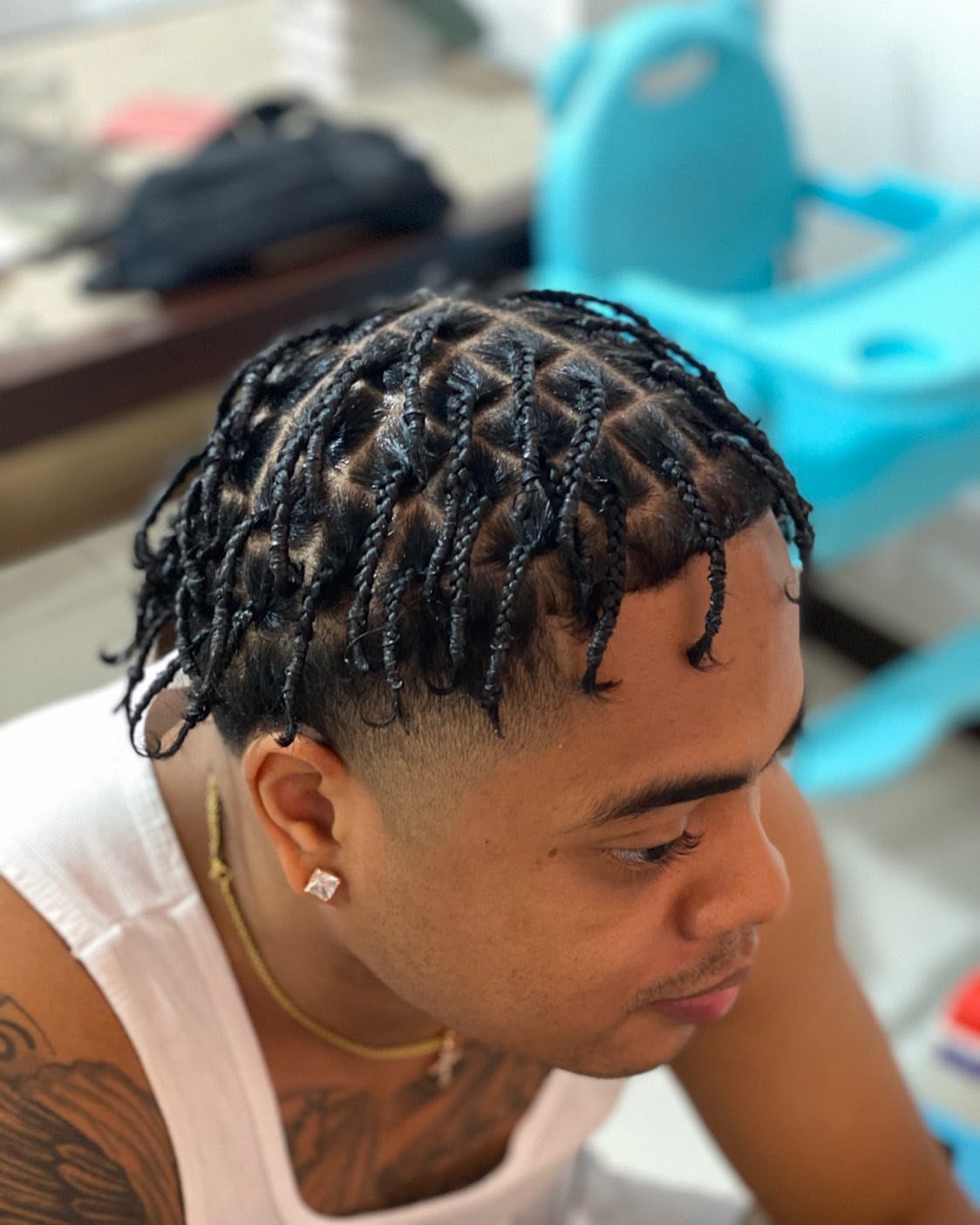
A fade on the sides with braids left long on top gives box braids a sharper, cleaner outline. The contrast between skin-short hair and thick black braids is what makes the shape read so clearly.
Get the braids done first, then have a barber blend the sides.
A fade grows out fast, so plan on regular barber visits to keep the edges crisp. Tell your braider you want the sides left loose for the barber.
3. Triangle Box Braids
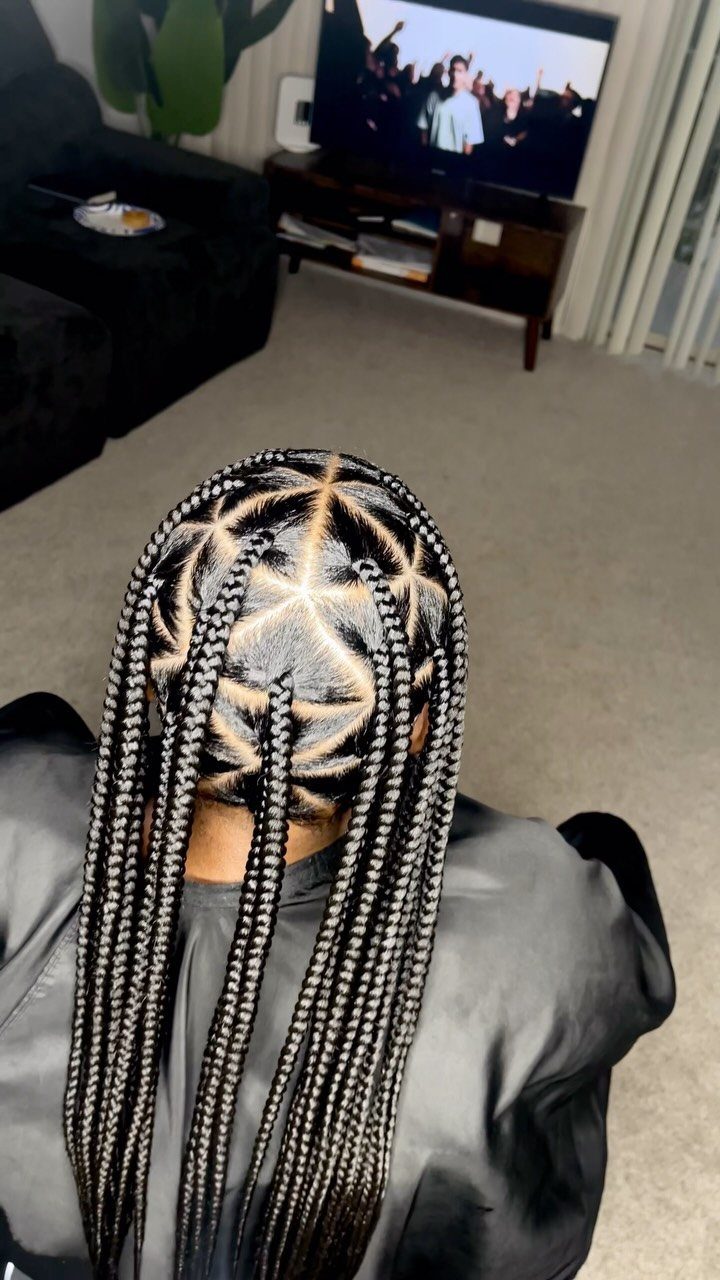
Triangle parts replace the usual square grid with small triangular sections at the scalp, so the braids fan out in a tight, patterned layout. From above, the scalp looks like a map of neat shapes.
I like this for men who want box braids with more detail, though I would warn that precise partings take a skilled braider and more time in the chair. Bring a top-down photo and ask for triangle parts by name.
4. Colored Knotless Braids
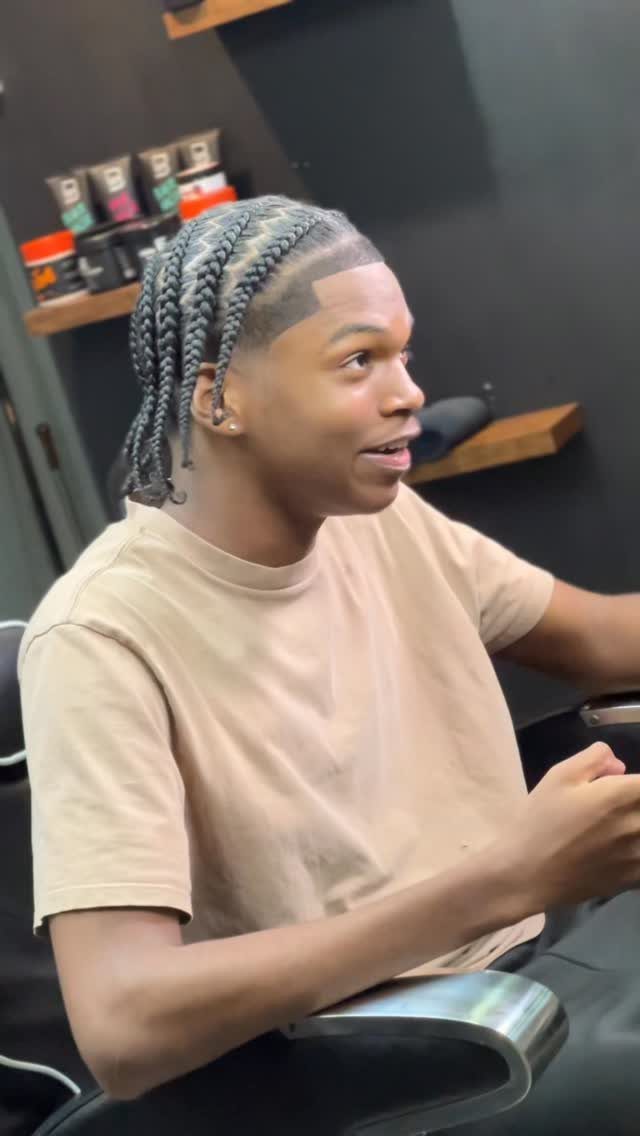
Greyish-blue braids look best against a sharp, freshly cut hairline, because the cool color draws the eye straight to the edges. A clean line-up matters more here than with black braids.
Color usually means pre-colored extensions or a dye job, and either adds cost, so ask your braider for a price before booking.
Book the barber visit right before the appointment, and keep a soft, light-colored scarf for nights so the color stays clean.
5. Knotless Braids with Straight Rows
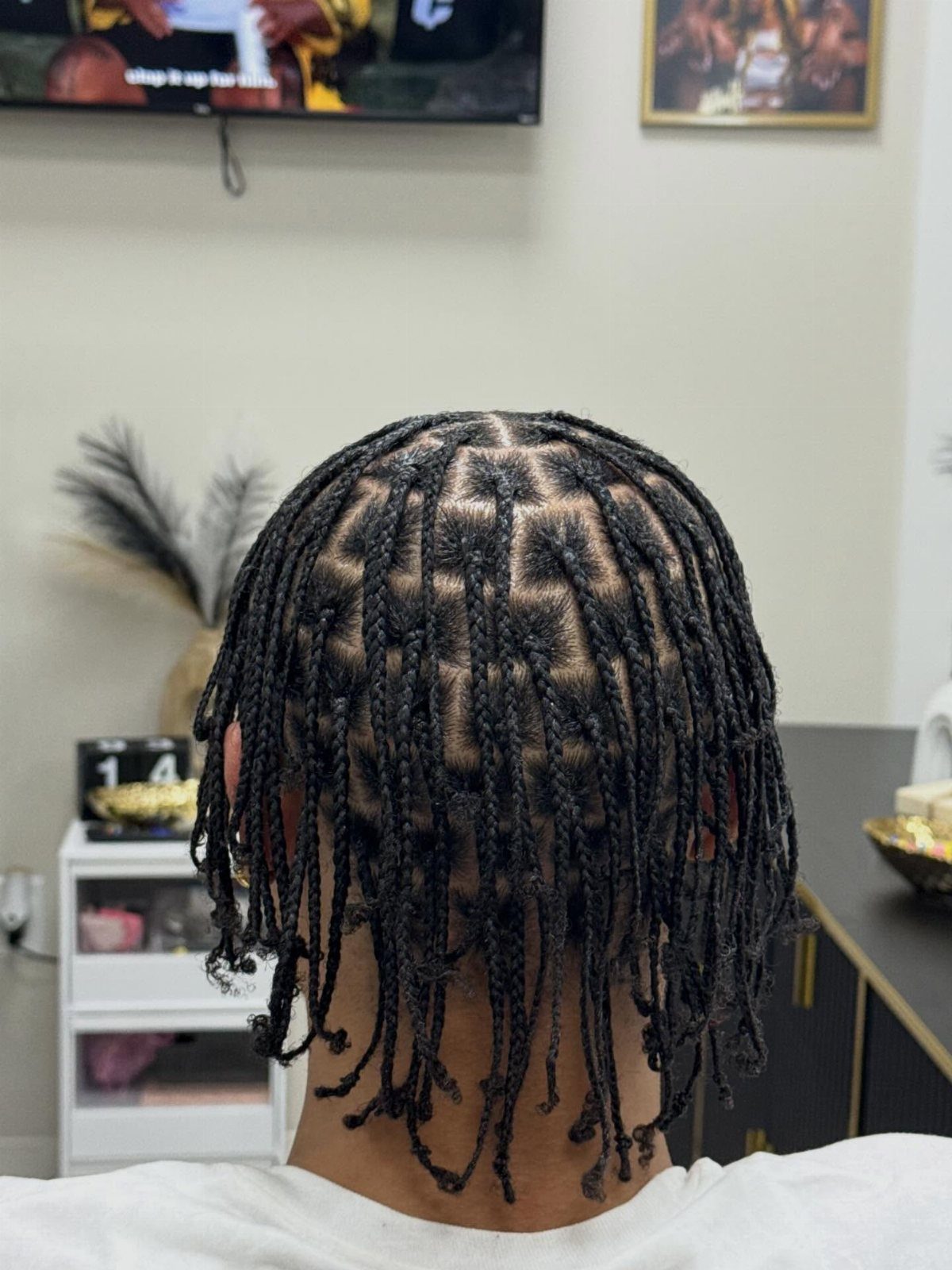
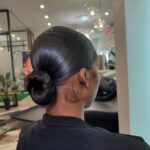
Straight rows run from the hairline back in parallel lines, and the result is the most orderly version of knotless braids. Seen from behind, every part lines up like a ruled page.
This is the one I would choose for a first set, since the layout is simple and easy to describe to a braider.
Neat rows also make it obvious when the parts start to blur, which tells you when it is time to redo them.
6. Curved Parting Knotless Braids
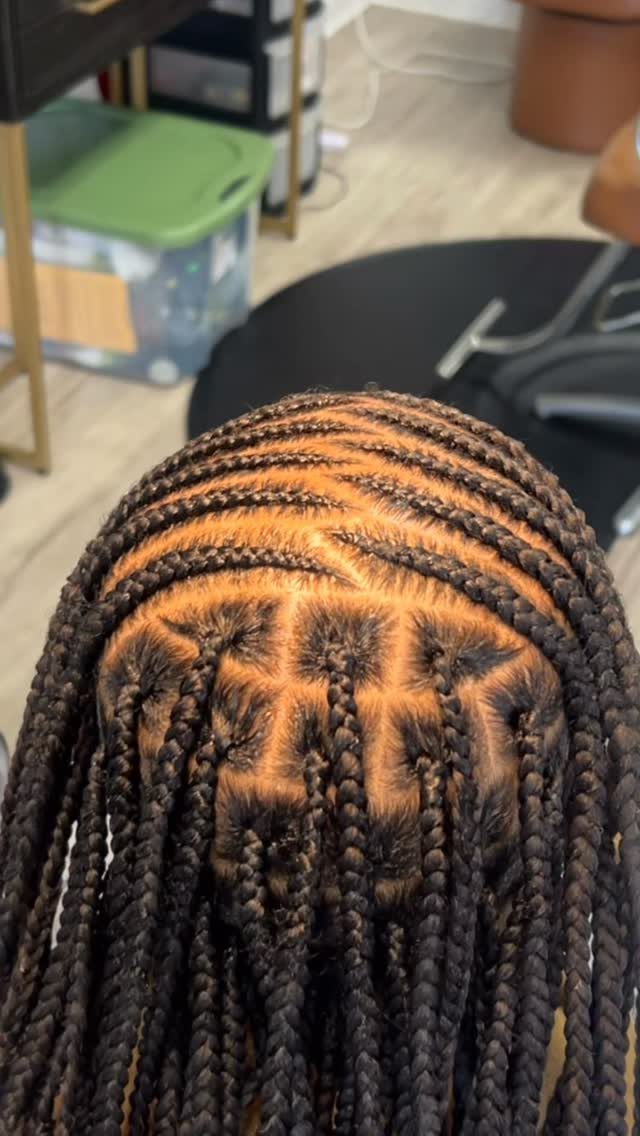
Curved partings swing across the scalp in soft arcs instead of straight lines, so the braids follow the shape of the head. The look is more fluid, and the dark brown shade shows those lines clearly.
Curved parts demand a steady hand, so find a braider who has done them, and show a photo of the exact curve you want. I find them better suited to a rounder head, where the arcs follow the natural shape.
Maintenance Tips for Braids
Sleeping in a satin scarf or durag cuts down on frizz and protects the crisp lines of your parts while you rest. Cotton pillowcases pull at braids, so the scarf is worth wearing even on a lazy night.
A little mousse tames flyaways and doesn’t leave the heavy residue that thicker gels and creams tend to build up. Use a small amount and press it down along the braids rather than rubbing it in.
After sweaty workouts, rinse your scalp between full washes, then add a light oil so the itching doesn’t set in. Go easy on the oil, since too much attracts lint and sweat.
When the set starts to look tired, redo the hairline first. Because the interior of the style holds up longer than the edges, touching up just the hairline can stretch the time before you need to redo everything.
How Long Do Braids Last?
Once the braids come out, usually somewhere between 4 and 8 weeks after install, the hair underneath needs a proper wash and a deep conditioning treatment.
Several factors change that timeline, including how fast your hair grows and how well you keep up with the scalp care.
If the hairline is frizzing badly or the scalp itches well before week six, treat that as your cue to take the set down early.
Book the takedown and the next install as separate steps, and give your hair a little time to rest in between.
Frequently Asked Questions
Which is better, knotless or box braids?
For a man starting out, I’d pick knotless. Time is the cost: feeding in the extension takes longer than knotting it, so book a long appointment, often 4–6 hours for a full head.
Is knotless braids painful?
They tend to hurt less than knotted braids.
Since the braid begins with only the natural strands at the root and the extension joins in gradually, the scalp and hairline feel far less tension. Expect some tenderness anyway, and a skilled braider helps keep it down.
Do knotless braids last longer?
Not really; with good care they last about as long as traditional box braids. Itching or heavy frizzing at the hairline well before week 6 means it’s time to take the set down early.