Hair length and texture decide which of these braided styles is yours, and the list covers a lot of ground: braids on long hair, cornrows, a braided man bun, braids over a fade, box braids, 2 braids, twist braids, stitch braids, zigzag cornrows, beads and a mohawk with shaved sides.
Most of them suit medium-to-long hair, and the shave or fade versions add barber visits on top of braiding sessions.
Beads show how far the detail can go; they slide onto a few braids once the opening is wide enough, and that small step turns a plain braid into a style with its own look.
1. Braids for Men with Long Hair
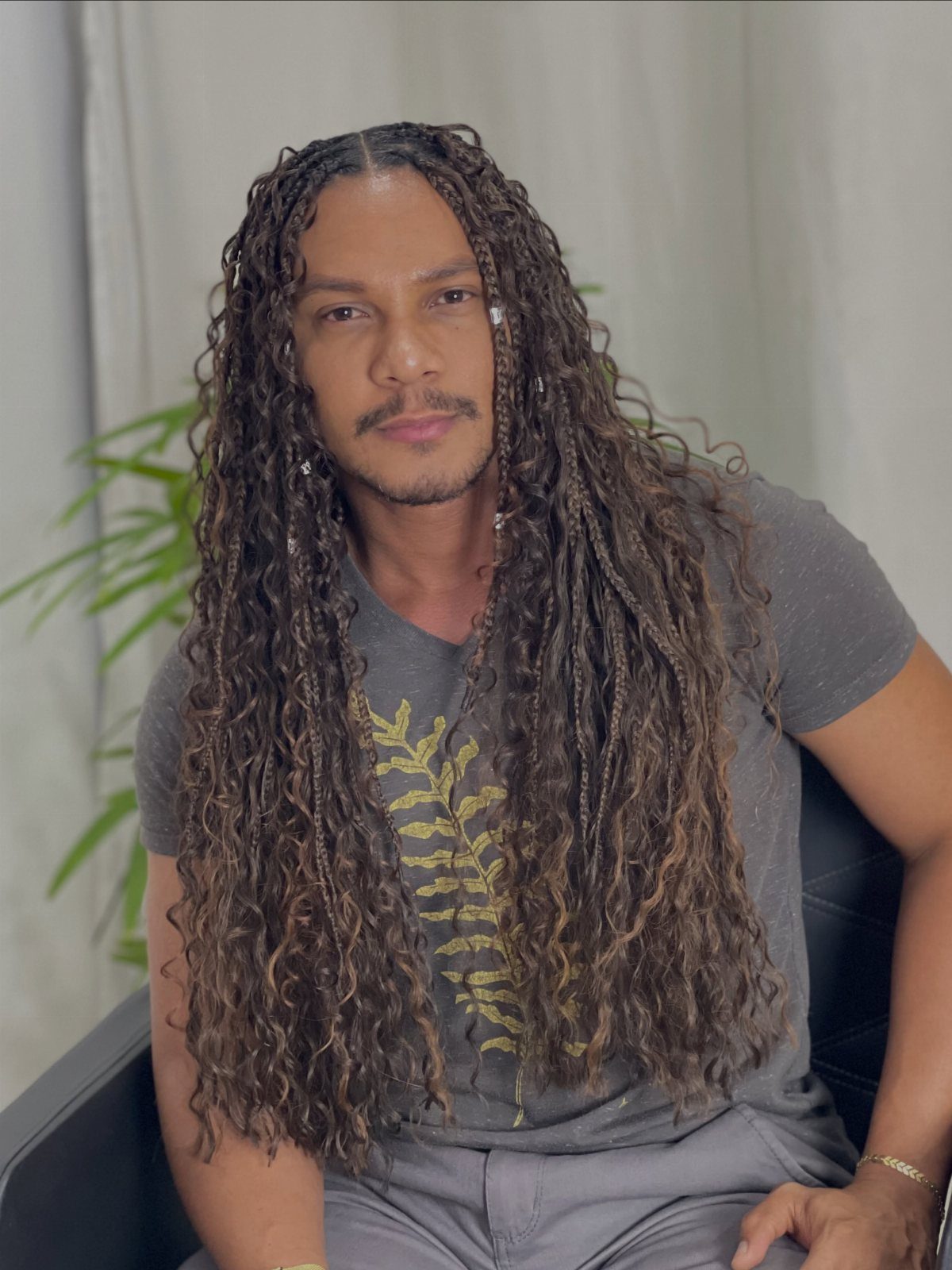
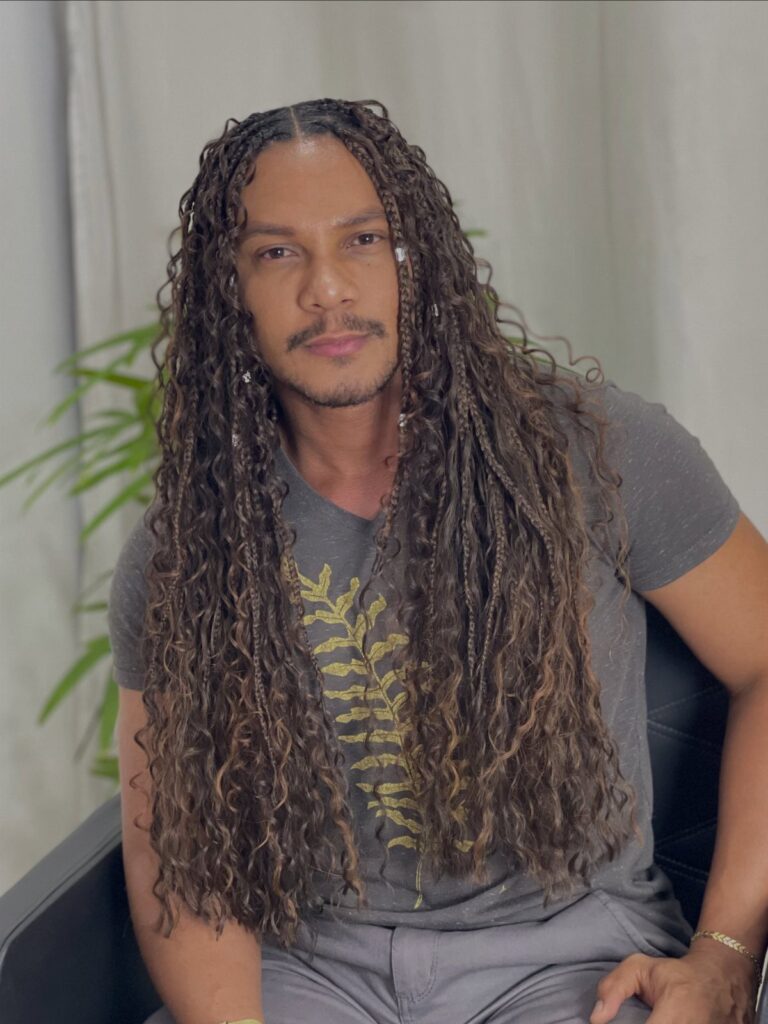
Long hair gives a braid room to show length, and the curly ends in this look are a feature worth keeping. Leave them loose instead of banding them tight, and the braid reads relaxed rather than severe.
Hair that already has texture holds a braid well, so a medium-to-long cut gets you there without much fuss. A mustache or a plain tee keeps the focus on the hair.
Braid on clean, detangled hair and ask a stylist for loose, even plaits if you want this soft shape.
2. Cornrows
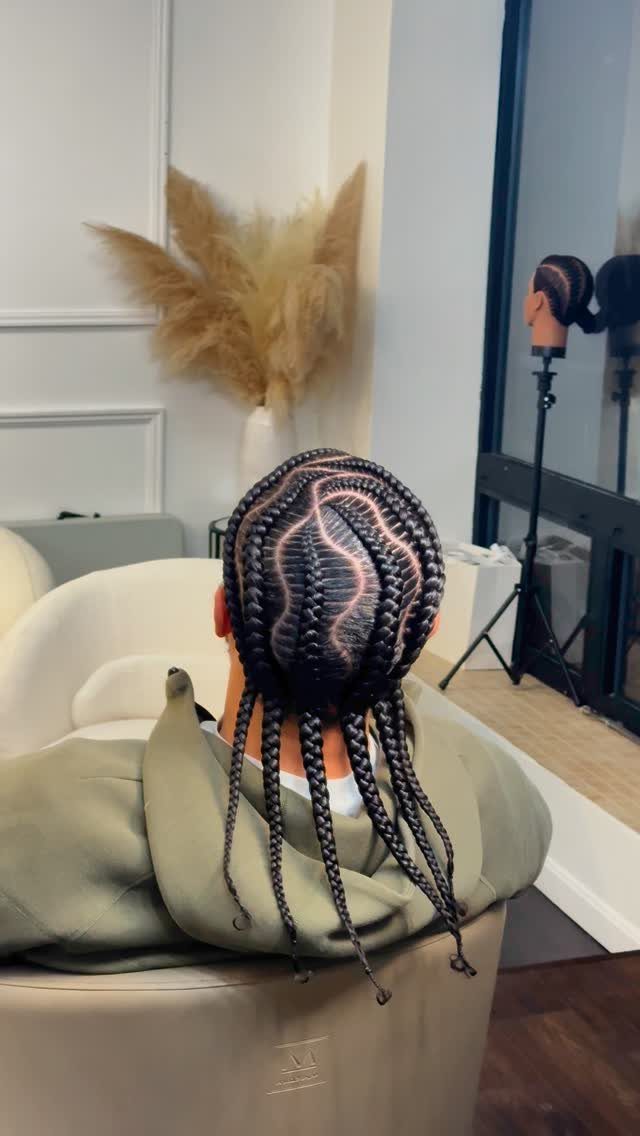
Cornrows are braids plaited tight and flat against the scalp, which makes them the cleanest base for any braided look.
Mine would always end in length: here the rows run back and then drop into long hanging braids, a pairing I like because it gives you both neat lines and movement.
For a reader with medium to long hair, that means the front stays tidy while the length does the talking.
Cornrows come in straight-back, diagonal, curved and zigzag versions, so name the row direction you want and show a saved picture of it so the stylist sees the same pattern you do.
3. Braided Man Bun
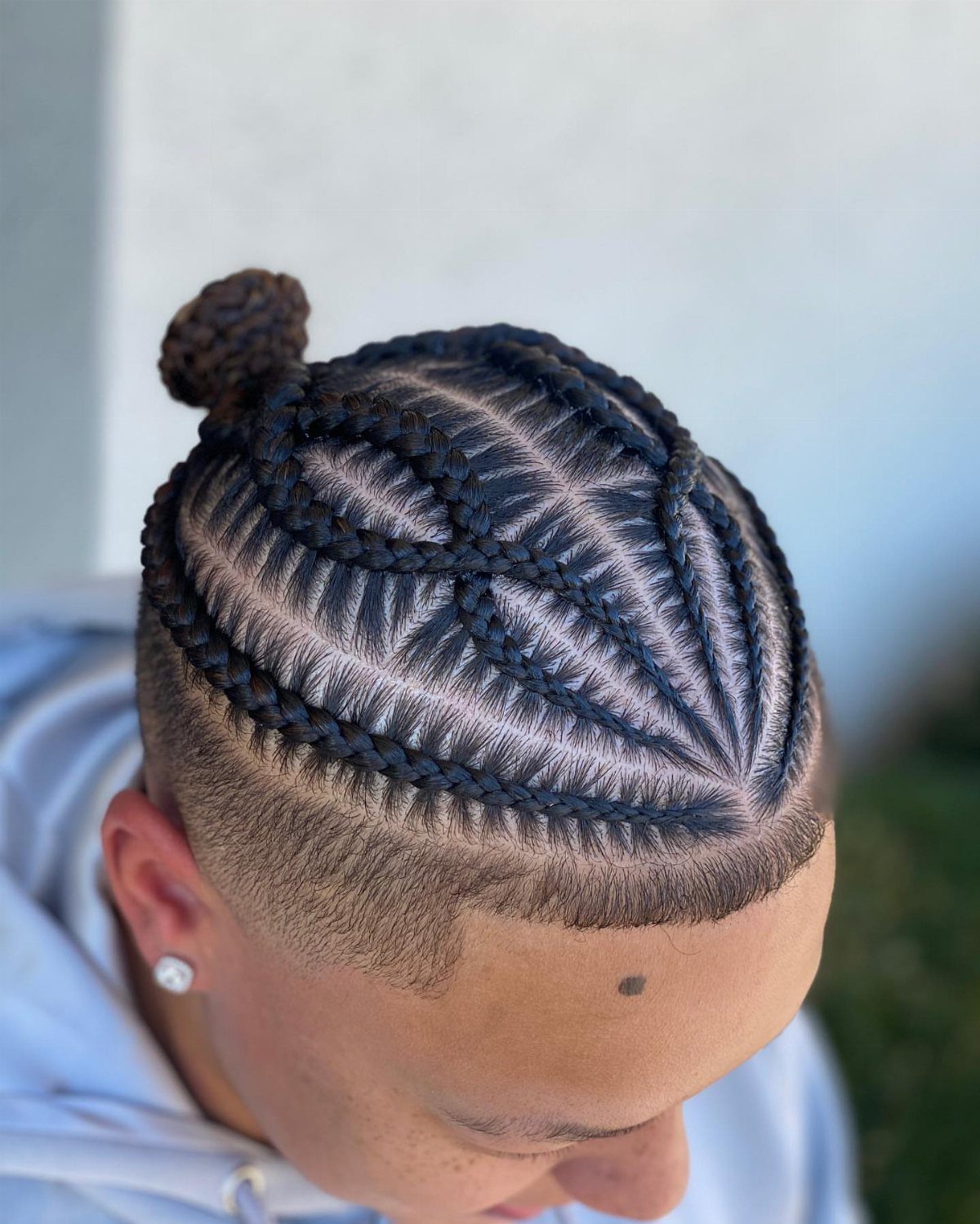
Cornrows pulled up into a small bun on top give you the man bun without the loose, floppy fuss. The braids hold the hair flat and neat, so the bun sits compact rather than sprawling.
A side fade, as in this look, keeps the sides crisp and makes the bun the clear focal point. I prefer the small version: it reads sharper than a large knot.
Ask for the braids to run toward the crown so the bun has an anchor.
4. Braids with a Fade Haircut
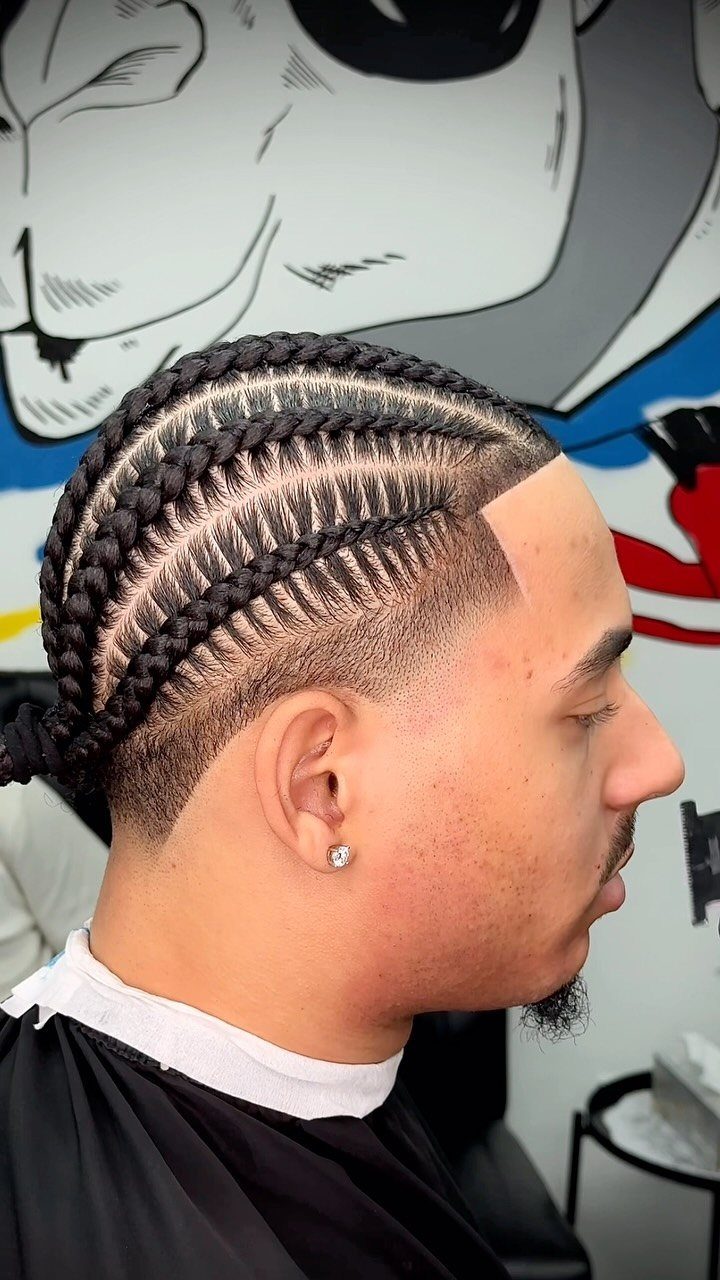
Pairing cornrows with a skin fade puts 2 sharp finishes side by side: tight rows on top, bare skin tapering below. The contrast is the whole appeal, and it looks best when both are fresh.
Plan the order with care.
Getting the fade cut and the braids done together, or the fade first, keeps the lines clean. A fade grows out faster than the braids will, so expect to book barber visits more often than braiding sessions.
5. Box Braids
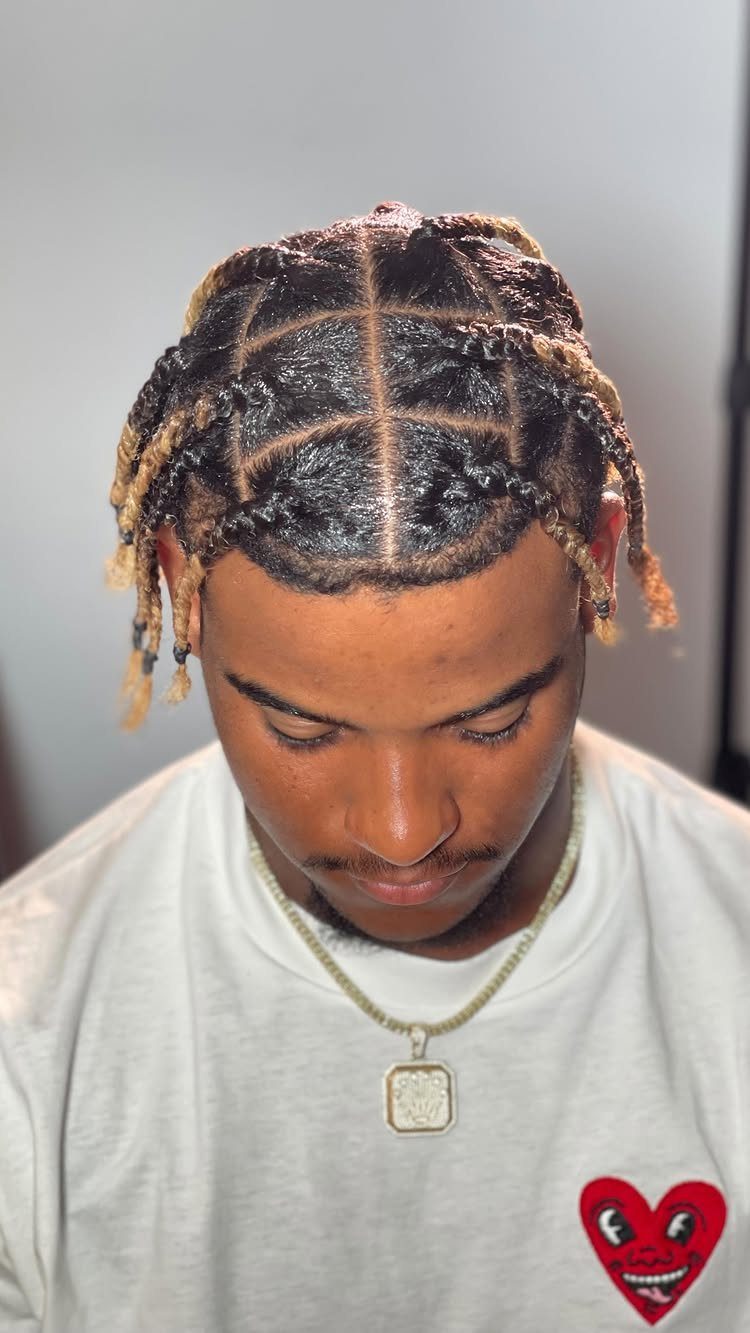
Box braids are built from square-parted sections, each one braided into a long, separate strand. The squares are what give the look its grid-like order at the scalp.
Even square parts matter more than almost anything else here, since uneven ones show right away at the roots, so make that request before the first braid is started.
Pick the size of the squares first: smaller parts look finer, larger ones look bolder.
6. Two Braids
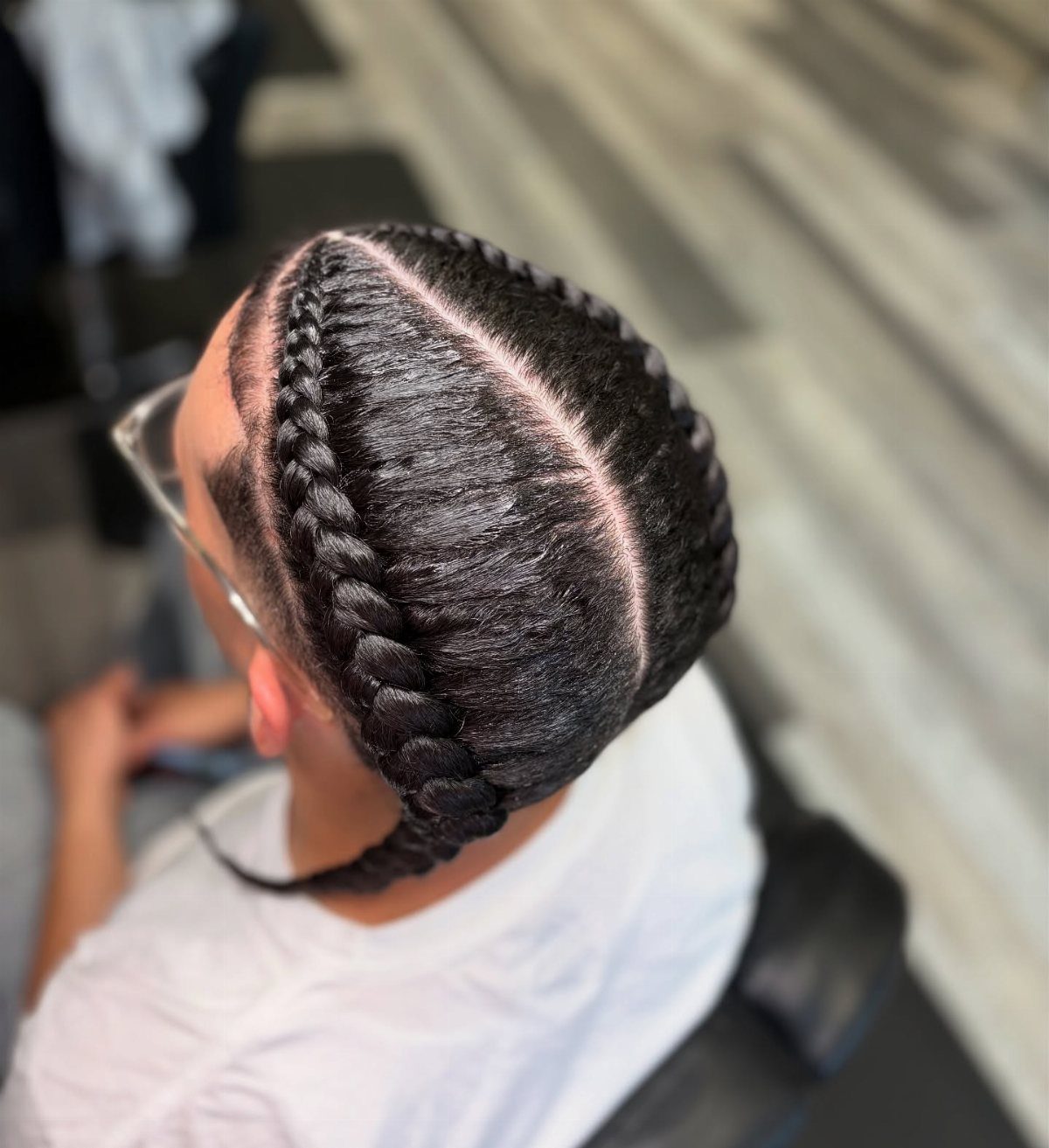
2 thick braids running along the sides of the head are about as simple as a braided style gets. Dutch-style plaits sit raised on top of the hair, so each one looks fuller and bolder than a flat plait would.
For a man with medium to long hair, two braids means one clear pattern and nothing complicated to maintain.
Part straight down the center, then braid each side back from the hairline. Keep the tension firm so the braids stay put through the day.
7. Twist Braids
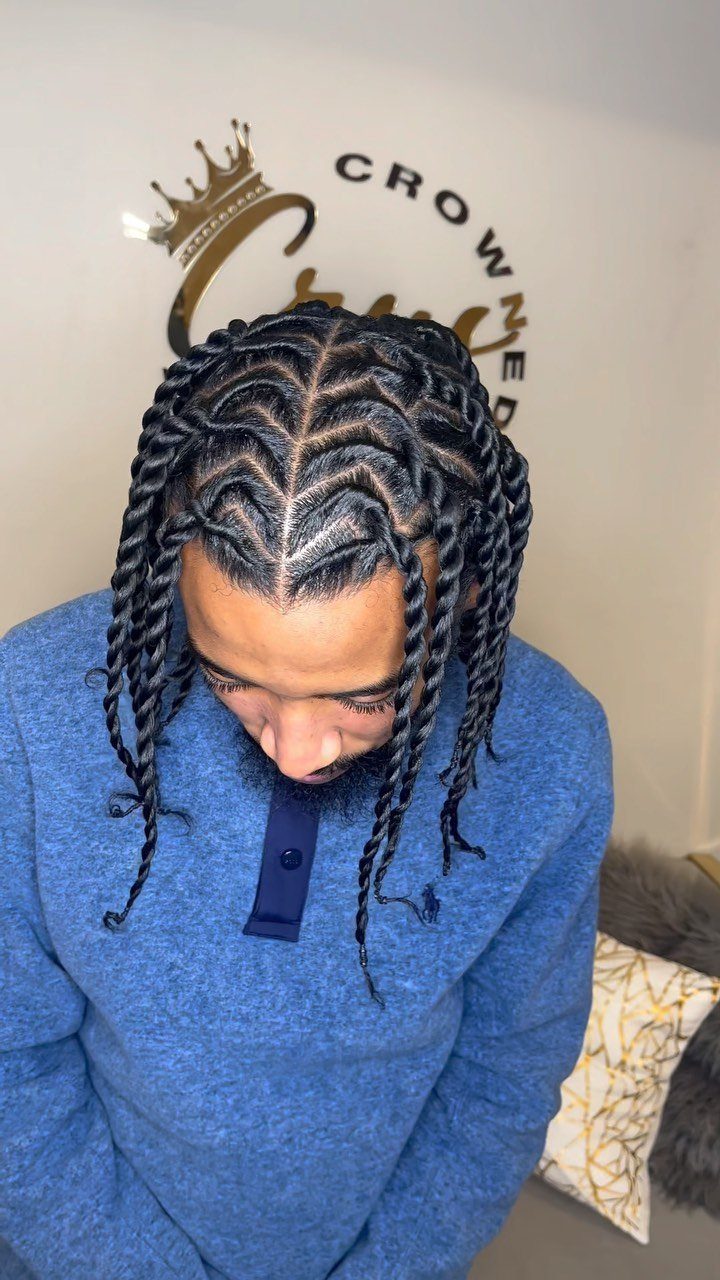
Twist braids take 2 sections of hair and wind them around each other into a rope, which gives a rounder, softer line than a flat plait. On thick, dark hair like this, the twists stand out as chunky, defined coils.
For a man with medium to long hair, I like them for the low effort: no tight pulling at the scalp. Ask for twists of an even thickness and save a photo of the size you want.
8. Stitch Braids
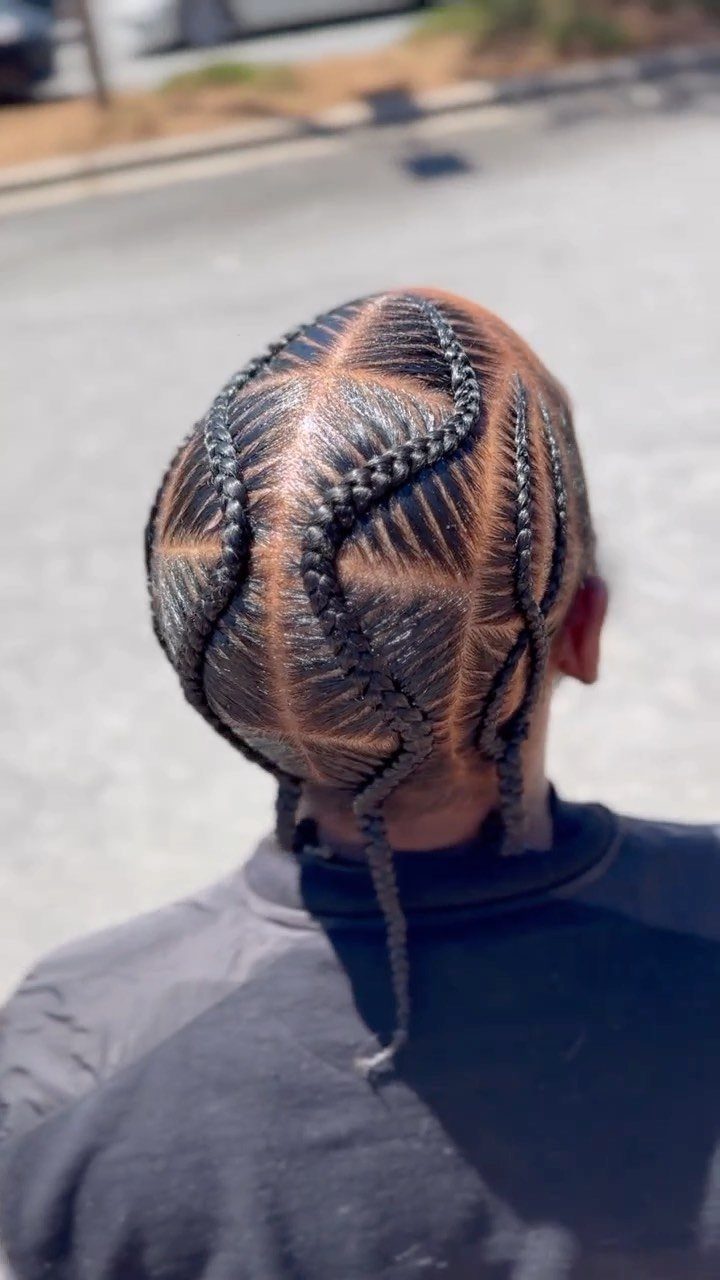
Stitch braids make a stitched seam along the scalp, and the parts between the lines are what decide the design.
Here they form a geometric star on the back of the head, which is the version I would show a stylist first.
Bring a clear picture of the pattern, since the parting is drawn before any braiding starts. Detailed designs like this take a skilled hand, so choose your braider on past work, not price.
9. Zigzag Cornrows
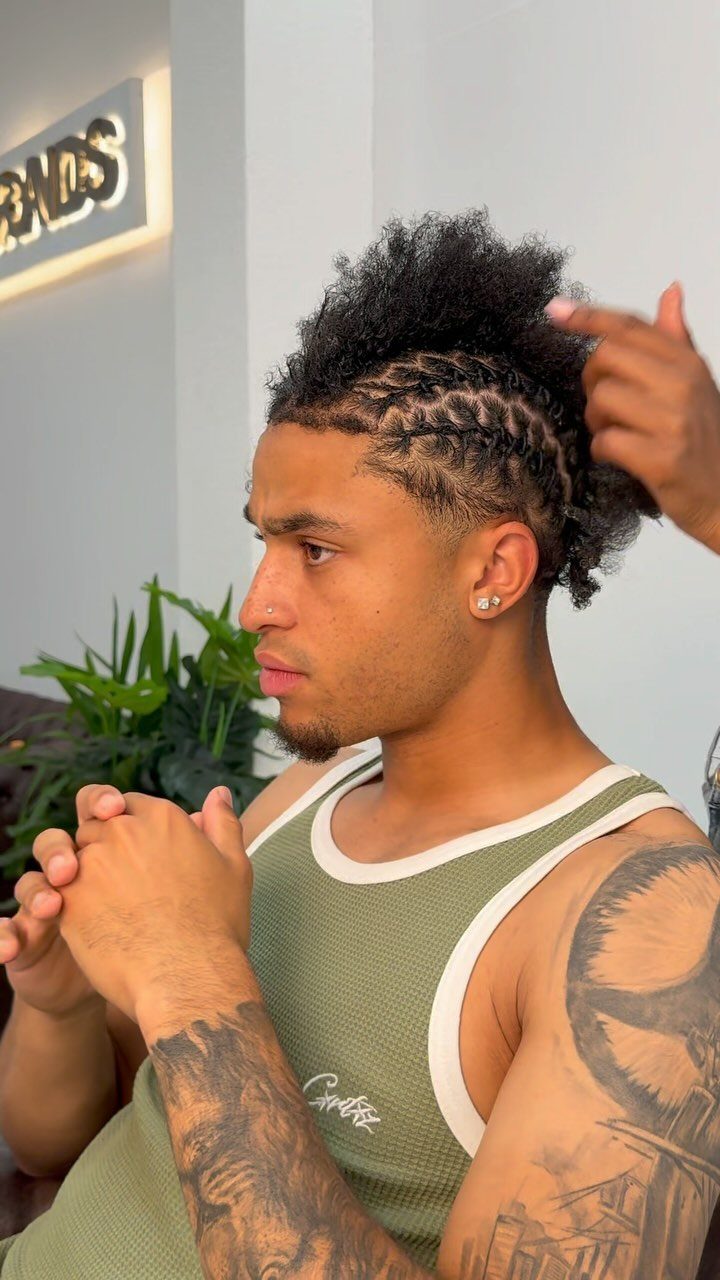
Zigzag cornrows bend each row back and forth instead of running straight, so the scalp reads as a sharp, repeating pattern. Set against an afro top, as in this frohawk, the neat sides frame the volume nicely.
For medium to long hair, I would keep the zigzag on the sides and leave the top free. Ask for crisp, even angles, because a wobbly turn shows more in this style than in straight rows.
10. Braids with Beads
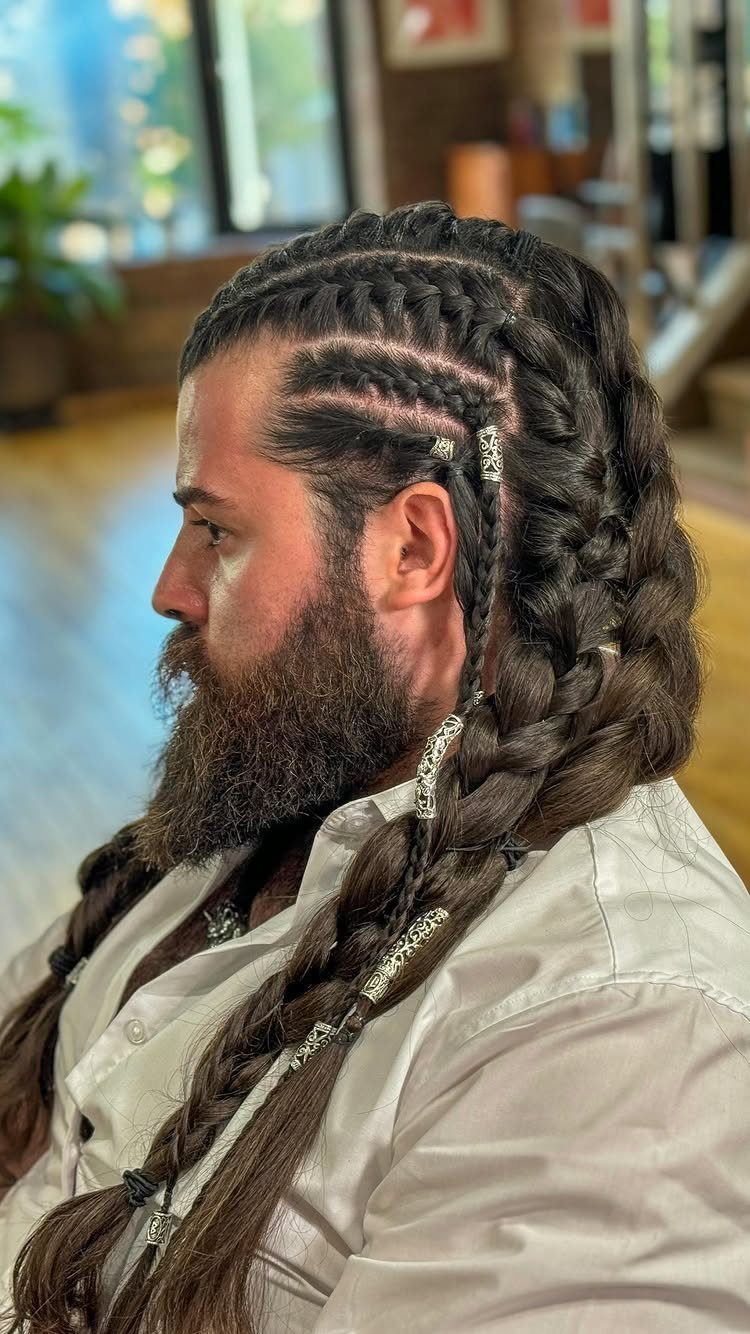
Beads turn a plain braid into a styled one, and silver ones against dark hair catch the light without shouting. A full beard balances them well.
Thread them onto a few plaits, not every one, so the look stays controlled.
Add them at the ends first, where they sit easiest. Choose a bead opening wide enough for your braid to pass through without forcing it.
11. Braided Mohawk with Shaved Sides
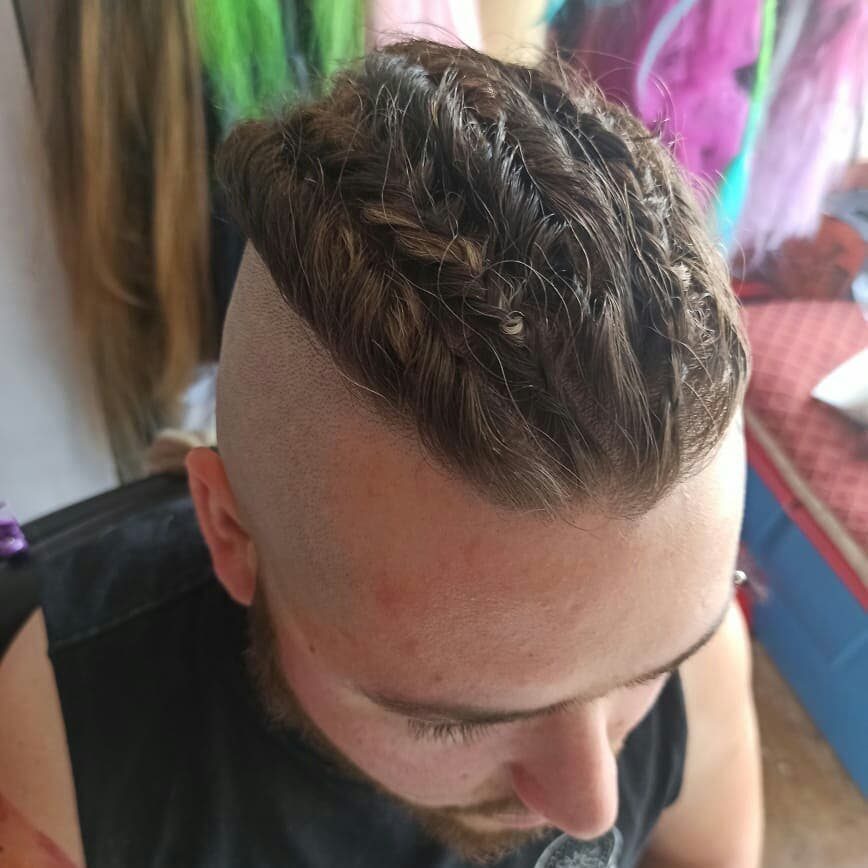
A braided mohawk keeps the length in a strip down the center and clears the sides to the skin. Braiding the top gives the strip a defined shape, so it looks planned instead of grown-out.
Ask the barber to cut the sides first, then have the top braided so the edges line up.
I like it on brown hair, where the braid pattern reads clearly against the bare sides. Expect more frequent barber visits to keep the sides sharp.
Advice for Beginners
Braiding feels clumsy for the first few tries, and that is normal. Start with a basic three-strand plait, get your hands used to the tension, then move to more complex patterns once it feels automatic.
For wear that holds up, I’d go with small cornrows over thick French-style braids, because the chunkier plaits loosen and fray sooner. Smaller patterns also leave room for more intricate designs later.
Braid gently. Braids pulled too tight or kept in too long can snap hair at the root and along the length, so I’d leave a gap of rest time between styles.
Maintenance Tips
Once braids are in, they need little upkeep, but a few habits keep them tidy. A do-rag worn overnight keeps frizz and dirt from building up while you sleep.
Shampoo gently and skip hard rubbing, since that can loosen the braids. To seal them, use a leave-in conditioner, or fill a spray bottle with water and coconut oil and spritz daily.
Tight, thin braids dry out quickly, so work a light oil into both the strands and the scalp.
My pick is a product built on shea butter or mafura oil, since both keep the braids and the skin beneath them moisturized.
Between salon visits, a dab of styling gel and a few hair ties hold the sections apart and calm flyaways.
Cultural Significance of Braids
Braids are old. Braiding is roughly 30,000 years old, and groups as varied as the Vikings, Ethiopians and Celts wore it, frequently to mark a tribe or a marriage.
In the late 1960s and early 1970s, black communities embraced braids as a rejection of beauty standards that demanded long, smooth hair. That gave the style a political weight that has returned more than once since.
As a generalization, tighter styles like cornrows are tied to black hair culture, while looser plaits and French braids read as more Caucasian. White readers thinking about box braids should expect that someone may bring up cultural appropriation.
My advice: learn where the style comes from, and book a braider who works in it every day.
Braids are arguably the OG hairstyle. They date back some 30,000 years if the Venus of Willendorf, a stone fertility goddess that was discovered in Austria in 1908, is anything to go by.
Frequently Asked Questions
How do you tie braids into a bun?
Run cornrows back toward the crown, then gather the braid ends and wrap them into a small bun on top. Because braids lock the strands down, the bun stays tight and neat rather than slumping at the nape.
Other versions take braids from the forehead into the topknot, which needs long hair and works with one braid or several. A small bun wins for me; it reads cleaner and more deliberate than a big knot.
What are the different types of male braids?
The most common are cornrows, box braids, 2 braids, twist braids and stitch braids.
Single plaits, layered braids and Viking braids also come up often. Cornrows run flat and close to the scalp, box braids swing free from square sections, and stitch braids leave a crisp, seamed line between each row.
Simple loose plaits can be done at home with long hair, but cornrows are best left to a professional.