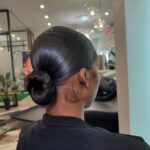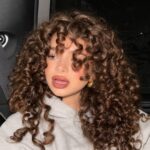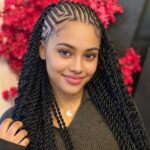
The braids here range from a single halo braid you can pin up yourself to micro braids that take a longer appointment because there are simply more sections to make.
Chair time and scalp comfort usually decide which style is yours: Micro Braids mean tiny sections and more hours seated, while Jumbo Braids go in much faster but each braid carries more weight, so they can pull if they are installed too tight.
Most installed styles come out after 4–6 weeks, so pick one you’re happy to live with for that long.
1. Box Braids
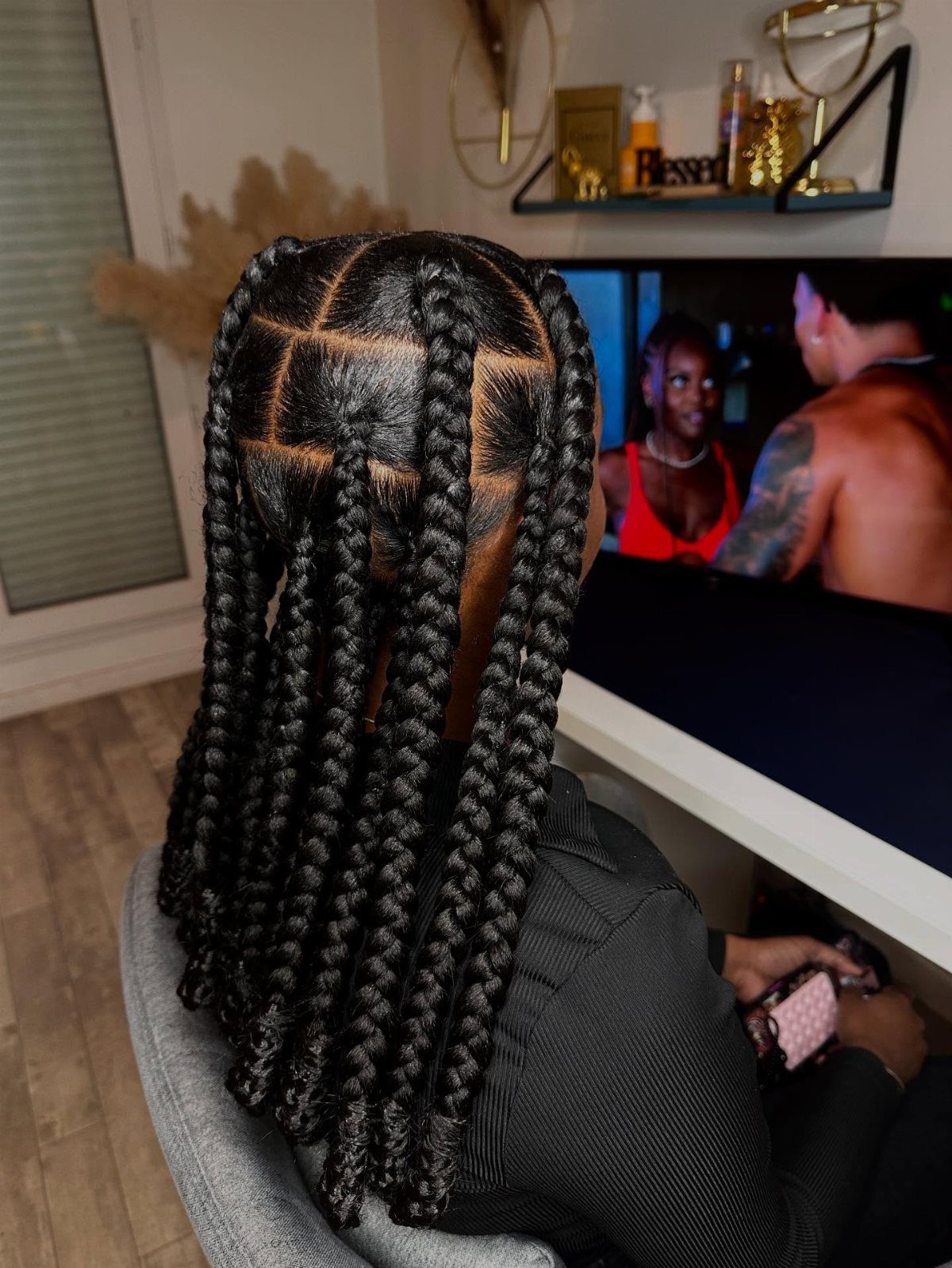
Square scalp partitions are what make box braids read as box braids, and they are also what you should check first when you book. Clean, even squares sit flatter and look sharper at the part line.
Long, black box braids are my pick because the style stays low-maintenance once it’s installed. As a protective style, it keeps your own hair tucked away in sections.
Bring the photo to your braider and ask for square parts by name.
2. Goddess Braids
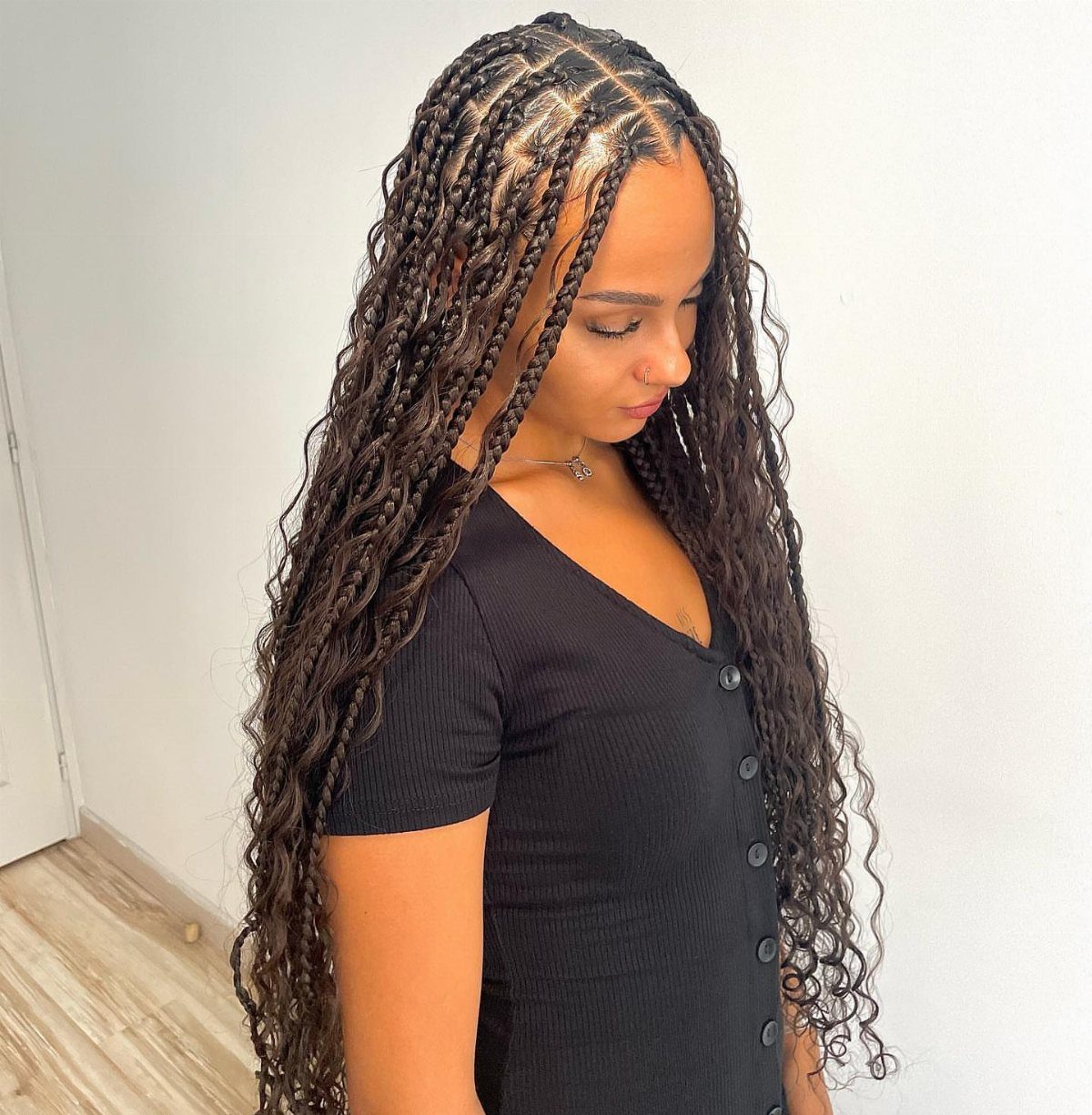
Thicker braids ending in loose curls give goddess braids their soft, romantic finish. The braids stay bold and defined while the curly extensions add movement at the ends.
For goddess braids, ask for long, dark brown braids with curly ends, and say you want the curls left loose rather than sealed into tight coils.
I’d choose this over a plain braid when I want a style that feels dressed up without any daily effort.
Fewer, thicker braids also mean less to manage each morning.
3. Micro Braids
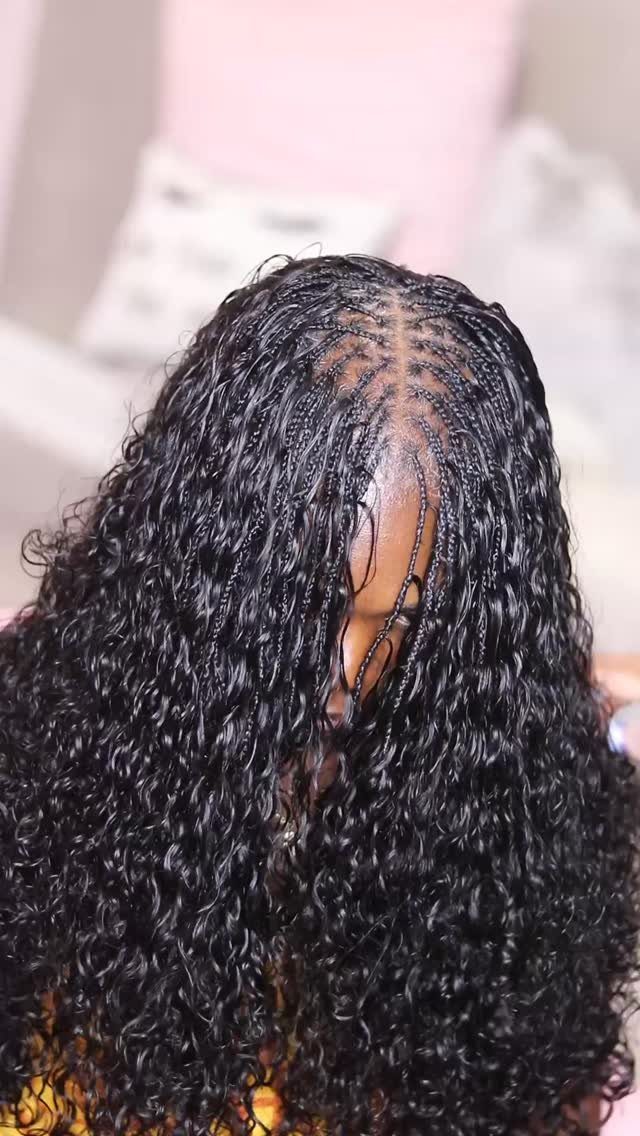
Tiny braids are the whole story here, and the smaller the section, the more styling freedom you get. Micro braids can be worn down, swept up or parted a new way each day.
Long black micro braids with voluminous curly ends are the version I’d pick: they keep the fine detail at the roots and add a soft burst at the bottom. Ask for the curly finish by name when you book.
Expect a longer appointment than with bigger braids, since there are simply more sections to make.
4. Bantu Knots
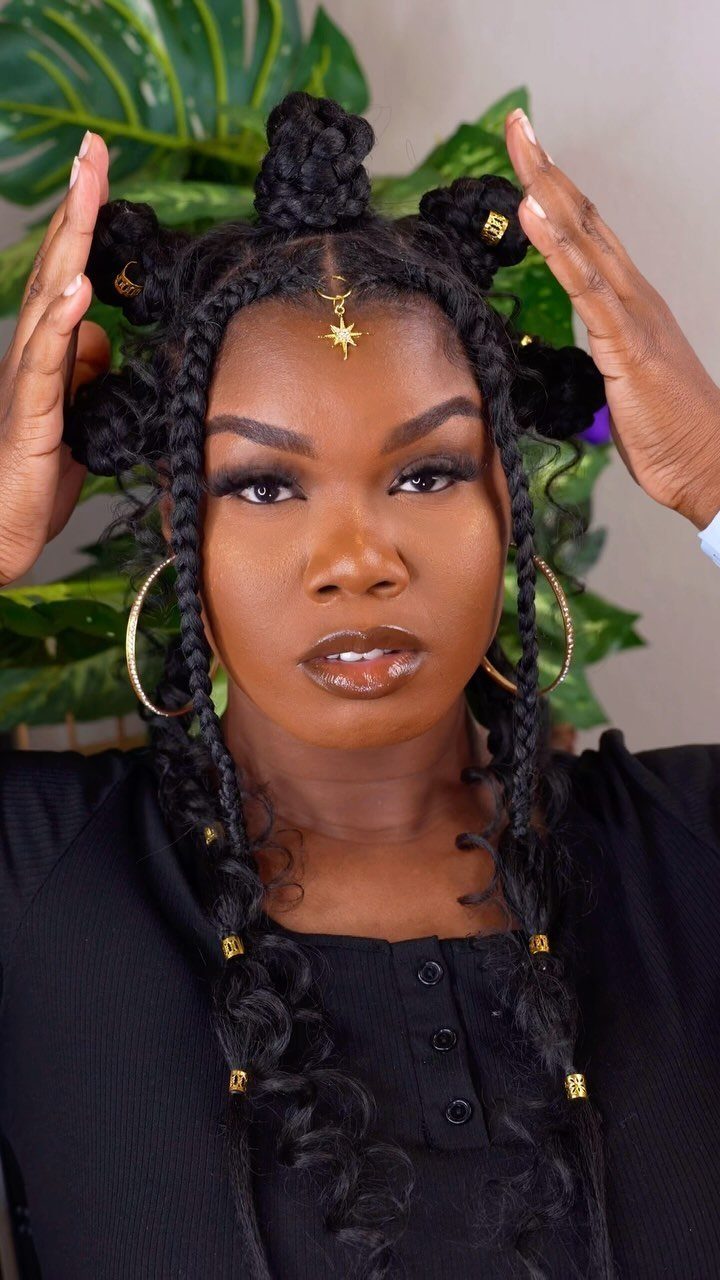
Coiled buns sitting all over the head make Bantu knots instantly recognizable. Each section of hair is twisted on itself until it curls into a small knot.
Bantu knots pair well with long braids, and gold beads or jewelry add a finish that needs no other accessories. I’d pick this combination for a night out because the knots give shape and the braids give length.
Keep the sections neat and evenly sized so the knots sit in a tidy pattern.
5. Fishtail Braid
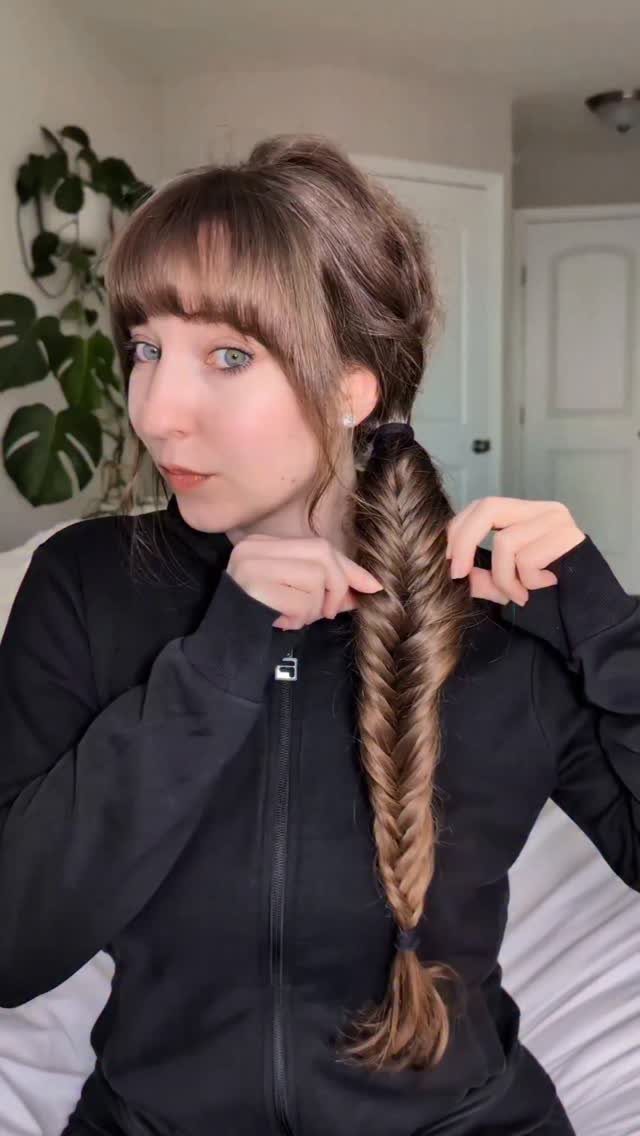
Look at a fishtail braid up close and the interlocking strands form a texture like fish scales. It’s finer and more detailed than a standard three-strand plait.
Worn over one shoulder with bangs, a fishtail braid looks relaxed and polished at once. I’d choose it when I want a braid that looks more intricate than it actually is.
To make one, split your hair into two sections and cross thin pieces from the outside of each section to the inside of the other. Smaller pieces give you a tighter, more textured result.
6. Butterfly Braids
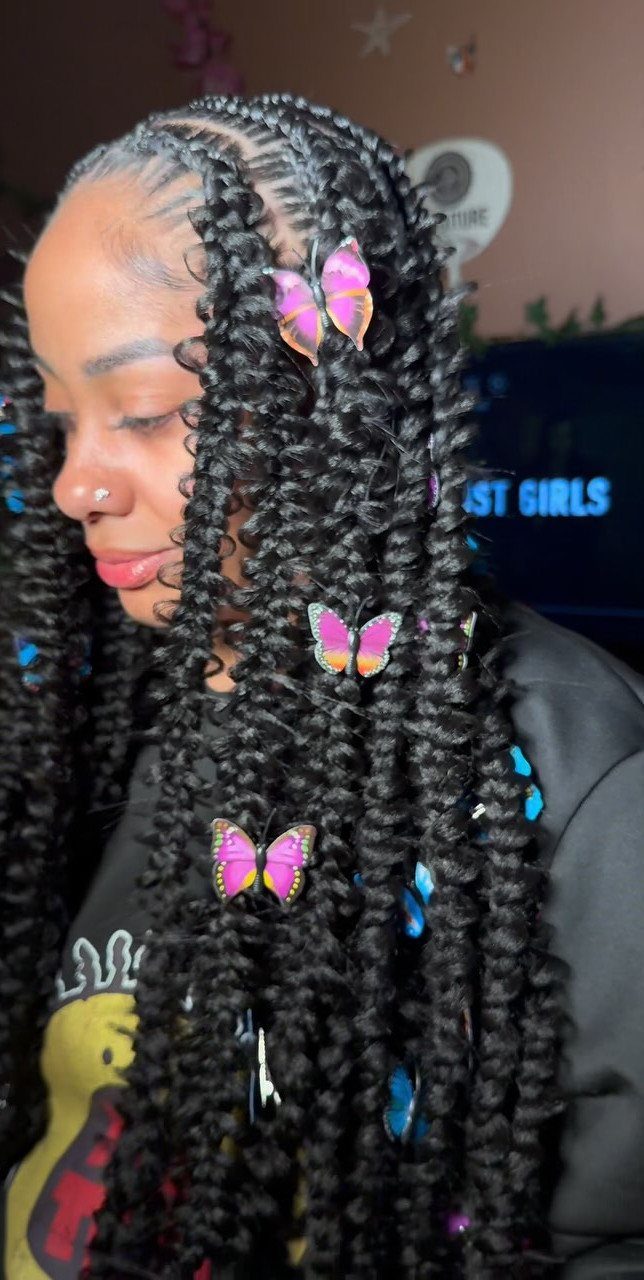
Volume and play define butterfly braids, and the colorful clips finish the effect. Long black curly braids with pink and orange butterfly clips lean fully into that whimsy.
I like the clips scattered rather than lined up, since an uneven spread keeps the look relaxed. Choose clip colors that contrast with your hair so they stand out against the black.
It’s a playful style that suits casual days, and the clips can be swapped out whenever you want a new look.
7. Cornrows
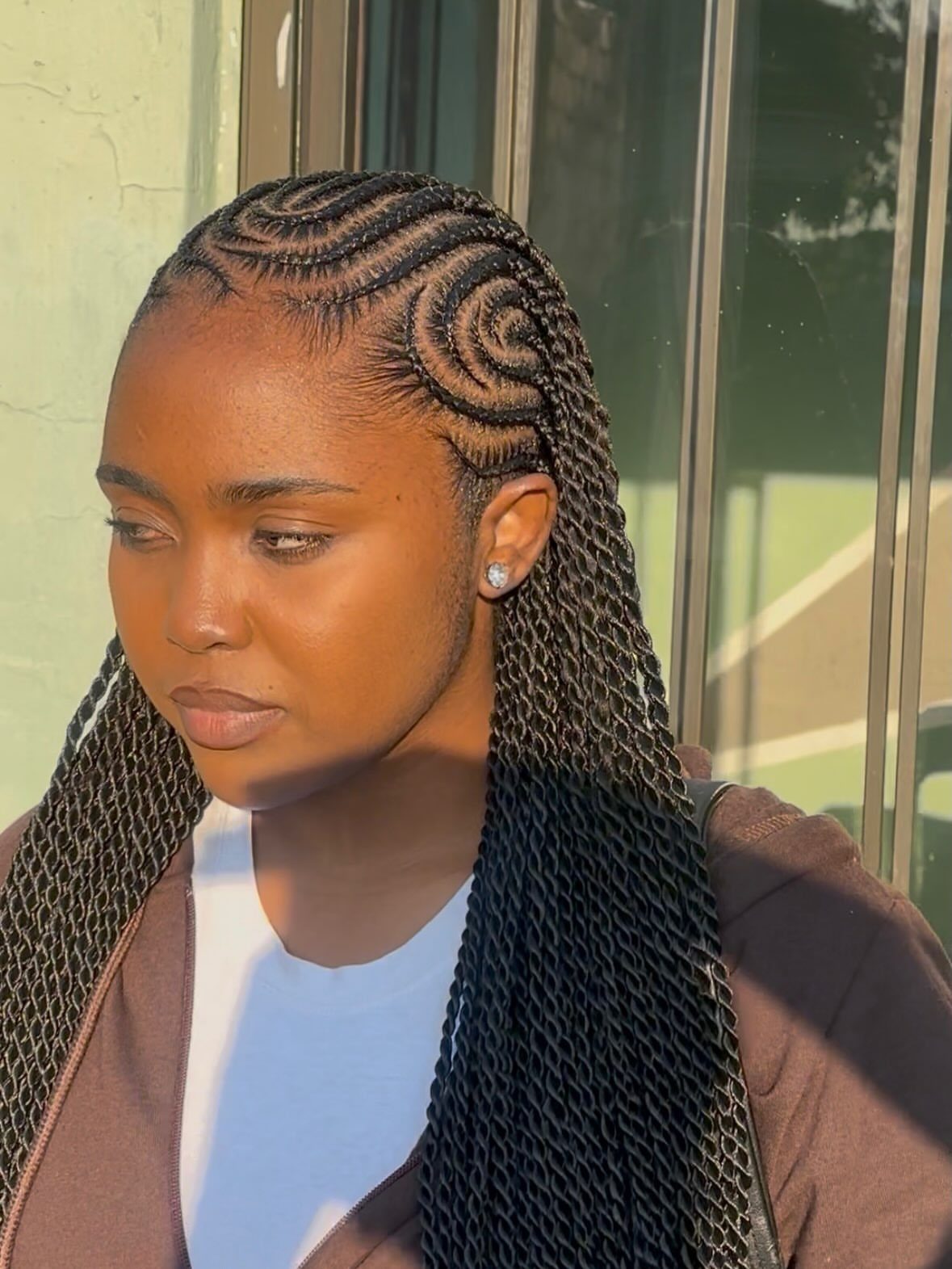
Cornrows lie flat against the scalp, so the pattern itself becomes the style. Curved rows that run into long loose braids give you a sleek top and plenty of length below.
I’d choose this curved layout over straight back rows when I want something with a bit of design. Show your braider the pattern and ask for the rows to end in individual braids.
Neat, even parting is what makes the curves read clearly.
8. Stitch Braids
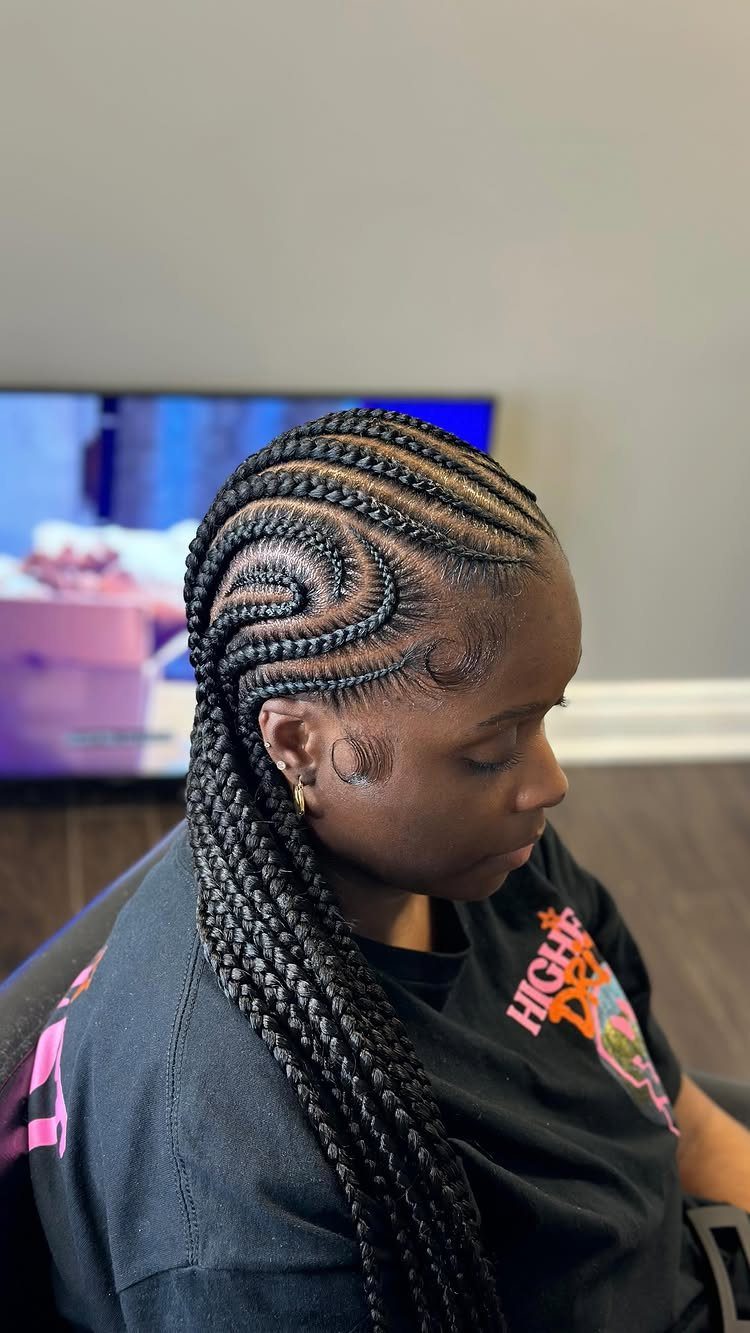
Stitch braids get their polished look from the tidy, stitched lines that run along each row. Curved rows sweeping from the forehead into one long ponytail are the version I’d pick, because the lines stay crisp from front to back.
Ask your braider for stitch braids by name and bring the photo so the curve of the rows is clear. Gathering the length into a ponytail keeps the whole style off your neck.
9. Lemonade Braids
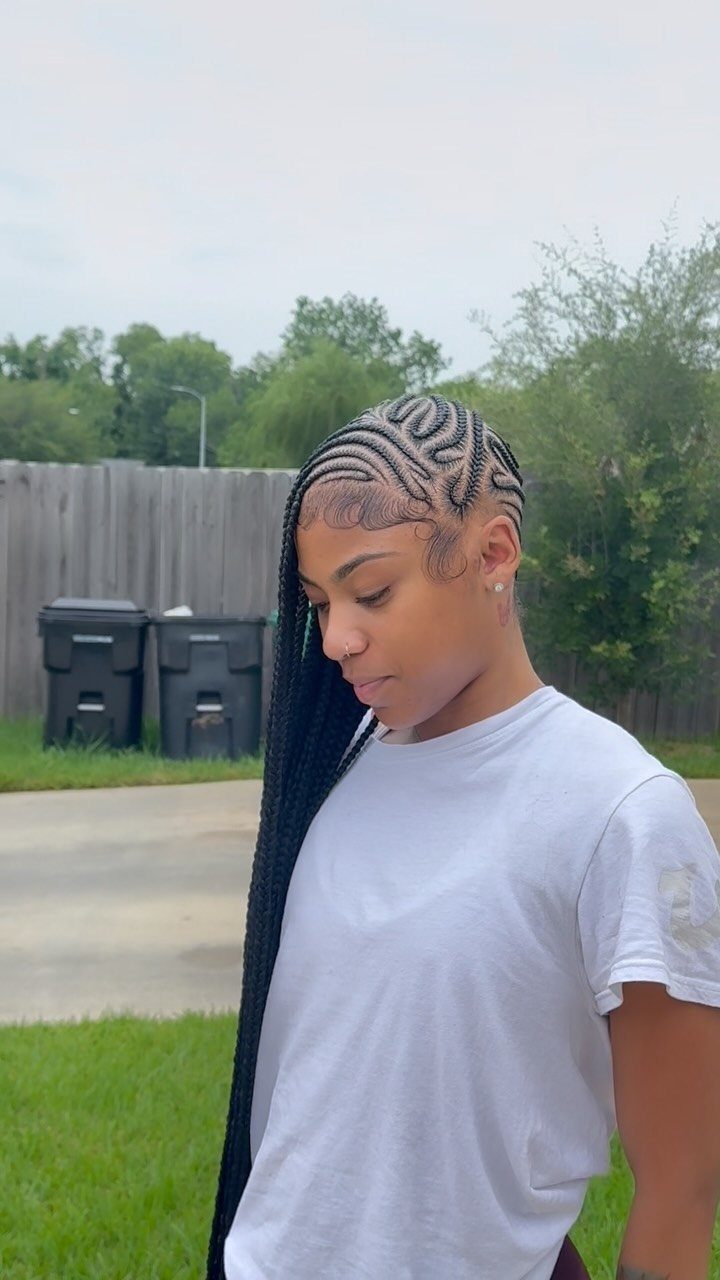
Every row sweeps to one side in lemonade braids, which makes the shape easy to spot and easy to ask for. Long black braids worn side-swept with neat, styled edges look sharp with something as simple as a white tee.
Ask for lemonade braids by name and tell your braider which side you want the sweep to fall on. Pick the side you part on naturally, and the style will sit more comfortably.
10. Knotless Braids
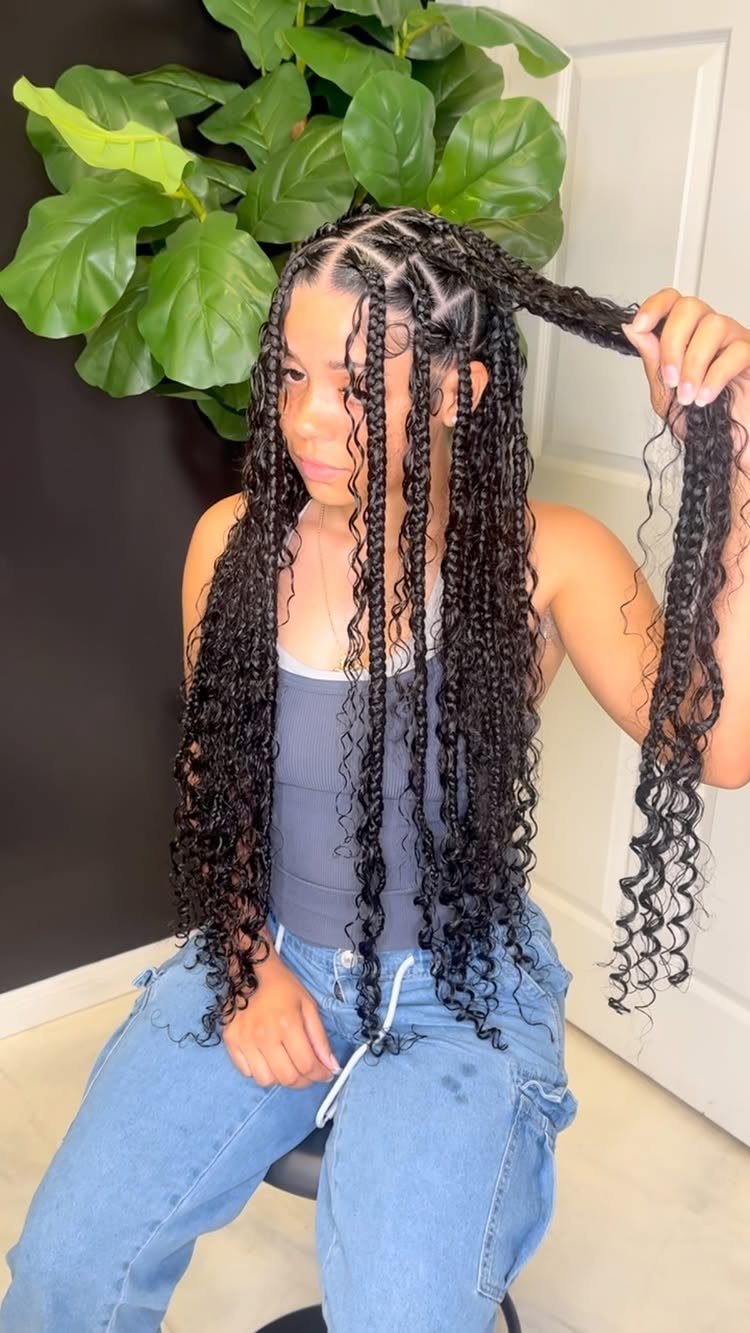
Light, natural-looking braids are the reason I reach for knotless. Long black braids with curly ends add movement at the bottom while the top stays smooth and flat.
I’d choose this over a heavier look when I want length without the weight.
Curly ends are a nice touch that needs no daily styling.
In fact, for Black women specifically, braids have always been more than a hairstyle; they’ve evolved to be a form of cultural expression, artistry and self-care.
11. Feed-In Braids
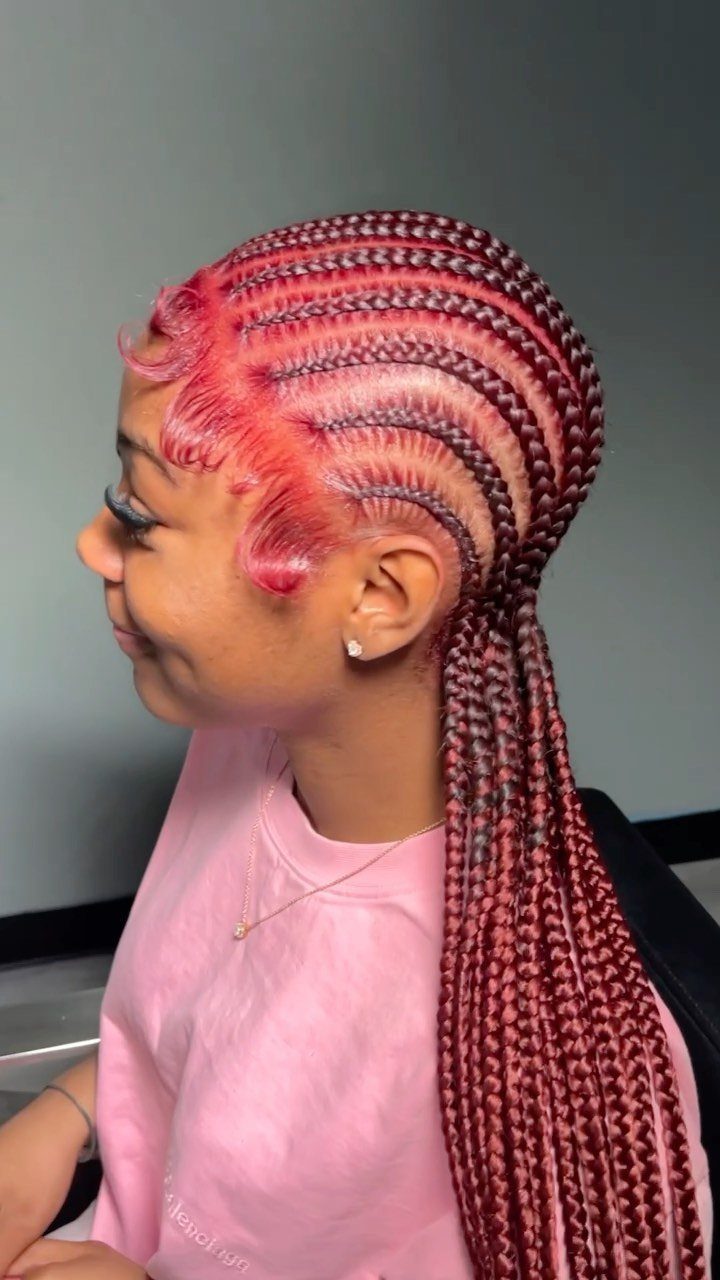
Extensions are added gradually in feed-in braids, so each braid starts thin at the scalp and builds toward the length. That slow build gives a smooth, natural start with no blunt edge at the part.
Red and burgundy braids pulled into a long ponytail are the version I’d pick for a bold look. Ask for feed-in braids by name and say you want them gathered into one high ponytail.
If red feels like too much, a darker shade follows the same method.
12. Halo Braid
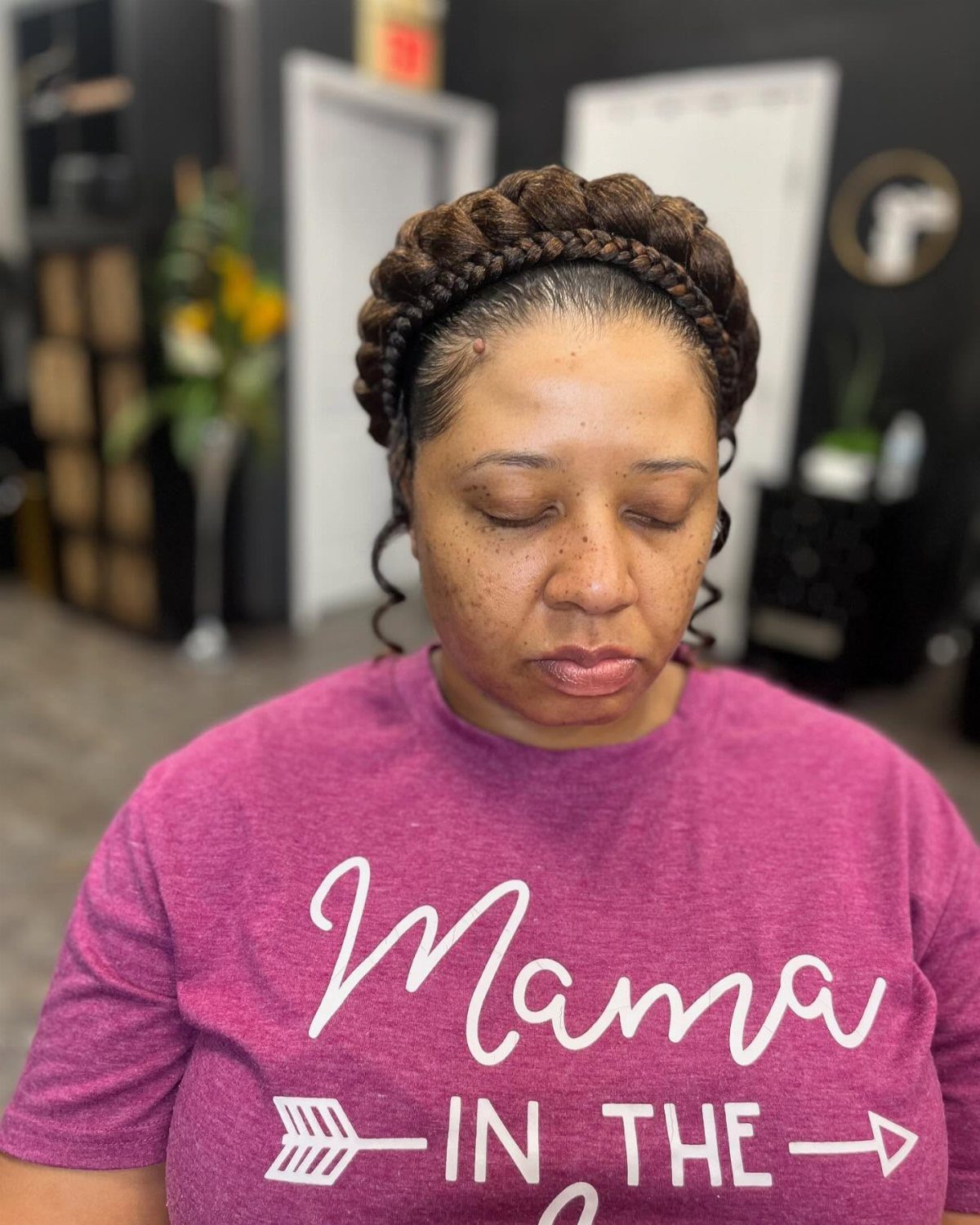
One thick braid wrapped around the head like a crown is all a halo braid needs. A thick brown braid circling the head keeps hair off your face and looks finished with no extra accessories.
To make one, braid your hair loosely, wrap it around your head and tuck the end under.
Pin it in place along the way. Pulling the braid wider before pinning makes it look fuller, and I like that effect.
13. Crochet Braids
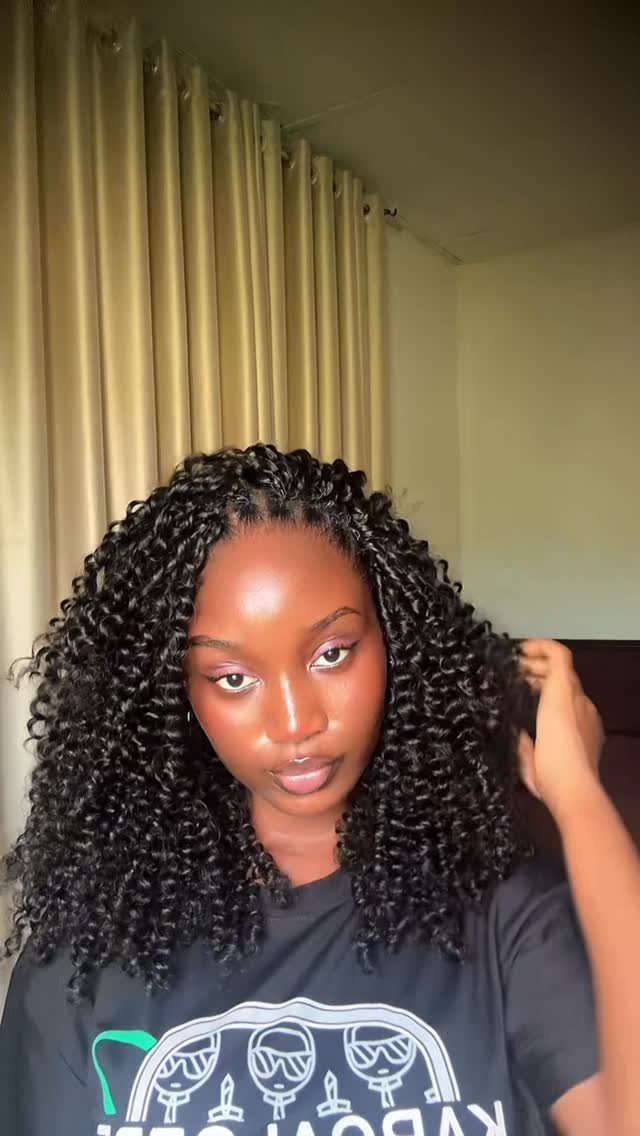
Synthetic hair looped through cornrows is what makes crochet braids a different animal from other braided styles. The cornrows lie flat underneath, and the extension hair is attached on top.
Long, voluminous black curls are the version I’d pick, since the curl pattern gives full body with no daily styling.
Book it as crochet braids, and tell your braider you want curly hair looped through cornrows instead of braiding in straight extensions.
Since the base is flat cornrows, the pattern underneath is worth discussing before you book.
14. Ponytail Braid
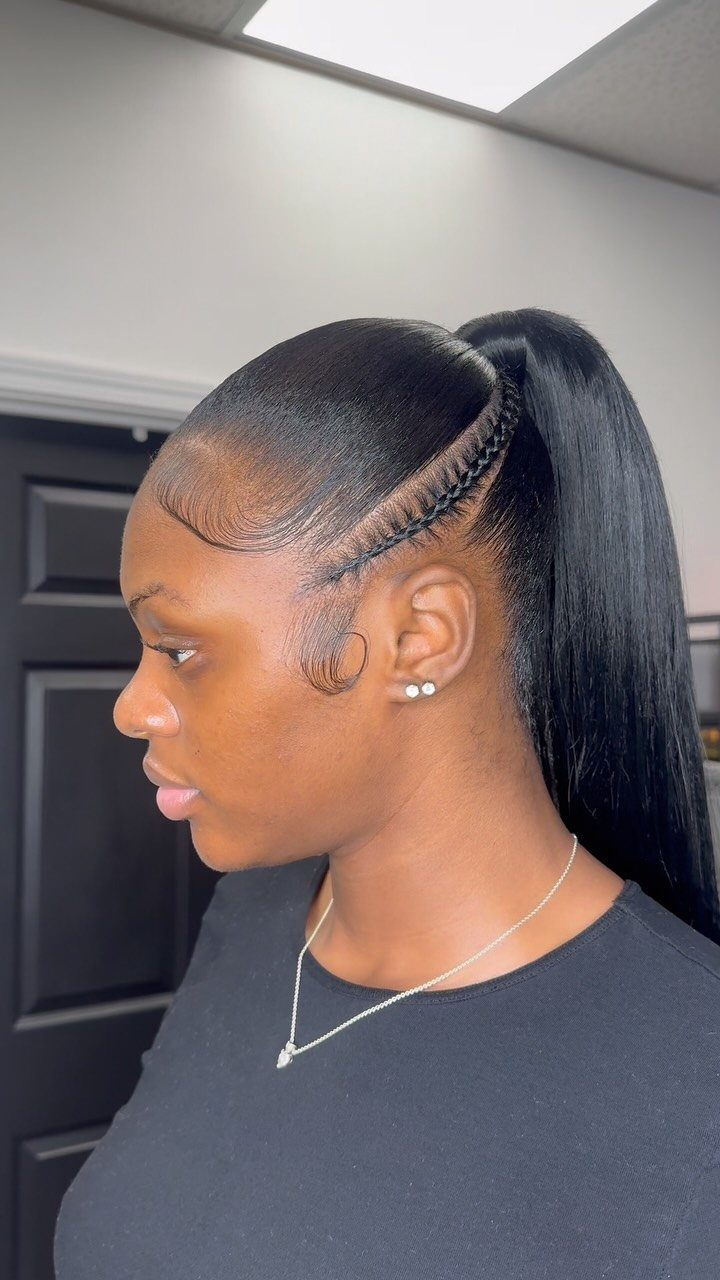
A high ponytail with one braid running alongside it is a small change that makes a plain pull-back look finished. The braid stays sleek against the head, then joins the ponytail.
My pick is the straight-hair version with a side cornrow, because the smooth ponytail makes the braid stand out. Ask for a high ponytail with a single side cornrow and bring the photo.
Keep the braid tight and the ponytail smooth, and the whole style looks clean with a simple tee and silver jewelry.
15. Bubble Braids
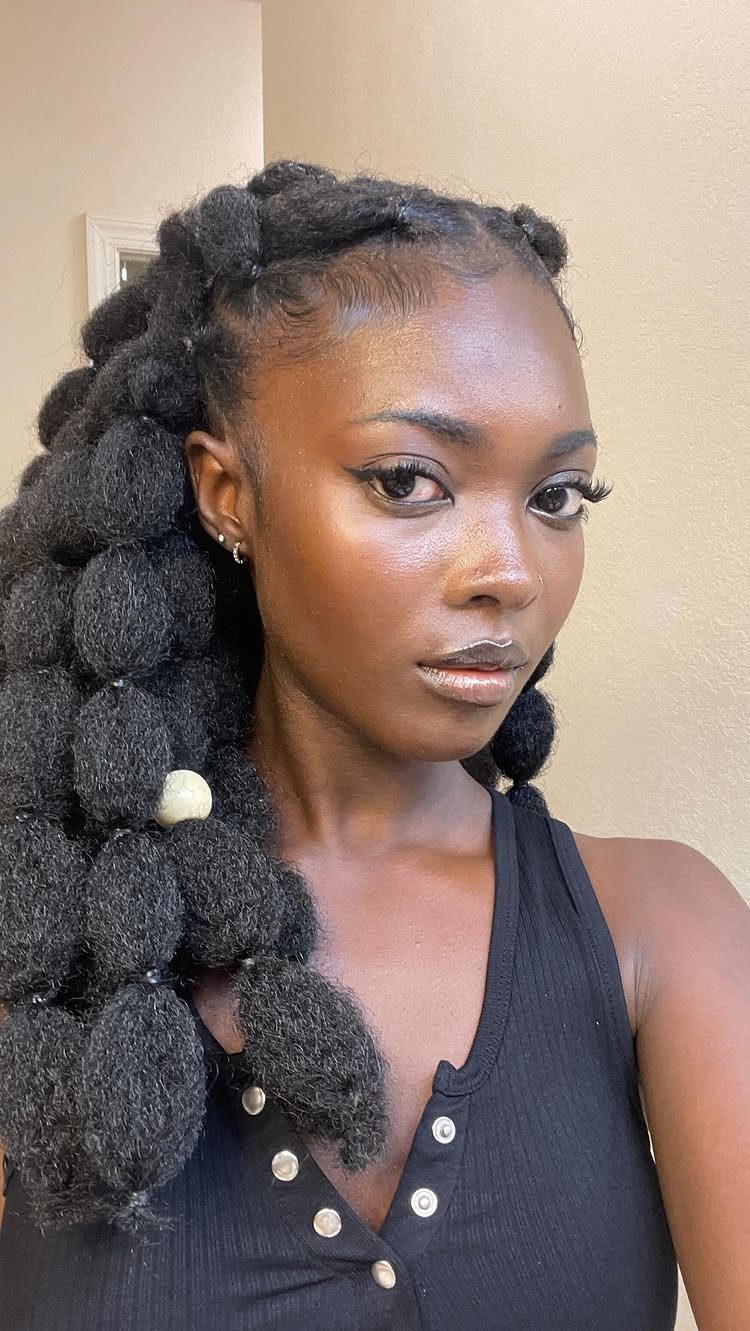
Each bubble is a ponytail secured at intervals along its length, which puffs the hair out between the ties.
A bubble braid adds a small detail without crowding the shape. Ask for evenly spaced ties so the bubbles come out the same size from top to bottom.
Pull each section gently outward after tying to make the bubbles look fuller.
16. Jumbo Braids
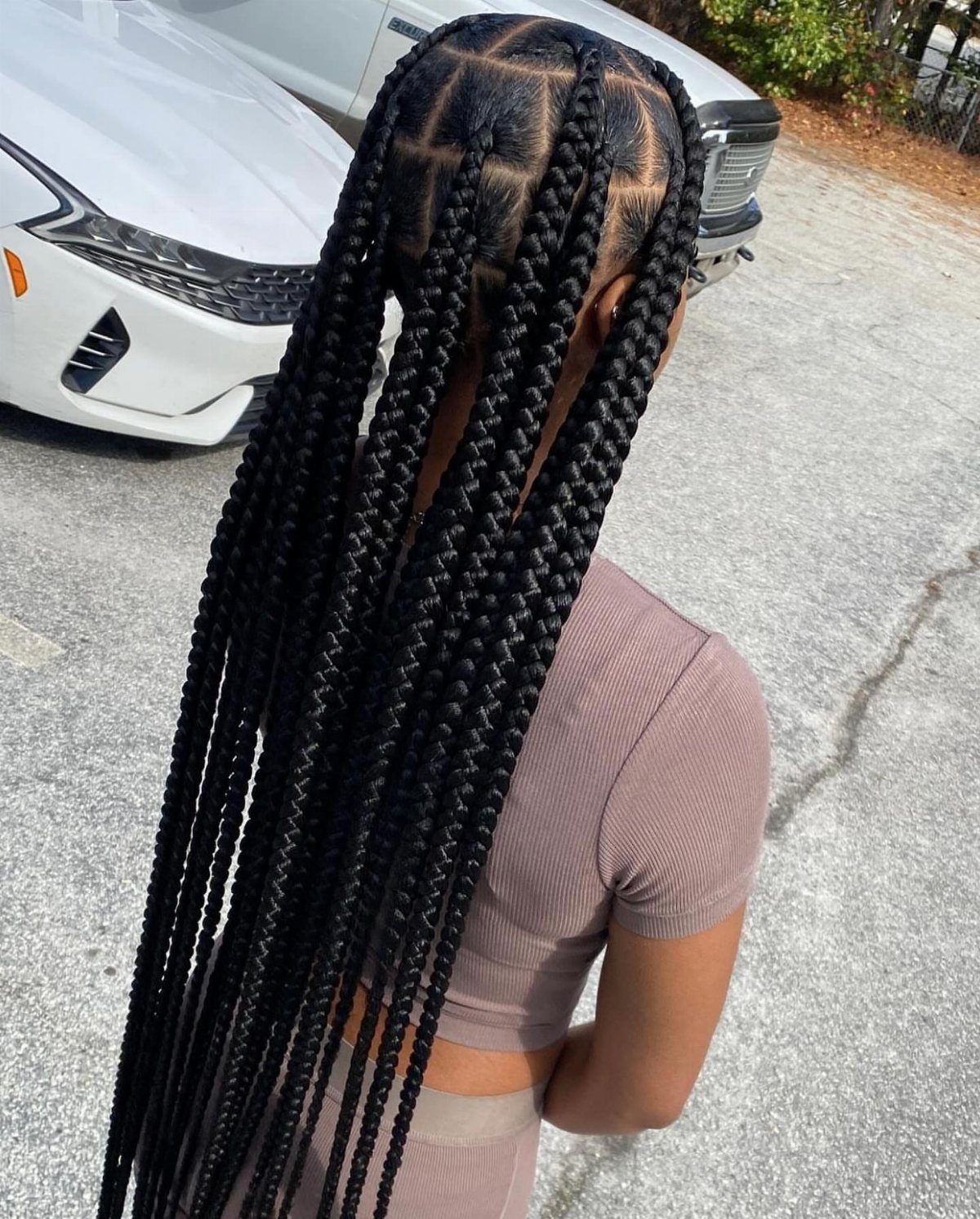
Thickness is the entire point of jumbo braids: fewer, bolder braids that hang long and heavy down the back. They make a statement from behind as much as from the front.
Long, thick black braids are the version I’d choose because they look dramatic with very simple clothes. Tell your braider you want jumbo-size sections and ask for the length you prefer.
Jumbo braids use fewer, larger sections, so there is less to fuss with each morning, but each braid carries more weight than a thin one and can pull on the scalp.
Best Products for Braids Maintenance
ORS Olive Oil Nourishing Sheen Spray is the finishing step I’d reach for once a style is in, since it gives braids a natural shine.
For edges and partings, Shine ‘n Jam Conditioning Gel Extra Hold helps define the lines while you braid and slicks edges back for daily wear.
Scalp care matters as much as the braids.
Steam Bar Scalp Shampoo cleans textured hair gently and also suits braiding hair, while Cécred Restoring Hair & Edge Drops ship with a pipette, which lets me place the oil right along each parting and rub it in without the greasy feel.
Ahead of an install, Doux Twist and Curl Cream leaves hair soft and moisturized, so it’s ready to braid and doesn’t pick up residue.
Synthetic hair bothers some scalps, and Rebundle Braidbetter in Natural, made from plant-based banana fiber, is the swap I’d try first. It looks and feels like regular braiding hair and is kinder to skin.
How Long Should You Keep Braids In?
Plan on 4–6 weeks for most braids, depending on the style and how well you look after it. Past that window, matting and breakage start to become a real risk.
Your hair gives better signals than a calendar. Product buildup, clear new growth at the roots, frizz, or an itchy scalp that won’t settle after a refresh all tell me the braids need to come out.
At night, a satin bonnet or scarf protects them and holds frizz down.