The range runs from solid deep burgundy, which needs one shade name and no decisions, to a burgundy and violet ombre, a chocolate base with burgundy balayage, and black hair with thin burgundy highlights.
How much color you want covering your hair decides which one is yours: all over, only through the mid-lengths and ends, or just a flash that shows when you move.
Each idea comes with the wording to give your stylist, such as "dark plum" or "bright cherry red," so a photo and a name land you on the right side of red or purple.
1. Deep Burgundy Hairstyle
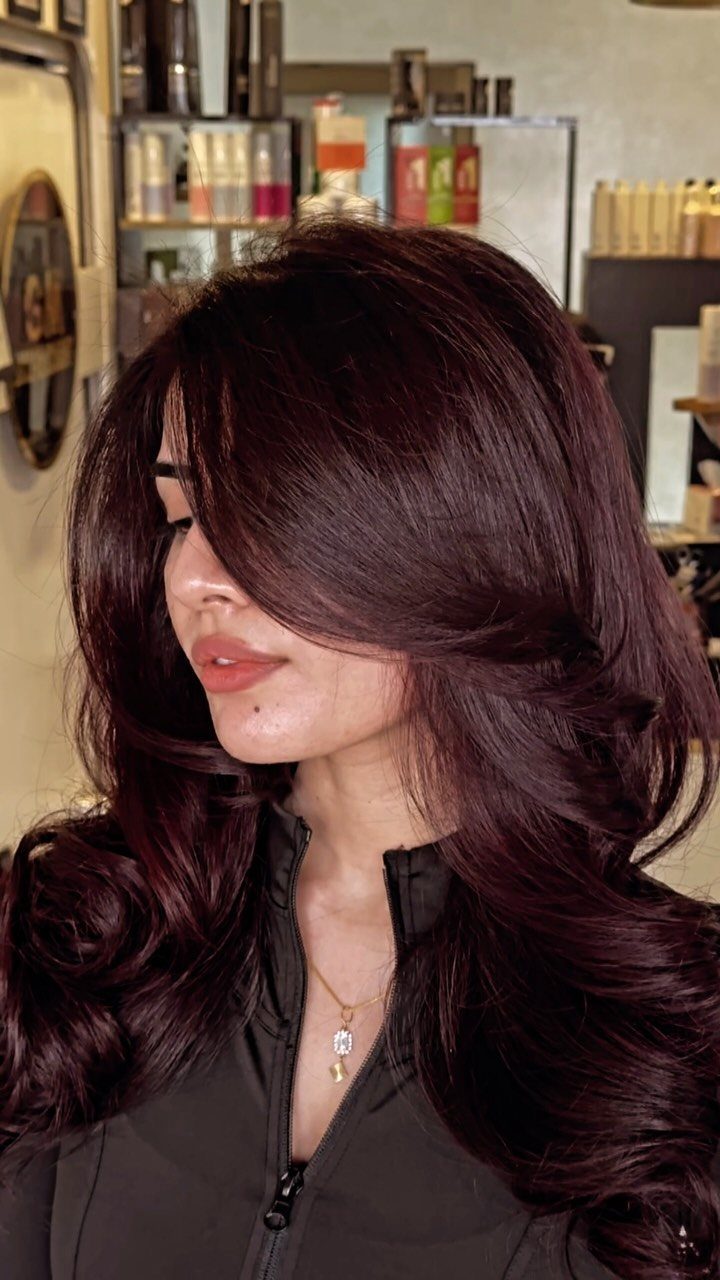
Solid burgundy is the easiest version of this color to ask for, because there is only one shade to name. Bring a photo and say "deep burgundy, all over" so your stylist doesn’t drift toward brown or toward bright red.
Long waves with layers give deep burgundy its dimension, because light catches the raised curves and shadow settles in the dips, so one flat shade reads as several.
I’d pick this over a gradient if you want one color and no decisions.
2. Ombre with Burgundy and Violet
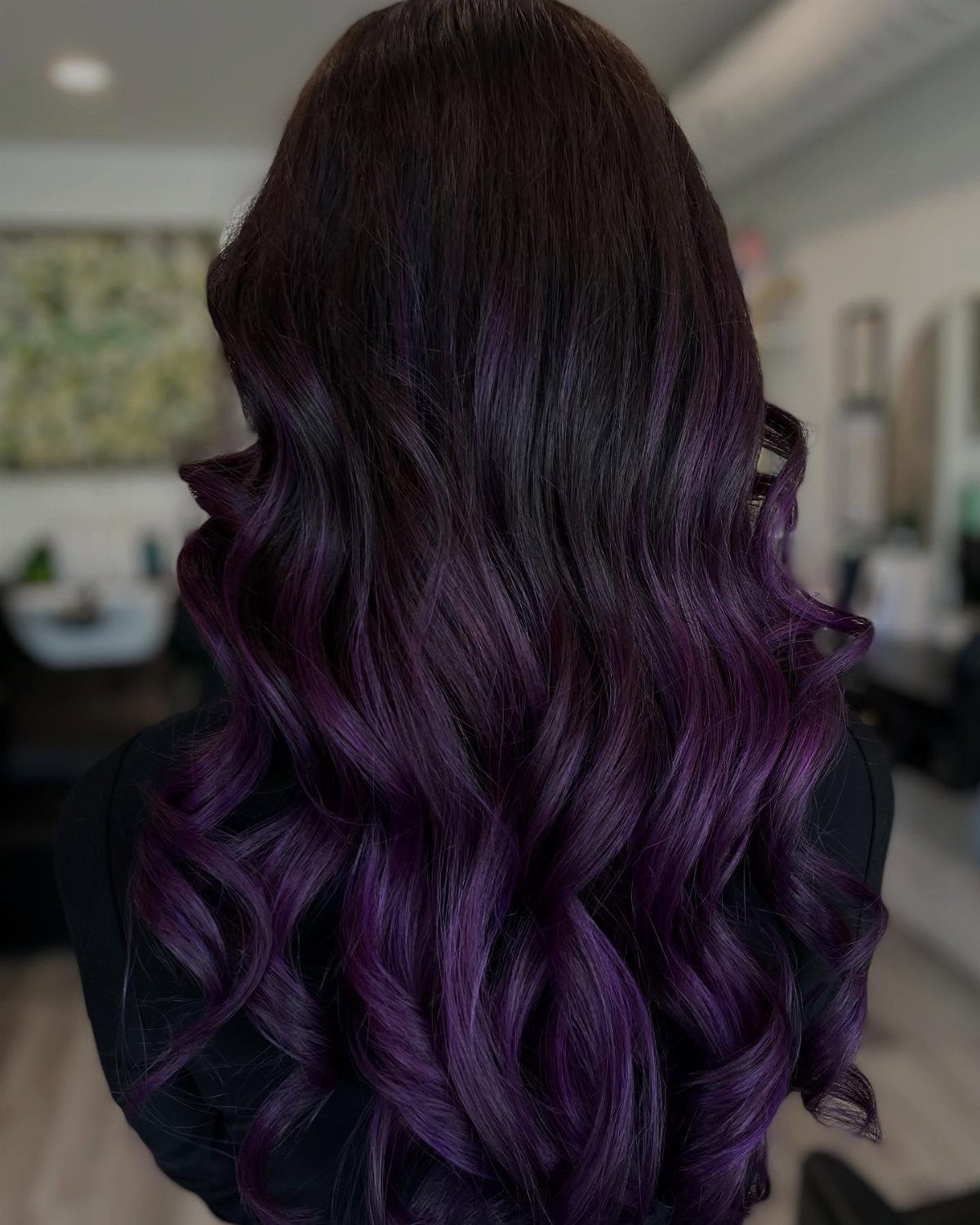
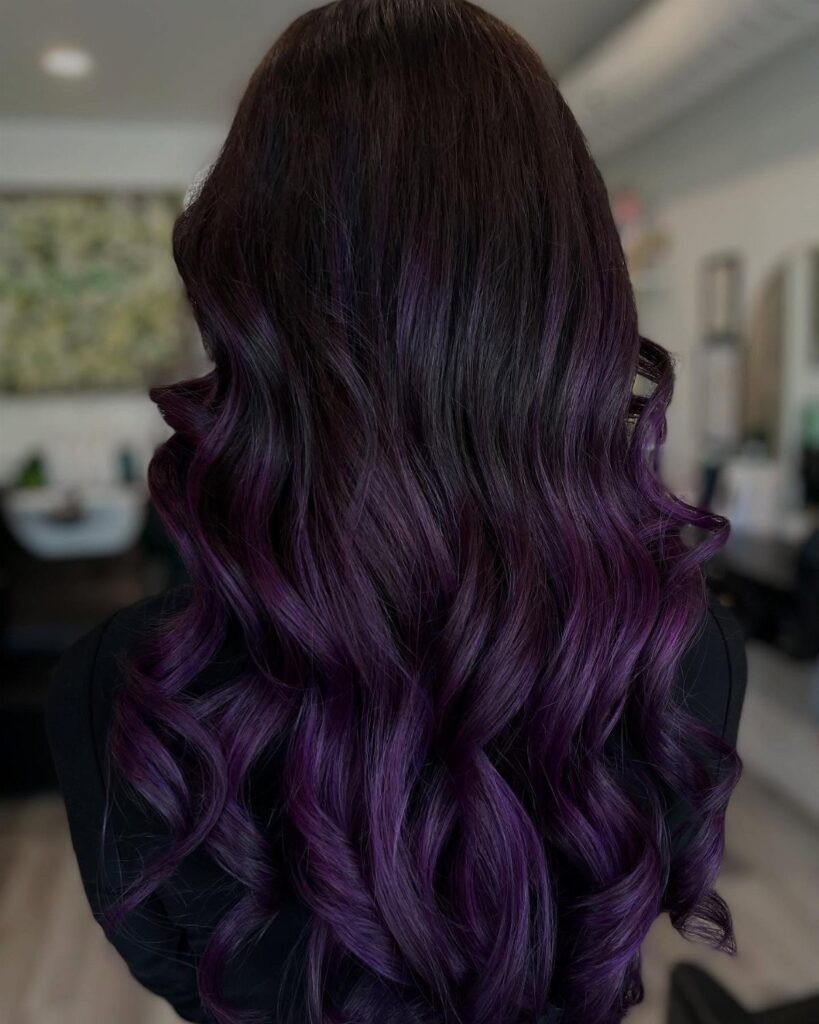
Dark burgundy at the roots melting into violet at the ends is my pick for anyone who can’t choose between the 2 shades. The gradient does the work, so loose waves are enough to show it off.
Ask for a soft blend rather than a line where one color stops.
Keep the burgundy darker near the scalp, since that makes the violet look brighter by contrast. Violet at the ends will need a bit more care than the roots, so plan for that.
3. Deep Violet-Burgundy Hair
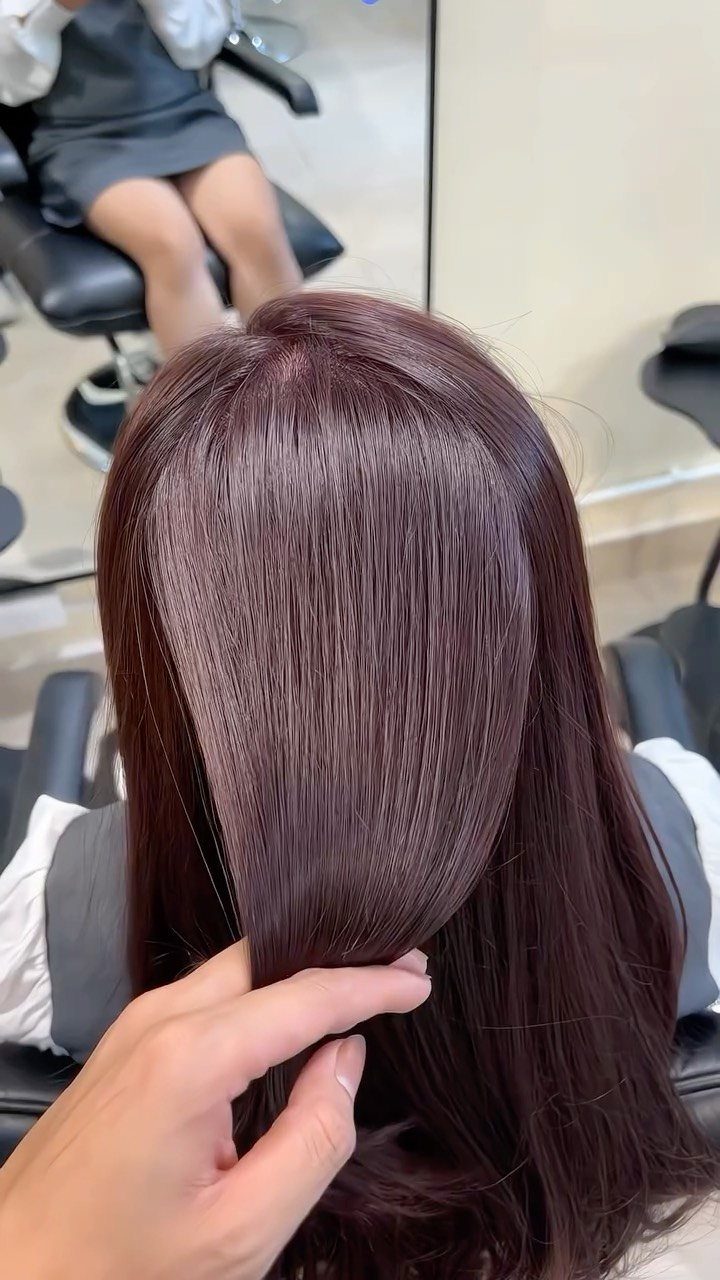
Plum is what you get when violet and burgundy share the same strand, and the finish looks different in every light. Straight hair, as above, shows that shift best because nothing breaks up the surface.
Ask for "deep violet-burgundy" or "dark plum" and bring a photo, since each stylist mixes the two a little differently. If you want something richer than plain burgundy but quieter than true purple, this is the one I’d choose.
4. Dark Red Velvet Hair
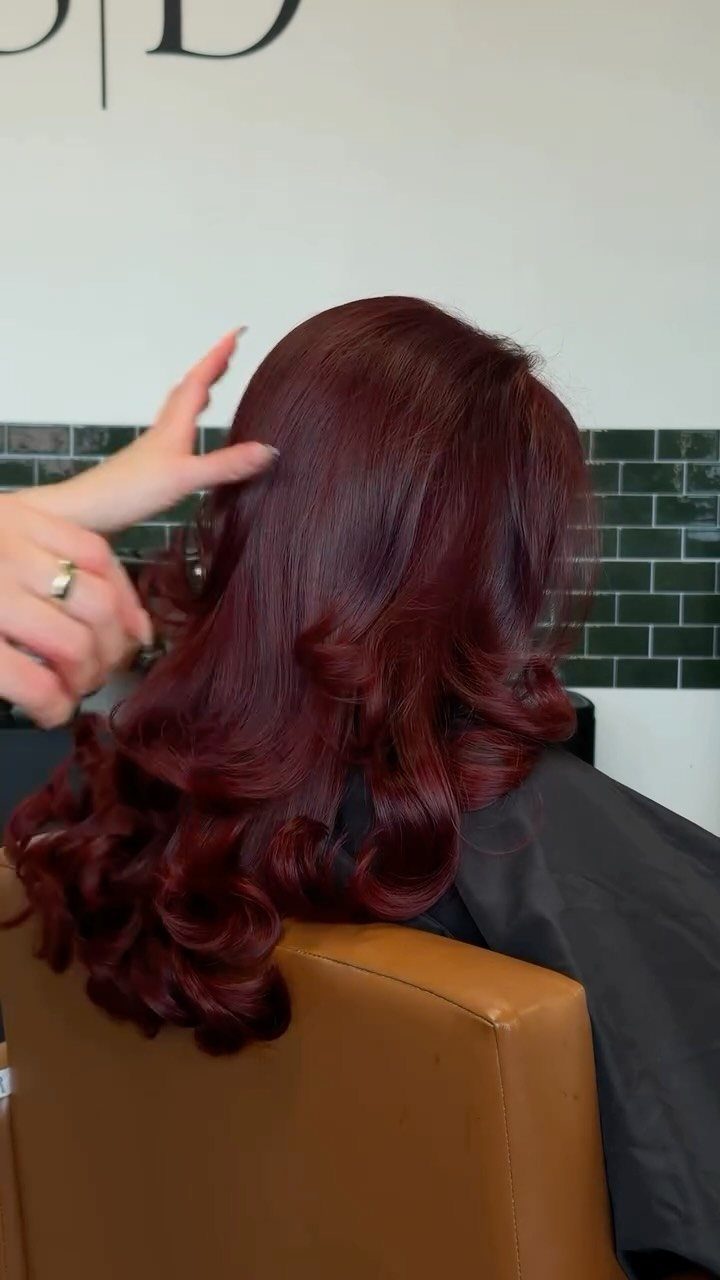
Red velvet is burgundy leaning red: warm, dark and a little glossy, with none of the purple. Say "dark red velvet" and show a photo so the red stays in front.
Curls suit it well because every bend catches light and deepens the shade. I like it best on hair with some shine, so a gloss or finishing oil does a lot here.
For a cooler result, ask your stylist to push the formula toward violet, with a blue-leaning base instead of a copper or orange one.
5. Dark Chocolate Hair with Burgundy Balayage
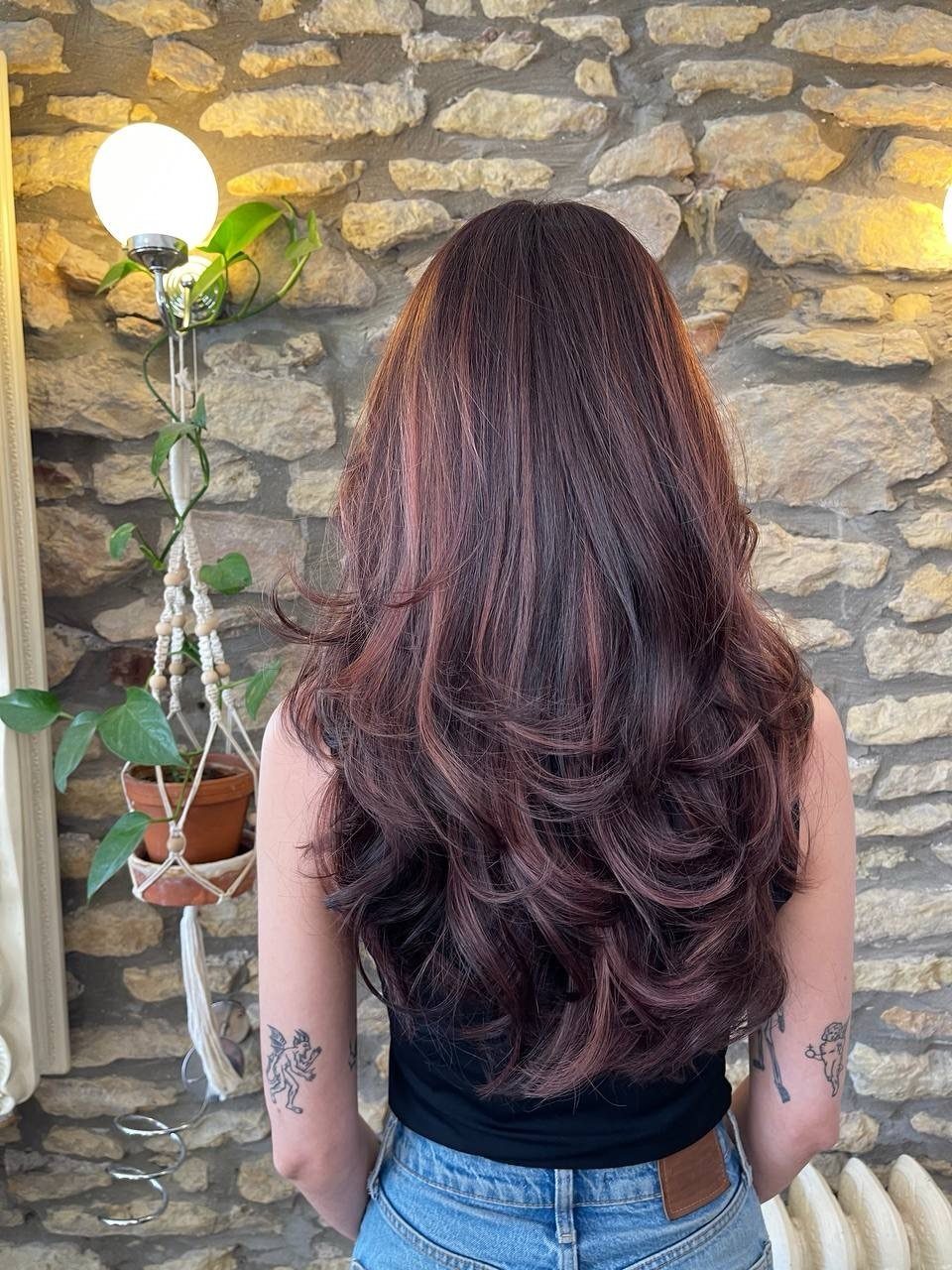
Burgundy balayage on dark chocolate hair is the low-drama way into red-wine color. The base stays natural-looking while the highlights add a glint of burgundy when the hair moves.
Balayage is painted by hand, so ask for the burgundy placed through the mid-lengths and ends, not at the roots.
Long waves show it best. It’s a good fit if you want color without a solid shade covering all of your hair.
6. Bright Burgundy Blowout
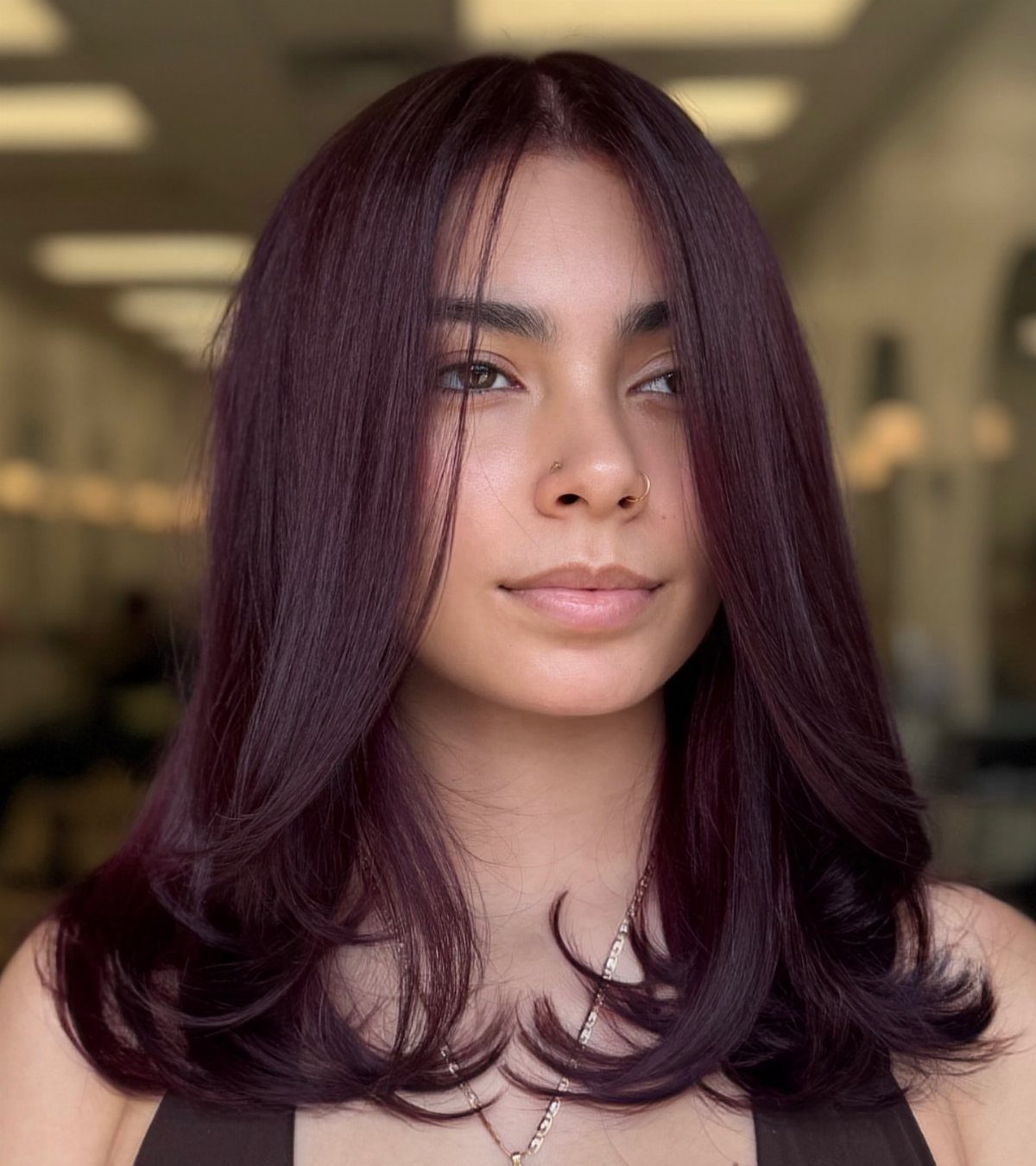
A blowout is what makes bright burgundy look expensive: smooth, sleek and shiny, with the ends curled under. At shoulder length it’s very manageable.
Brighter burgundy reads more red-pink than the deeper shades, so tell your stylist you want it vivid.
Use a round brush and a heat protectant for the finish, then curl just the ends. Smooth, glossy hair is what carries the shade, so skip this one if you rarely style your hair.
7. Dark Violet Hairstyle
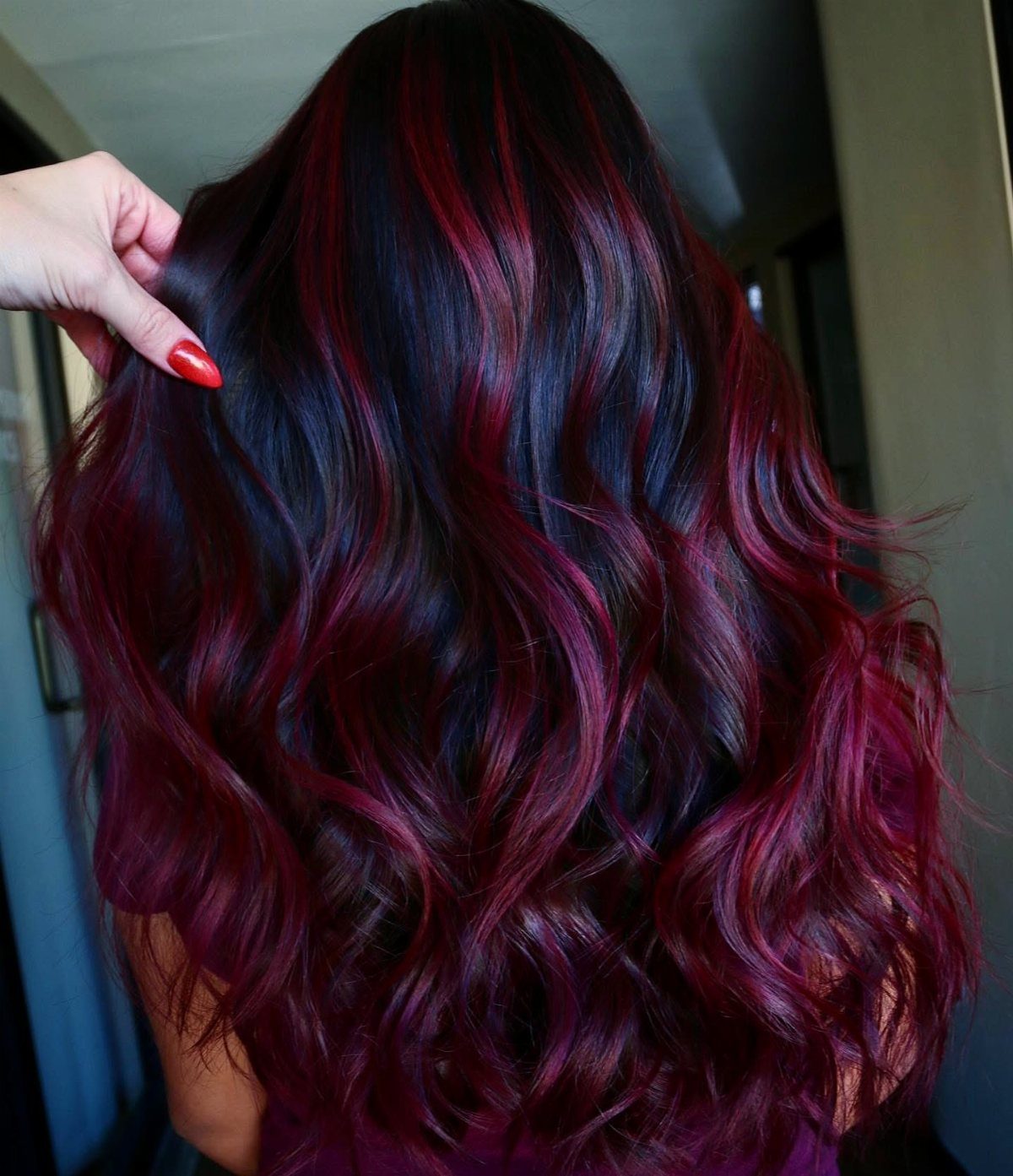
Dark violet is burgundy with a purple tinge, and in long waves the violet only shows where the hair bends and catches light.
That makes it a good first step into purple if you don’t want a color people spot from across the room.
Ask for "dark burgundy with violet highlights" and bring a photo, so the violet stays a hint and doesn’t take over. I’d keep the waves loose, since they spread the violet around.
8. Burgundy Hair with Cherry Highlights
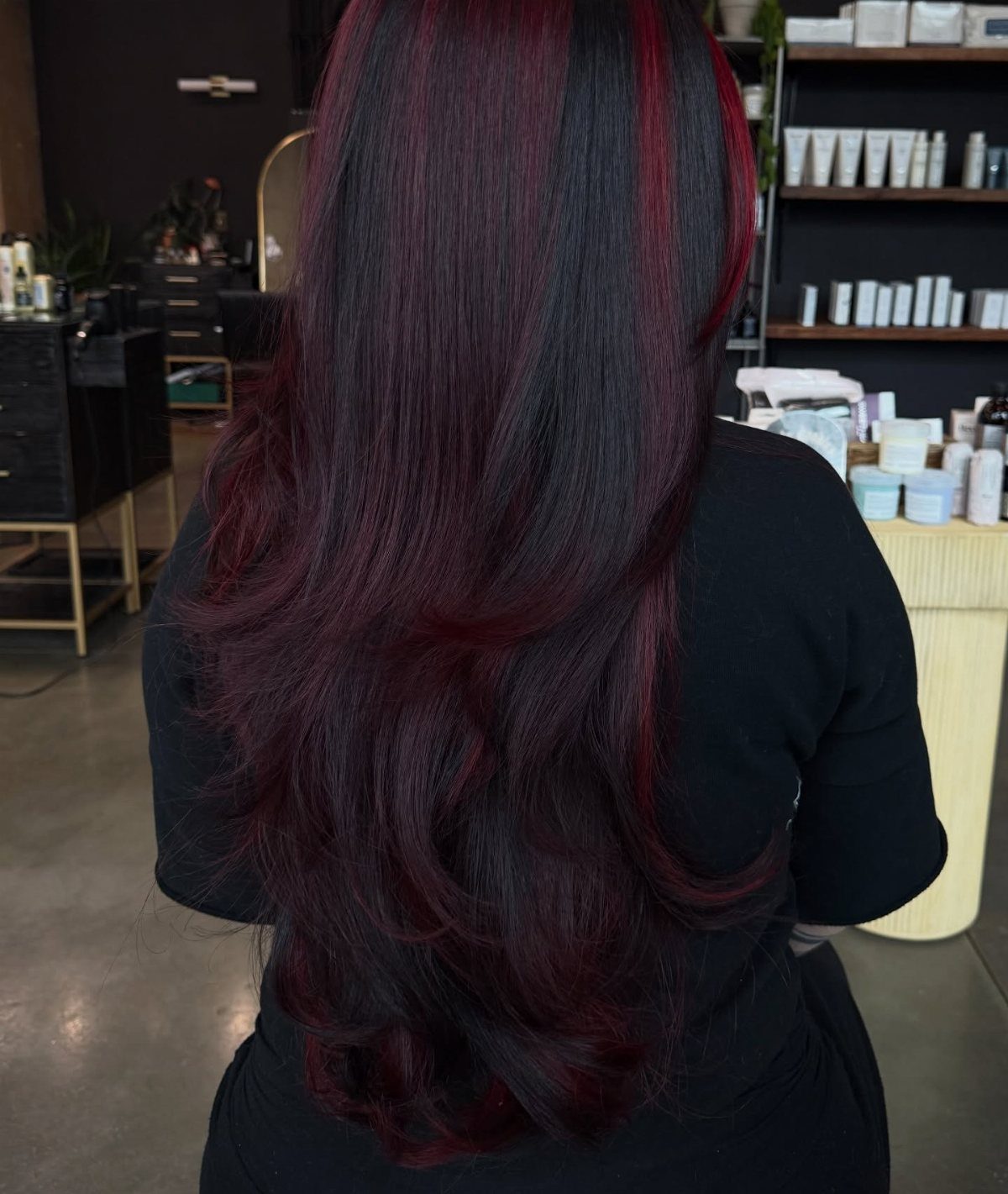
Cherry highlights turn plain burgundy into something with an edge, because bright red against a dark wine base makes the contrast do the talking.
Ask for the cherry in distinct pieces rather than a soft blend, and say "bright cherry red" so it doesn’t come out muted. Long waves give the highlights room to show up.
If you’d rather keep it quiet, ask for fewer, thinner pieces. This is the version I’d pick when deep burgundy alone feels too safe.
9. Plum Burgundy Hairstyle
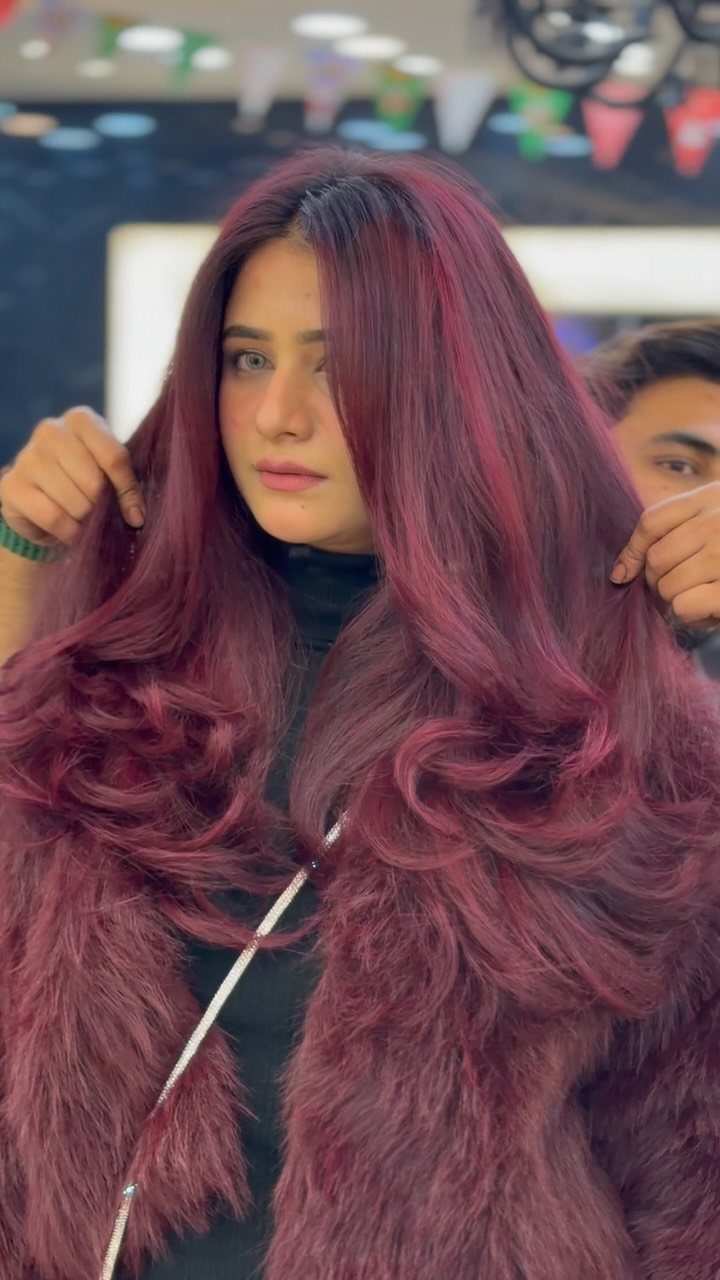
Merlot is the model for this one: a wine shade with enough plum in it to look rich and a little moody, whatever the light.
Say "plum burgundy" or "Merlot" and bring a photo, because plum can slide toward purple or toward red depending on the formula.
Long waves suit it well. I’d choose this over bright burgundy if you want something that looks deep and polished without much styling.
10. Black Hair with Burgundy Highlights
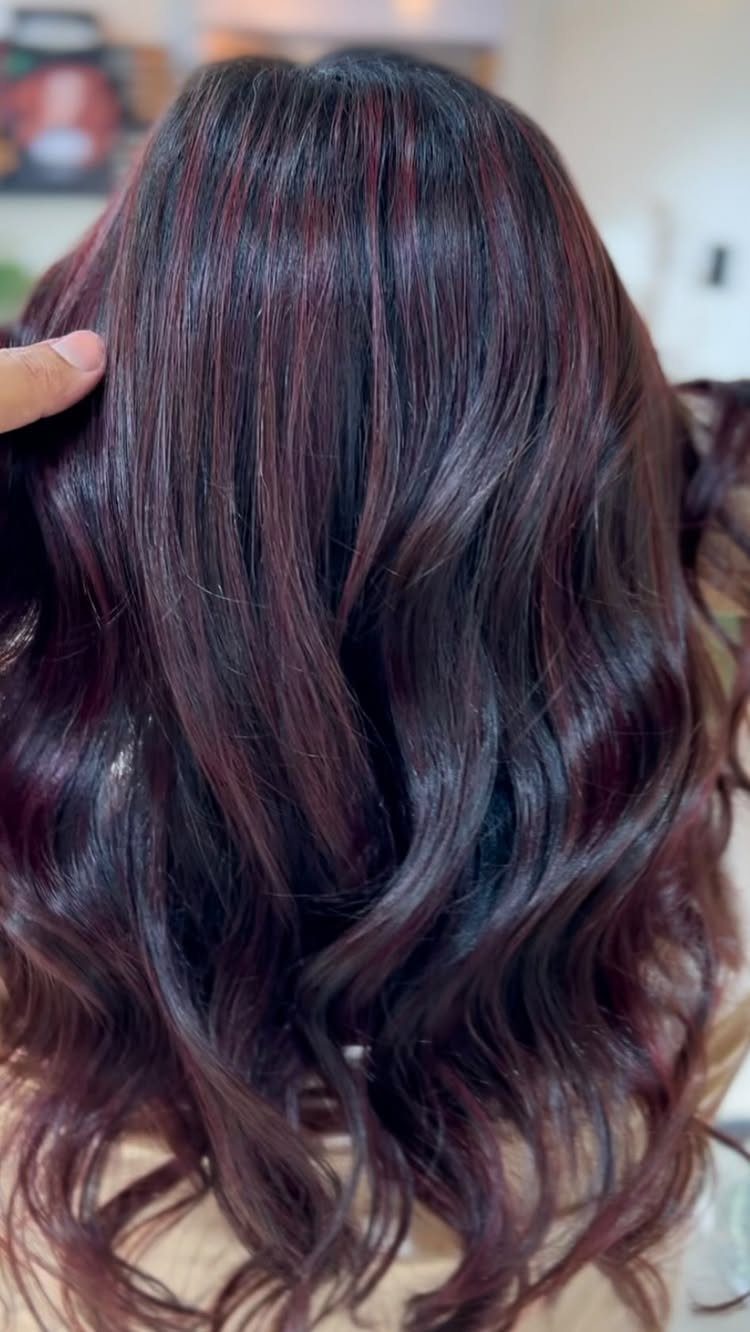
Black hair with burgundy highlights gives the strongest contrast of any violet-burgundy look, and the red only flashes when the hair moves or turns in the light.
Ask for burgundy highlights placed in thin pieces, not heavy chunks, so the black stays the base.
Long waves show the red off best. It’s a good fit if you want your natural dark base to stay put and only need a little warmth threaded through.
Burgundy color combined with a subtle violet is an unusual yet eye-catching combination everyone will admire. What a wonderful solution to create a fantasy touch for black hair!
Frequently Asked Questions
What color is burgundy in hair dye?
In a box or at the salon, burgundy means a deep red with a cool, wine-colored undertone and very little brightness.
It sits between brown and bright red, and a stylist can push it toward violet for a cooler look or toward red for a warmer one.
What is a more purple burgundy?
A more purple burgundy is one with a stronger violet undertone, usually called plum burgundy, dark plum or deep violet-burgundy.
Plum leans purple or red depending on the formula, and every stylist mixes it a bit differently, so a reference photo saves you from a surprise. Think of it as deeper than regular burgundy and softer than a true purple.
What hair color complements purple well?
Burgundy is the best partner for purple. Keeping the root a dark burgundy and letting it melt into violet ends gives a soft blend, and the darker base near the scalp makes the violet read brighter.
Dark chocolate or black bases also work, with just a hint of violet or burgundy threaded through.
Can I put purple over red hair dye?
Yes, violet can sit on top of burgundy or red, and the two blend into plum-toned shades.
An ombre with burgundy at the roots and violet at the ends is one way to do it, or burgundy hair with dark violet highlights.