Curl length and the upkeep you’ll realistically keep up with are what separate the Braided Curly Mohawk from the Thick Side Braid with Cascading Curls, so compare those two before you pick one.
The styles run from micro braids and bob-length box braids that sit between chin and shoulder to very long goddess braids that need extensions, and from a simple thick side braid to cornrows set in a mohawk.
1. Half-Up, Half-Down Braids with Loose Curls
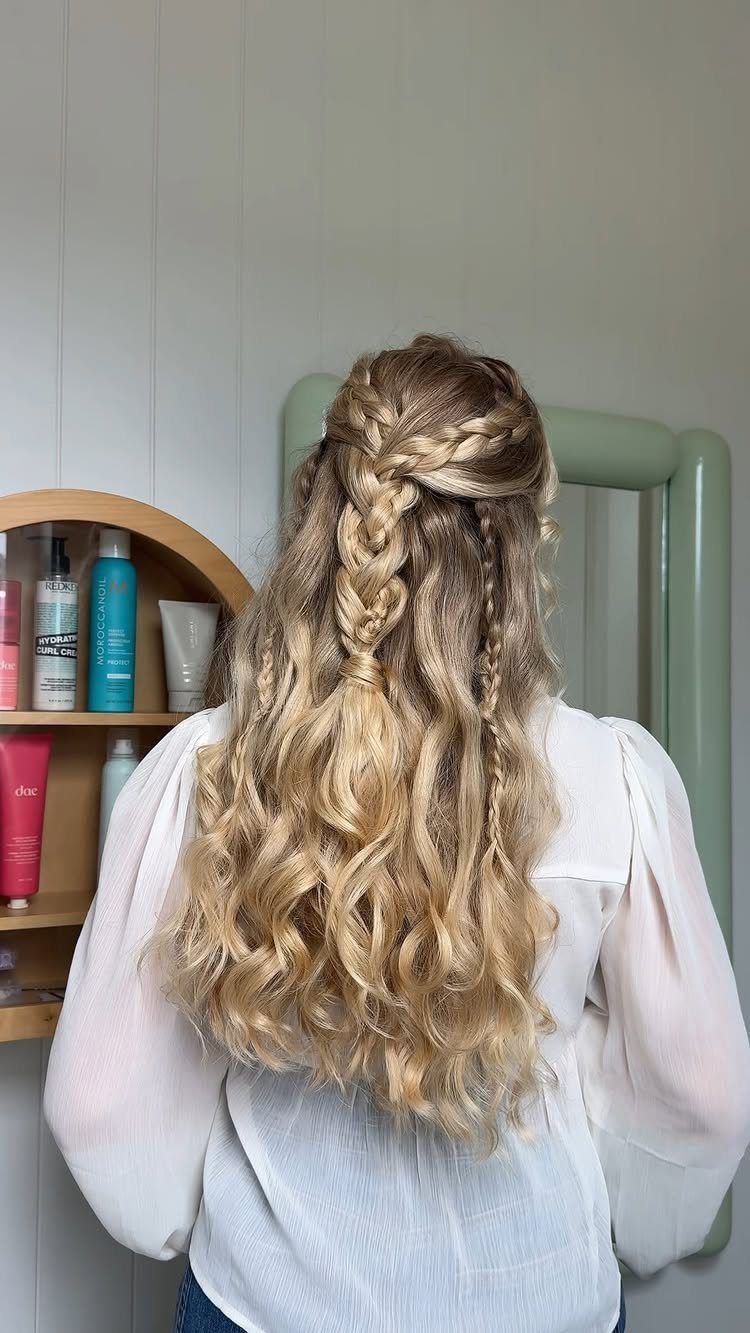
Braiding only the top section keeps curls loose and free while pulling hair off the face. Pick this if your curls are long enough to fall well past the braid, since the contrast is what makes it work.
Leave the lower curls undisturbed and define them before you braid, so the 2 textures look intentional rather than half finished.
2. Space Buns with Braids
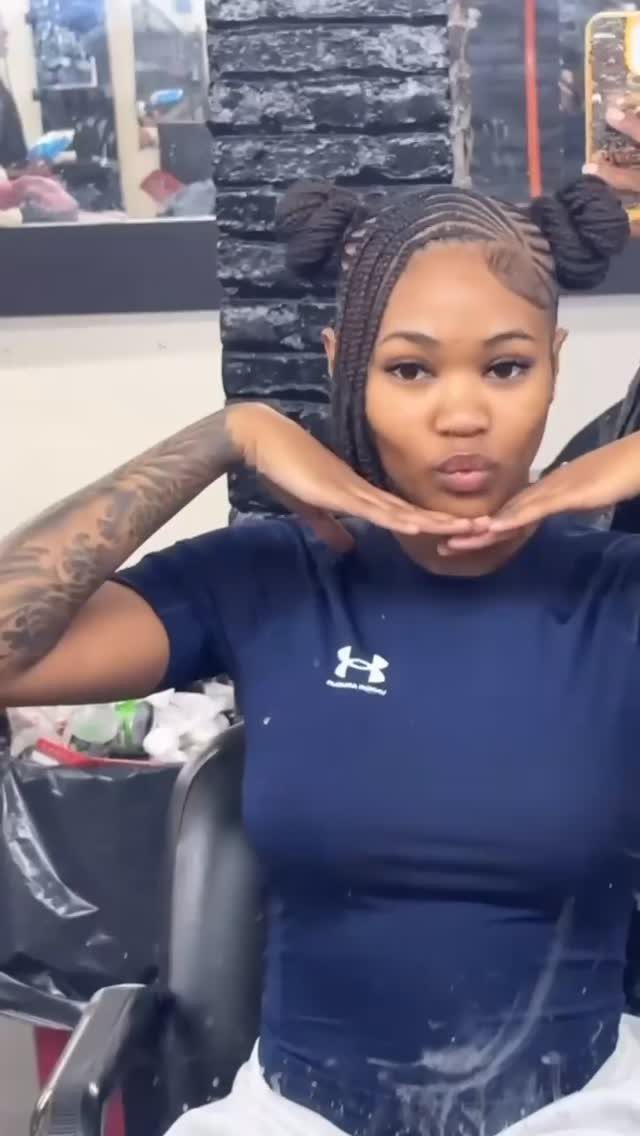
Cornrows running up into 2 buns give you a style that stays tight and neat while still looking playful. Space buns sit high, so the braided base matters: the cleaner the parts, the sharper the buns read.
I like this for anyone who wants hair completely off the neck and out of the way. Ask your stylist for cornrows that finish right at each bun.
3. Bob Box Braids with Curls
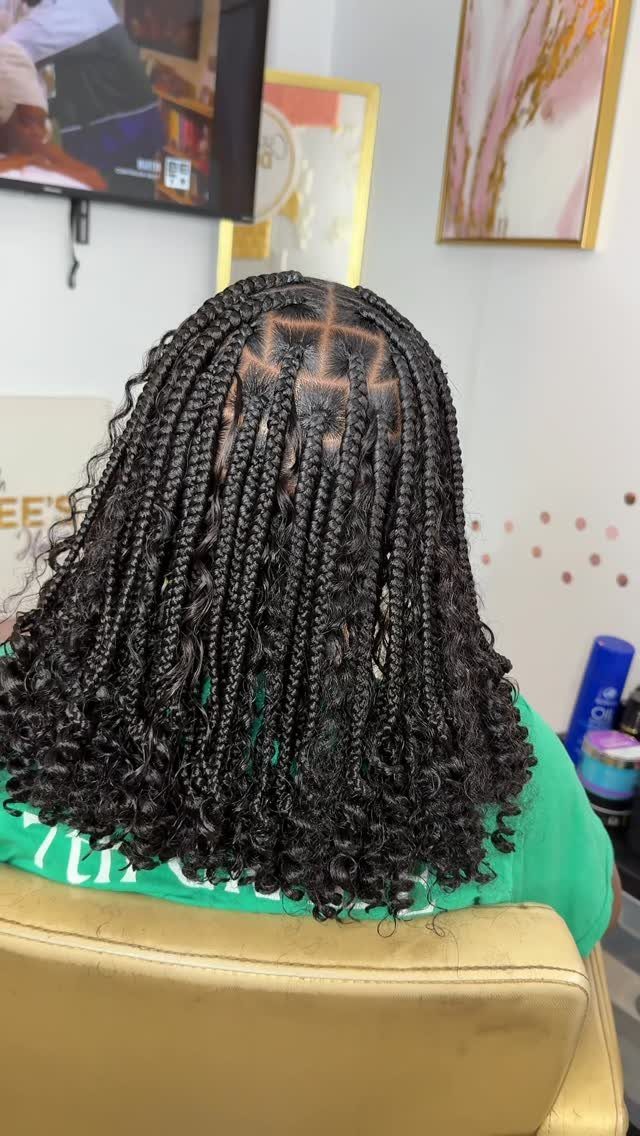
Chin-to-shoulder length is what makes this one work: medium to thick box braids hang with weight, and the curly ends add bounce at the bottom. Ask for a bob cut by name, and for curled ends.
Short braids are lighter than long ones, which is a real upside for your neck on hot days. Bob-length braids give you fewer ways to pin them up, so plan on wearing them down.
4. Long Goddess Braids
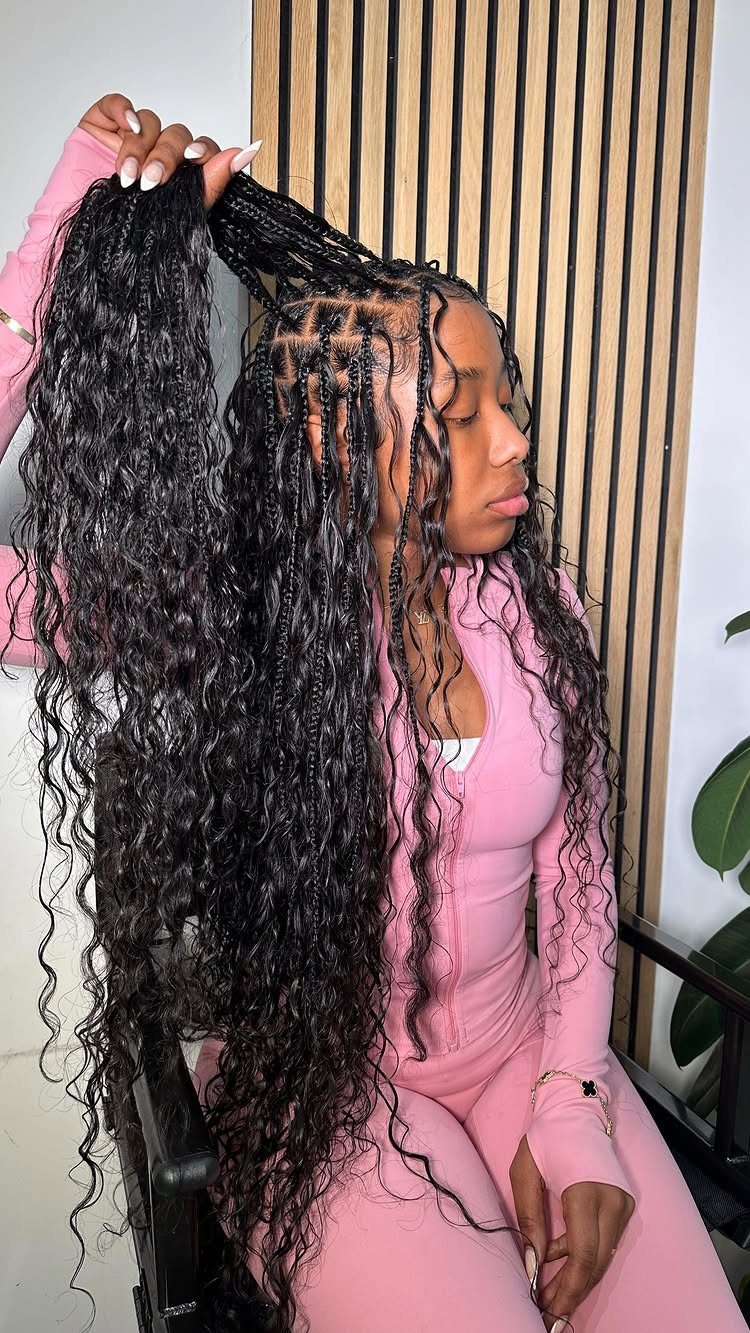
Very long goddess braids call for extensions, and I think that is worth accepting if length is the whole appeal. Without added hair, you will not get this reach.
Curly ends keep the length from looking heavy and stiff. Expect a long appointment, and ask for the curls to be set at the tips so the braids finish soft.
5. Box Braids with Voluminous Curls
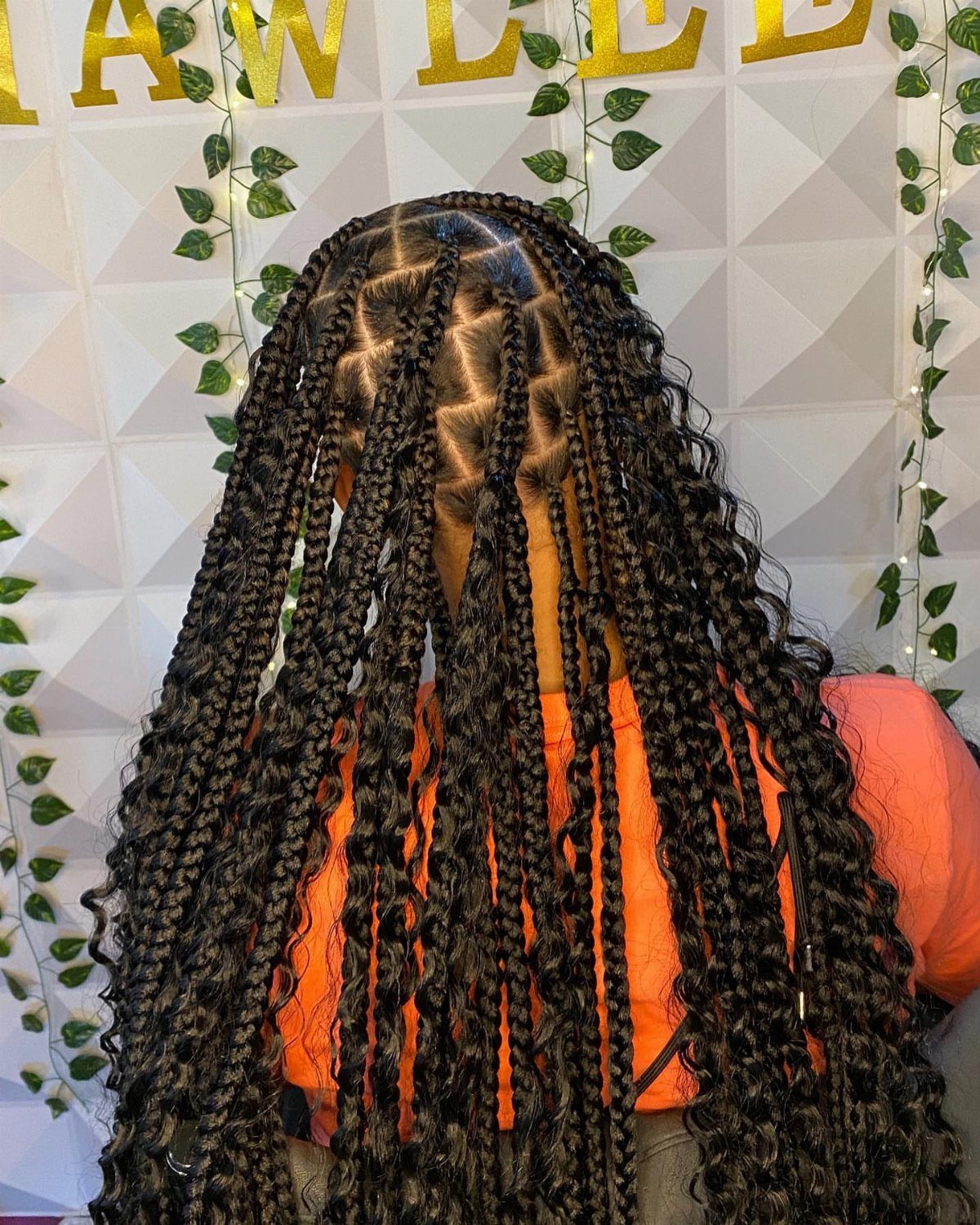
Structure on top, volume at the bottom: that contrast is what sells this style. Box braids give you clean, defined squares at the scalp, and the curly ends open up into fullness.
Of the curly-end braid styles, I would pick this one for the most movement. Keep the curls moisturized so they stay springy rather than frizzy.
6. Braided Curly Mohawk
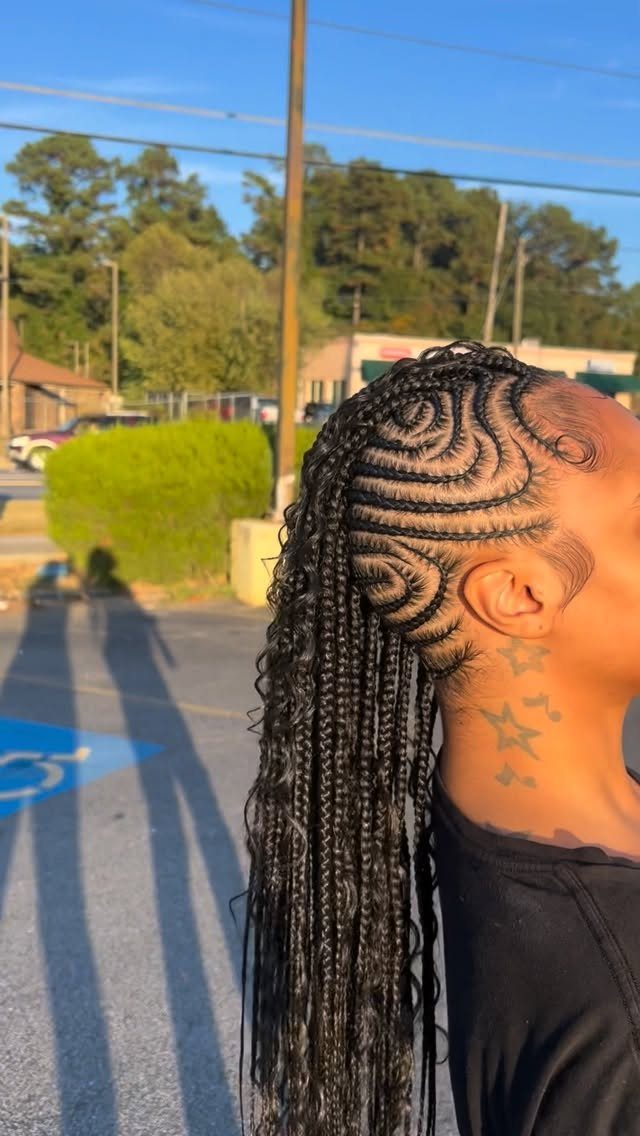
A mohawk built from curved cornrows that turn into long curly braids reads as bold without any cutting. The braids sweep up the center, so ask for the pattern to curve rather than run straight.
Choose this when you want a statement look for a night out or a event, since it holds attention from the side as well as the front.
7. Micro Braids
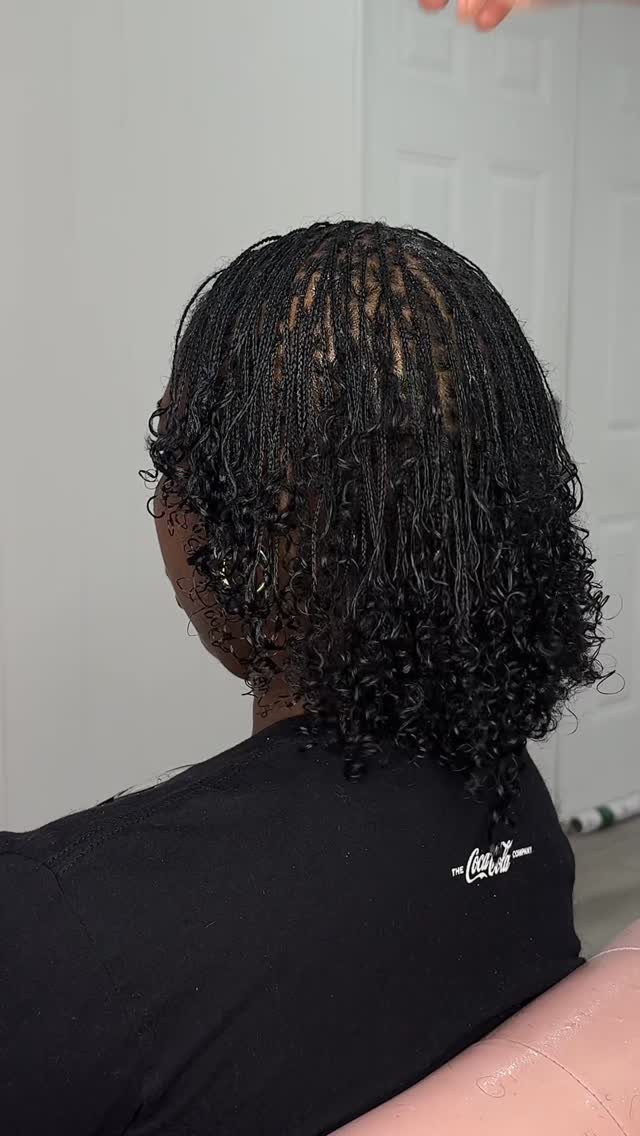
Micro braids are the finest style here, and tiny braids that end in curls give you plenty of movement without any bulk at the root.
The thin size lets the hair swing and fall like loose hair, which suits curly-haired readers who want length without a heavy feel.
Expect a long appointment, since more braids means more time in the chair.
8. Chunky Braids with Curls
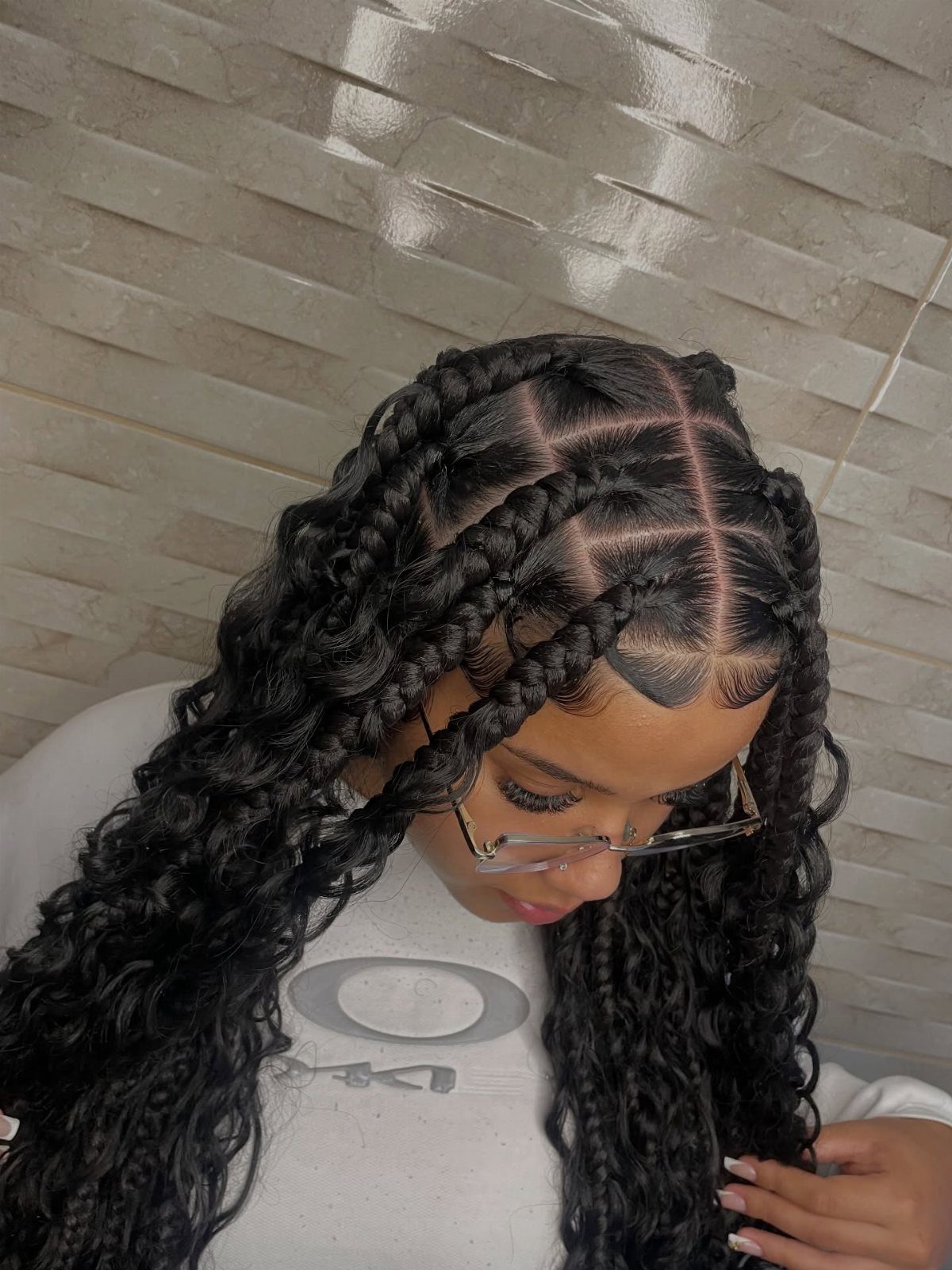
Thick, chunky braids make the curls at the tips look even fuller, because the contrast in scale does the work.
Fewer, larger braids also mean a simpler look, and that suits anyone who wants a bold style without a lot of detail.
Ask for chunky sections and for the ends to be curled, so the braids don’t stop abruptly. Chunky braids with curls beat thinner braids for a bold, statement look.
9. Cornrow Braids with Curls
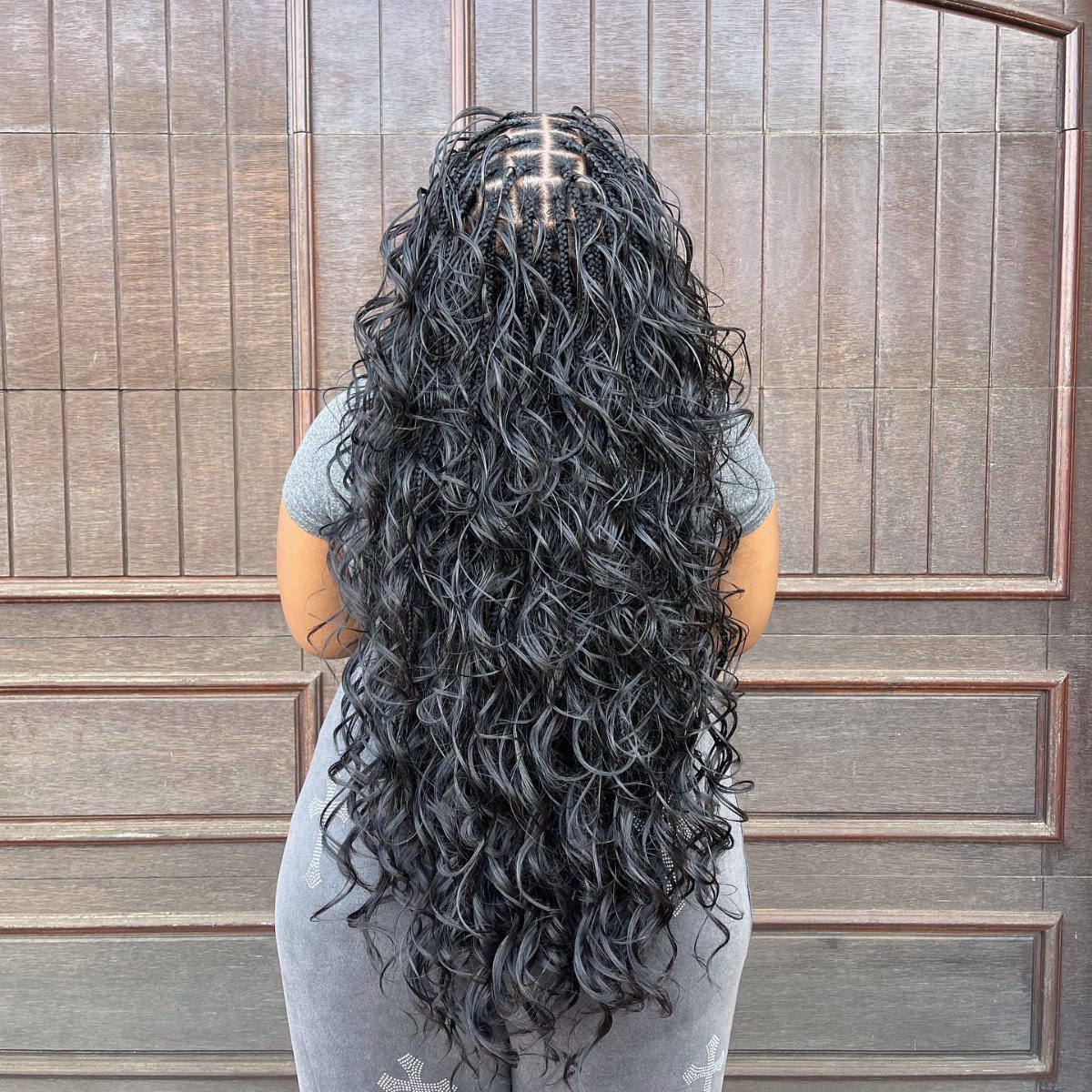
Cornrows laid close to the scalp, then released into long curls, give you precision on top and fluff below. The cleaner the parts, the more the curls look like a deliberate finish.
Bring a photo and ask for the cornrows to run straight back, ending in curls.
I like this for anyone who wants a neat base with a soft, full ending. Curls need regular moisture to stay fluffy rather than dry.
10. Braided Bun with Loose Curls
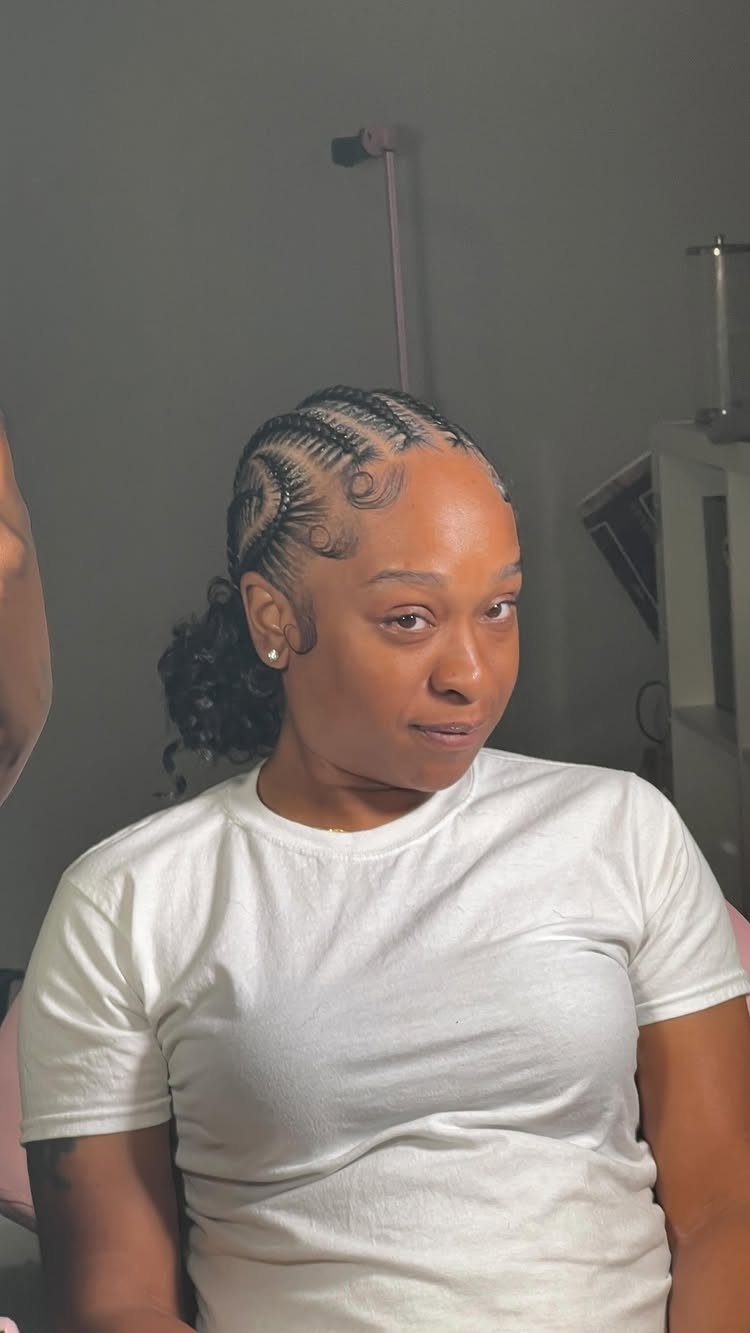
Cornrows leading back into a curly bun make a tidy style that still feels dressed up. The braids give the bun a clean foundation, and the loose curls keep it from looking stiff.
Ask your stylist to gather the cornrows at the back and leave the curls loose in the bun.
This works well when you want your hair up and off the neck, and it looks polished for an event without extra styling at home.
11. High Ponytail with Straight-Back Cornrows
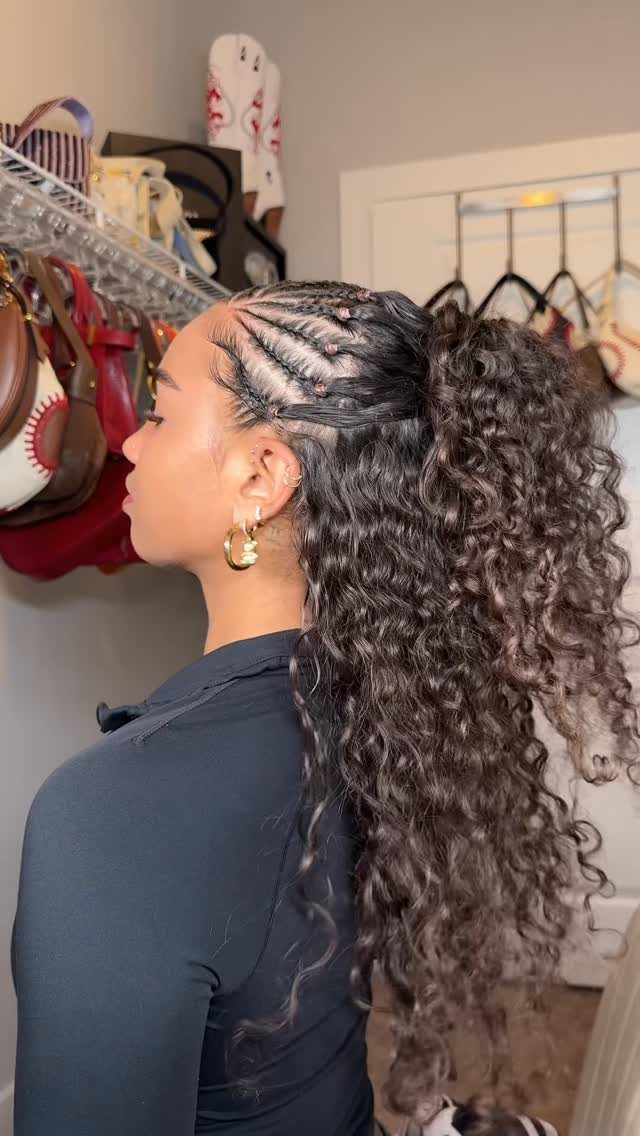
Straight-back cornrows feeding into a high ponytail put all the volume at the crown, where long curls can burst out. The braids keep the front flat and sleek, so the ponytail becomes the focus.
Ask for the cornrows to end exactly at the ponytail’s base, and for the curls to be defined. I think this is one of the easiest styles to wear daily, since there is almost nothing to restyle each morning.
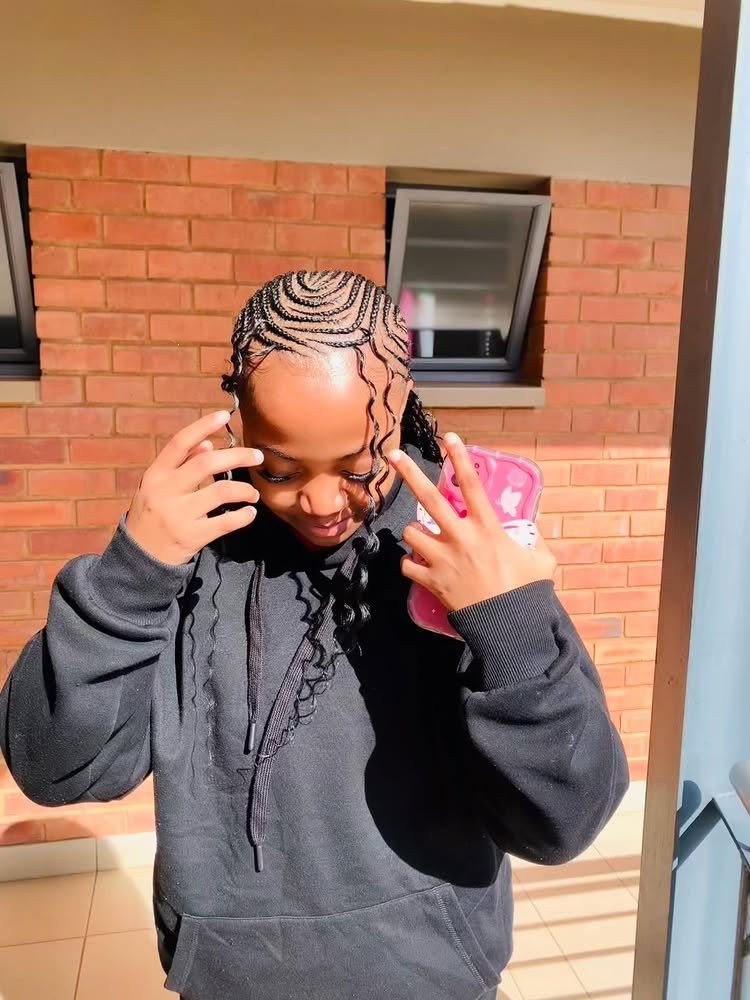
12. Side Cornrows with Voluminous Curls
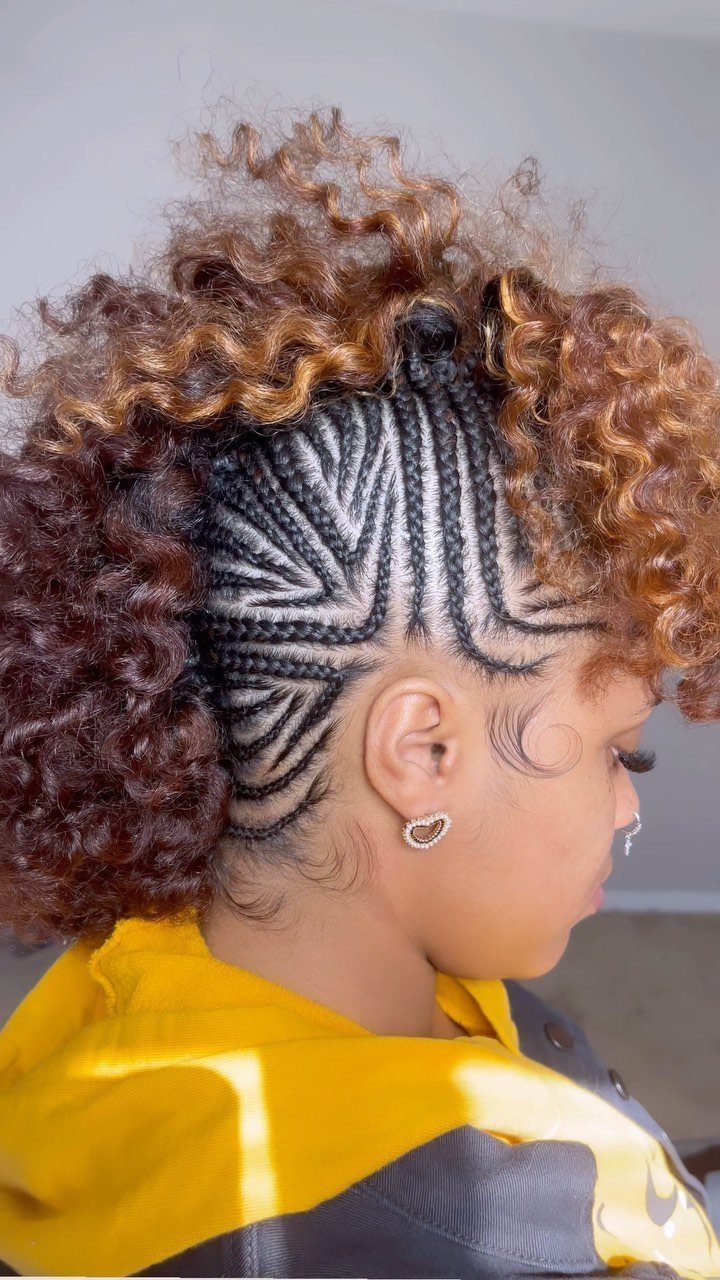
Cornrows along one side of the head, then full curls sweeping back, give you an asymmetrical look that frames the face. The curls stay loose and big, so the braided side reads as detail rather than the whole style.
Ask for the cornrows to follow the side of the head and blend into the curls.
This style is dramatic but still easy to wear down, so it suits anyone who wants impact without a fussy routine. A little leave-in conditioner or curl cream on the curls each morning keeps them full.
13. Braided Crown Flowing Into Curls
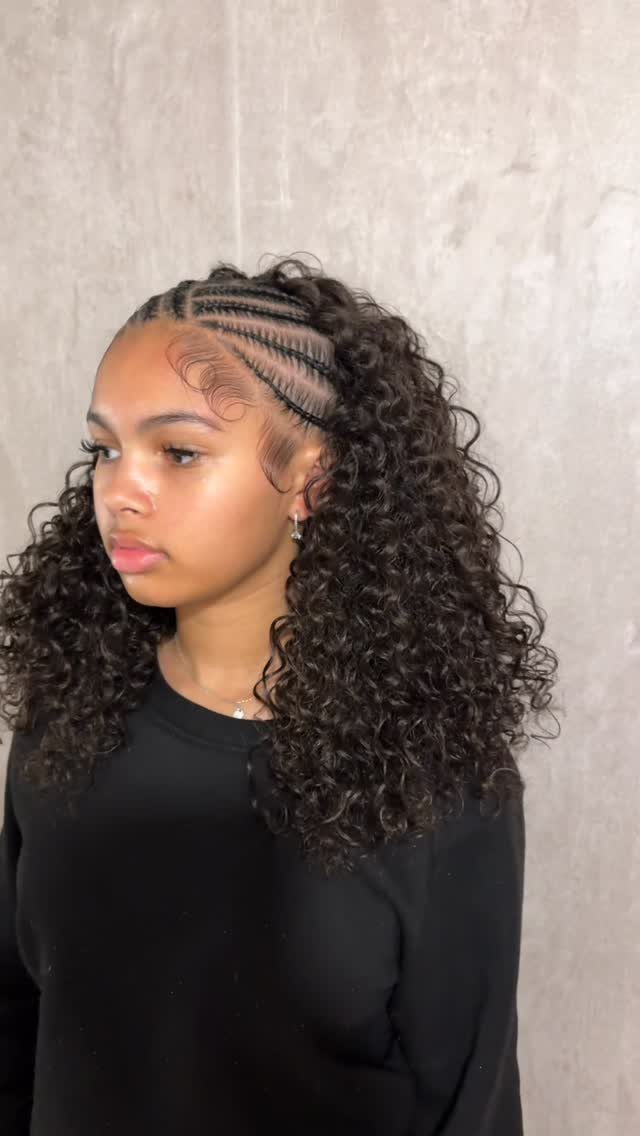
Braids that start at the forehead and crown, then open into a full fall of long curls, put the structure right where the eye lands first.
The cornrows keep the front flat and tidy, and the curls take over from there.
Ask for the braids to run back and end where the curls begin, so there is no visible gap. Define the curls before you leave the house, since they carry most of the look.
14. Straight-Back Braids with Curly Tips
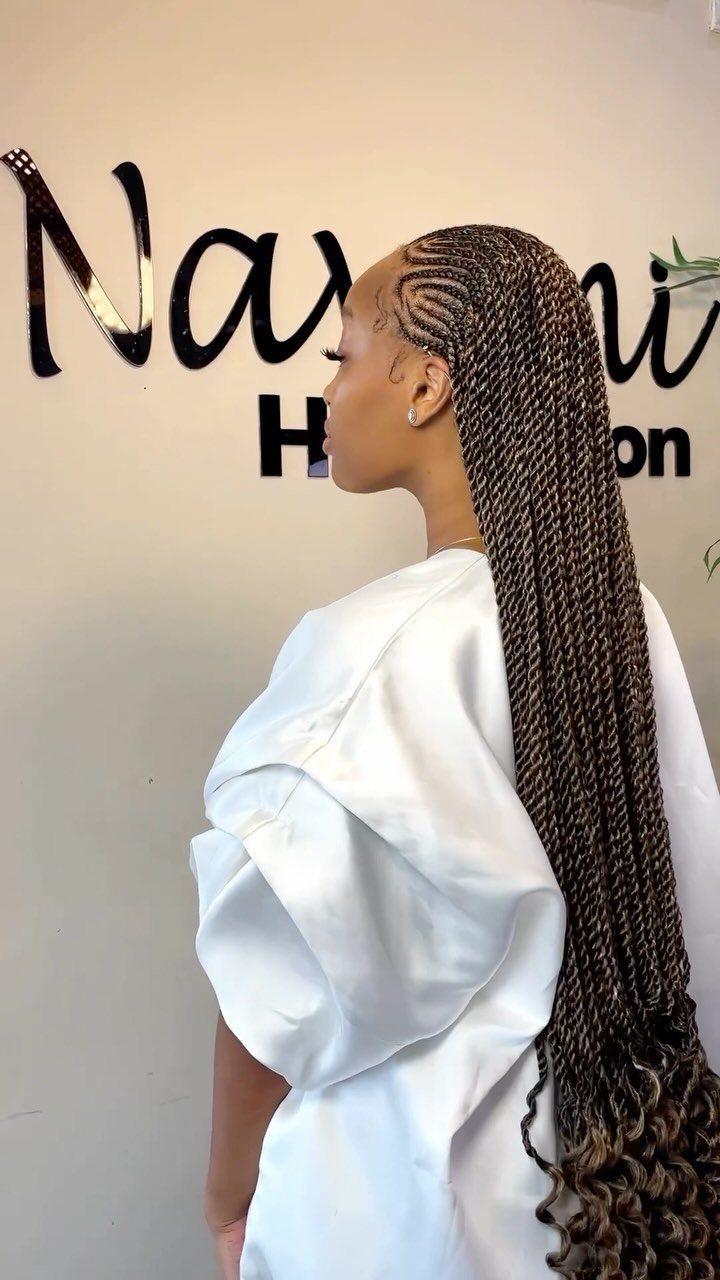
Long braids swept straight back from the hairline and finishing in tight curls read clean from the side, which is the angle this style was made for. The tight curl at the tip gives the braid a soft stop.
I would ask for the curls to be tighter than you think you want, because length pulls them looser over time. Wear it down; there is little to restyle.
15. Thick Side Braid with Cascading Curls
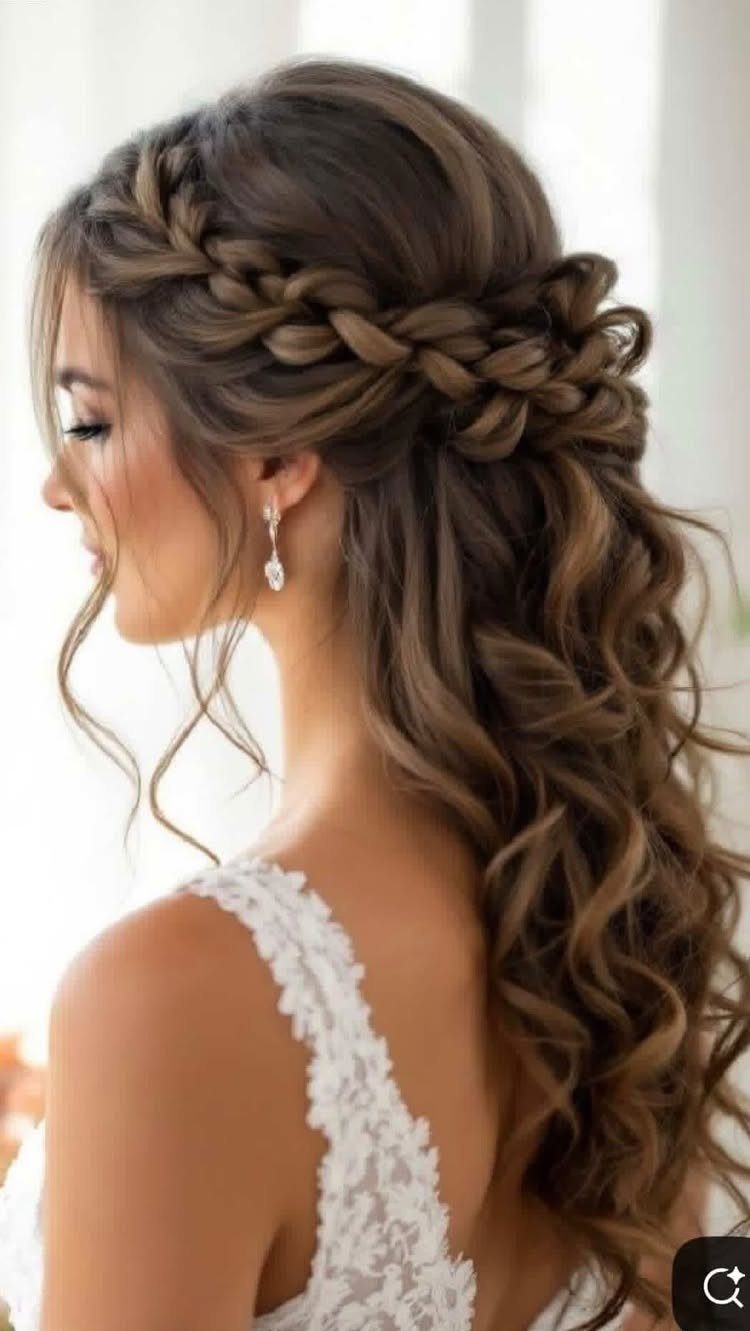
One thick braid swept back from the front, with loose curls tumbling below it, gives you a romantic look built from a single detail. Keep the braid chunky so it stands out against the curls.
Ask for it to start at the front and run back, then let the curls fall free. This suits anyone who wants a soft look for a dressy occasion, and a curl cream keeps the curls from drying out.
16. Low Curly Nape Style
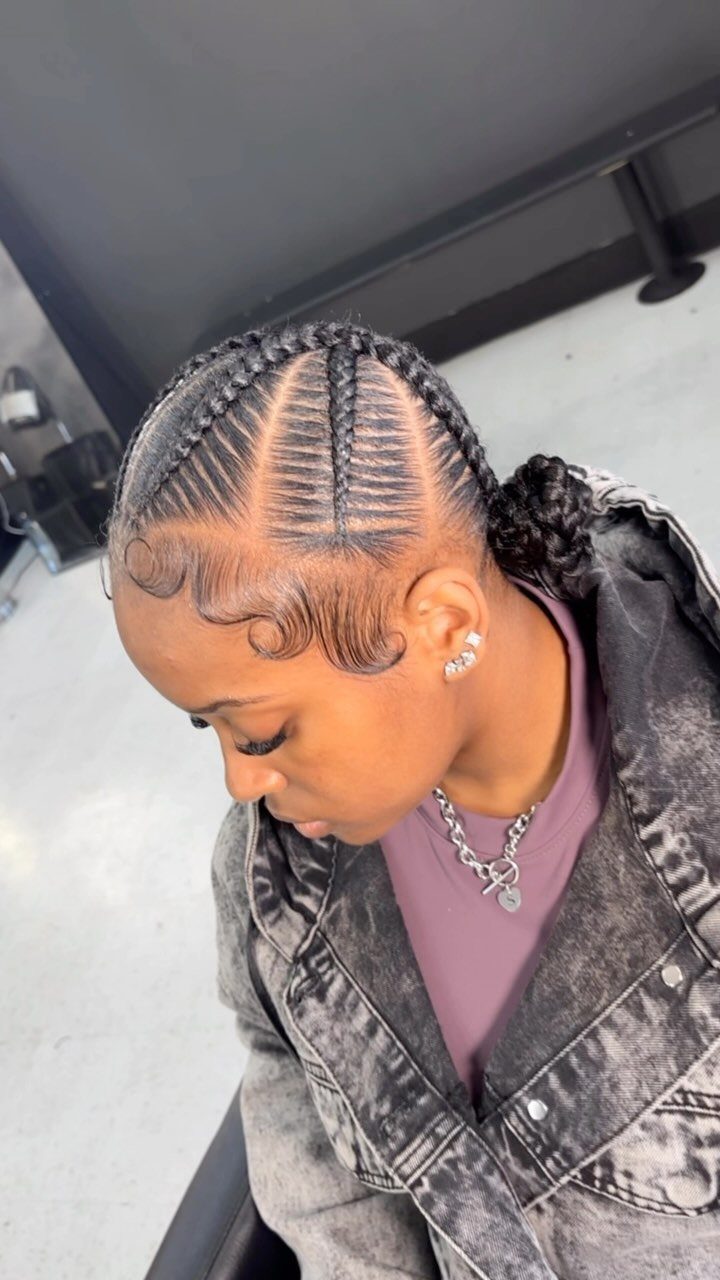
Cornrows laid straight back and gathered low into curly tendrils at the nape make a neat style that keeps hair off the face. Because the curls sit low, the braids do the visible work up top.
Show your braider a photo and ask for the cornrows to stop at the nape, so the curls below them hang free. I like this one for work or errands, since it needs almost no morning styling.
Caring for Braids and Curls
Moisture is what keeps curls and braids healthy, so work a light moisturizer into both the braids and the loose curls on a regular schedule.
Avoid styles installed too tight, because tension at the hairline is a common cause of breakage.
Tell your stylist right away if your scalp feels pulled during the install. Sections that are too small or too dense also make braids heavier than they need to be.
Plan on a wash-day rhythm to set the timeline: tighter coils that you rinse less often can hold braids longer, while fine or oily hair usually needs them out sooner.
Some sets hold up for a good while, while other hair shows damage sooner. If you see frizz building at the roots or feel your hair straining, take the braids out rather than stretching the set.
Styles that leave curly strands hanging out of the braids, with a relaxed, undone look, are the ones to watch for dryness, since those loose pieces tangle first.
Styling Tips for Curls
After the braids come out, curl-enhancing products do the most work. Apply them to damp hair to define the curls and calm frizz, and let the hair dry without constant touching.
To leave most of your curls loose and natural, 2 small braids framing the face will do it. A few clear beads slipped onto each braid add a small bit of sparkle, and it takes about a minute.
Braiding the front sections of your hair back while leaving the rest of your curls loose also keeps frizz away from your face while the rest of your curls hang free, and it works best on long hair.
Choosing the Right Braids
Match the style to how much upkeep you will realistically do. Some braids need more attention than others, so pick the one that fits your hair type and your washing routine.
For a light, natural-feeling texture, ask your braider about high-quality human hair. Choose a color, length and amount that fit your style, since mismatched synthetic hair can frizz.
Look for a stylist with experience in the exact style you want. Look through the braider’s portfolio, ask around for referrals, and bring reference photos so you can settle on thickness, length and any accessories before you sit down.
Come with hair that’s washed and fully blow-dried, since braiding goes in more smoothly on clean, detangled strands. During the install, speak up if anything feels too tight.
Frequently Asked Questions
Can curly hair be braided?
Yes, curly hair takes braids well, and leaving the ends curly is a big part of the appeal.
Cornrows, box braids, goddess braids and micro braids can all finish in loose or tight curls. The contrast between a neat braided base and full curls at the tips is what makes these styles read as intentional.
What helps curls stay in overnight?
A silk scarf or silk pillowcase protects curls while you sleep. It cuts friction, so the curls are less likely to frizz or flatten.
Add curl cream or a light mousse to the curled ends before bed, because defined curls hold the shape through the night and carry most of the look.
How to keep hair wavy after taking out braids?
Apply a curl cream or mousse to damp hair right after the braids come out.
A curl cream or a light gel on damp hair brings the wave back and keeps frizz down. Then let the hair dry without touching it constantly, because handling it breaks up the definition.