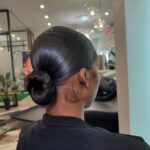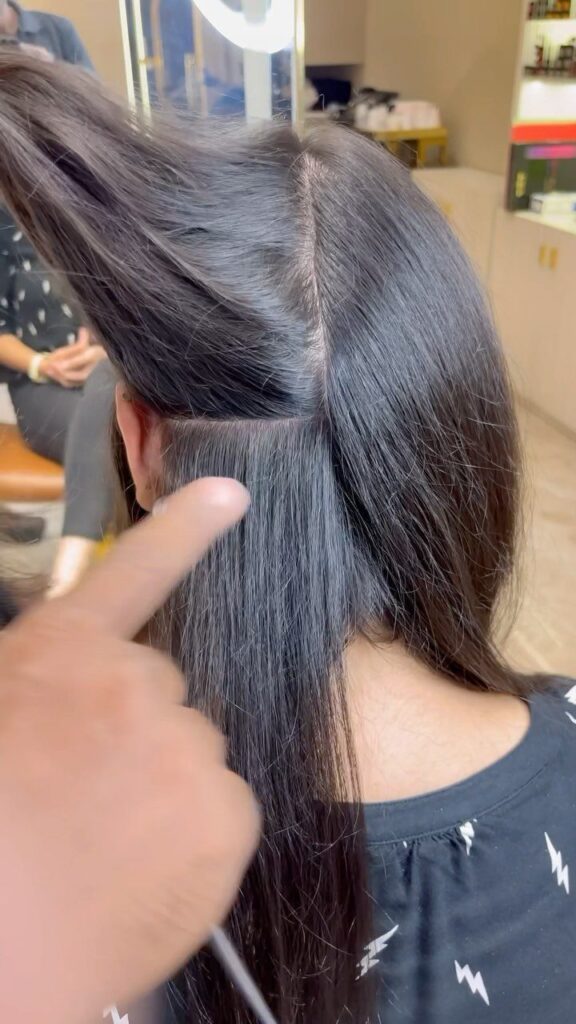
How much gray you need to cover, and how fast, decides whether brush-on dye or root powder is your method, and sectioning, product choice and upkeep follow from that.
The list runs from a brush-on dye that covers every strand and lasts through washes, to a makeup-brush root powder that hides a temple patch in about 2 minutes and comes out at your next wash.
1. Sectioning Hair
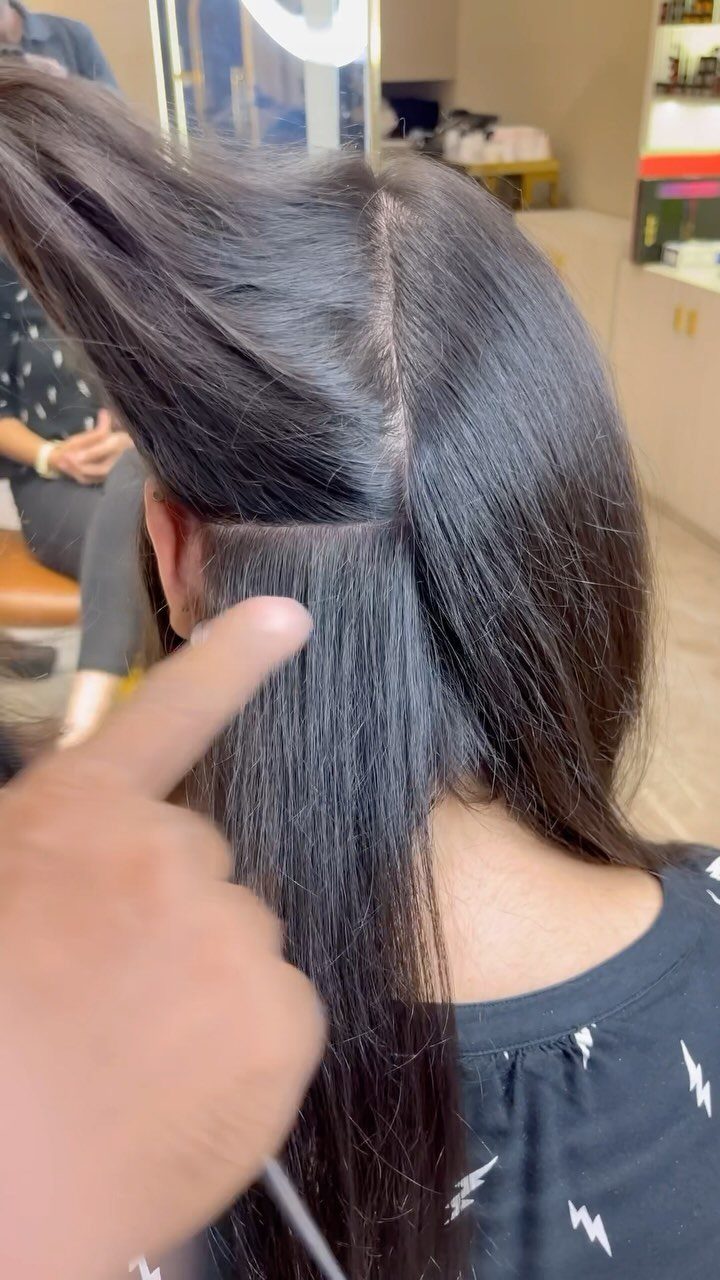
Clean parting decides whether a root touch up looks even or patchy. Sectioning splits the hair into horizontal rows, so every bit of regrowth sits in plain view instead of hiding under the layer on top.
Clip the rest of your hair out of the way and work one row at a time, from the front hairline back.
Thinner rows cost a few extra minutes, but on dark hair, where gray shows up fast, they catch the strands a quick sweep would miss.
A tail comb and 4 or more sturdy clips make the job much easier. I would take the slower, tidier method every time; the finish looks more natural.
2. Brush on Root Dye
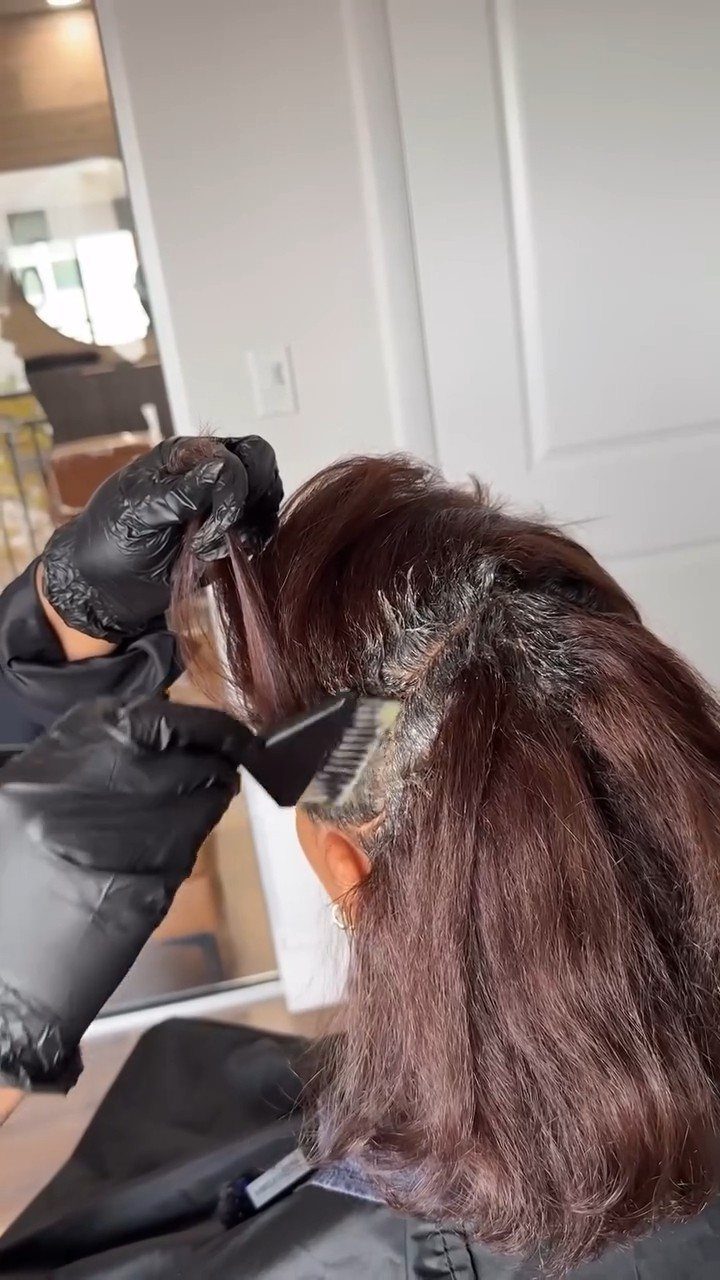
Gloves on, brush in hand: this is the most thorough way to cover gray at home, and the one I would pick if full coverage matters more than speed.
Reddish-brown shades are some of the easier ones to match at home, as long as the dye you pick sits within one shade of your current color.
Paint the dye only onto the regrowth, along the part first and then row by row, and keep it off the lengths that are already colored. Dye on old color can leave bands that look darker than the rest.
It takes longer than a spray or powder, and it means a bowl, a brush and gloves. For budget-minded readers, though, it usually costs less than a salon visit.
3. Root Powder with Makeup Brush
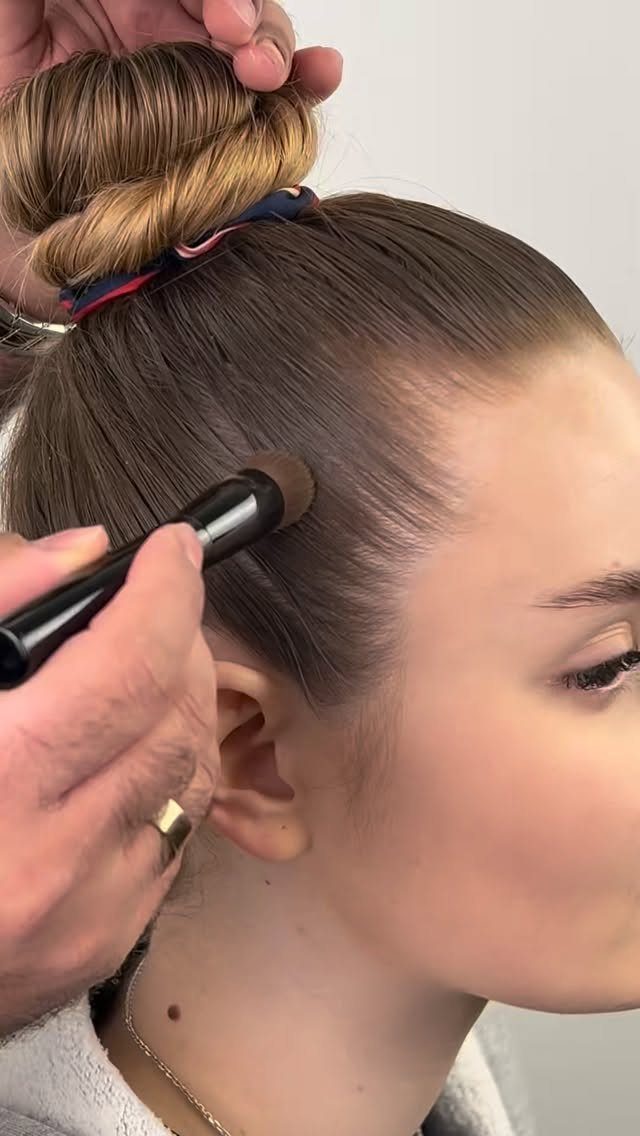
For a gray patch at the temple that shows up before a meeting, root powder is my pick.
A soft makeup brush dusts pigment onto the roots and hairline, and it blends with no mixing, no waiting and no stained hands.
Tap the excess off the brush first, then build color in light layers. A heavy hand looks flat and chalky, so stop as soon as the gray disappears.
It is temporary: the color sits on the surface and comes out at your next wash.
That makes it a bridge between full dye jobs rather than a replacement for them. A shade that matches your hair, or sits a touch lighter, looks the most believable.
Advice on Choosing Products
Shade comes first, and it is the hardest part to get right. Your usual colorist is the best person to ask, and that doesn’t have to mean a salon visit: some colorists offer video consultations to help you pick.
Once you’ve settled on a shade, pick the format by how much product you’re comfortable putting on your scalp and strands. Sprays put down the heaviest layer, shakers land somewhere in the middle, and a brush-on wand deposits the least.
I save the spray for the part line and for roots farther back from the face, because it drifts and can leave a hazy edge near the hairline.
For thinning areas, a shaker is a good fit. For a receding hairline, a powder with a brush gives more control.
Speed matters too. A pressed powder or spray covers gray in about 2 minutes, which makes it my pick for a rushed morning, but only a true dye covers every strand fully and lasts through washes.
If you have highlights, choose a shade that matches the overall tone of your hair, not just the darkest strands. Blending 2 shades is also an option, and it lets you rebuild the light and dark dimension that real roots have.
Maintenance Tips
Because a root touch-up leaves the lengths alone, they skip another round of full-head color, so shine and texture hold up much better over time.
The color goes on the new growth alone, and that is why the lengths don’t take on needless chemicals.
It also saves time and money. You keep a steady shade without paying for or sitting through a full dye job every time.
If you can’t tell whether your hair needs a root touch up or a full color, ask your colorist before you buy anything.
Send a photo of your roots and lengths in natural light, and you will get a straight answer on which one fits.
The permanent root touch-up kit contains everything you need to ace your at-home coloring refresh, including dye (which is available in a whopping 33 shades), developer, and even color-block gel to protect the skin around your hairline.
— Allure
Frequently Asked Questions
What is the best root touch up for gray hair?
Only a permanent or demi-permanent brush-on dye reaches every strand, and it holds up through shampooing, so it’s the one I’d pick for full gray coverage.
For stubborn grays I’d skip the powders and reach for a permanent or demi-permanent brush-on kit, and keep a L’Oréal Paris Magic Root Precision Pen around for a handful of stray strands.
How often should you touch up roots?
Most colorists say every 4–6 weeks, depending on how fast your hair grows.
Touch-ups cover only the new growth, so they keep the color balanced between full dye jobs. Fast-growing dark hair with gray tends to show regrowth sooner.
How to use L’Oréal root touch up dye?
Use a fine-tip pen to dab small areas of gray, or a spray for larger sections, and blend the product into your existing color. A pen brushes onto individual gray strands and lasts until your next shampoo.