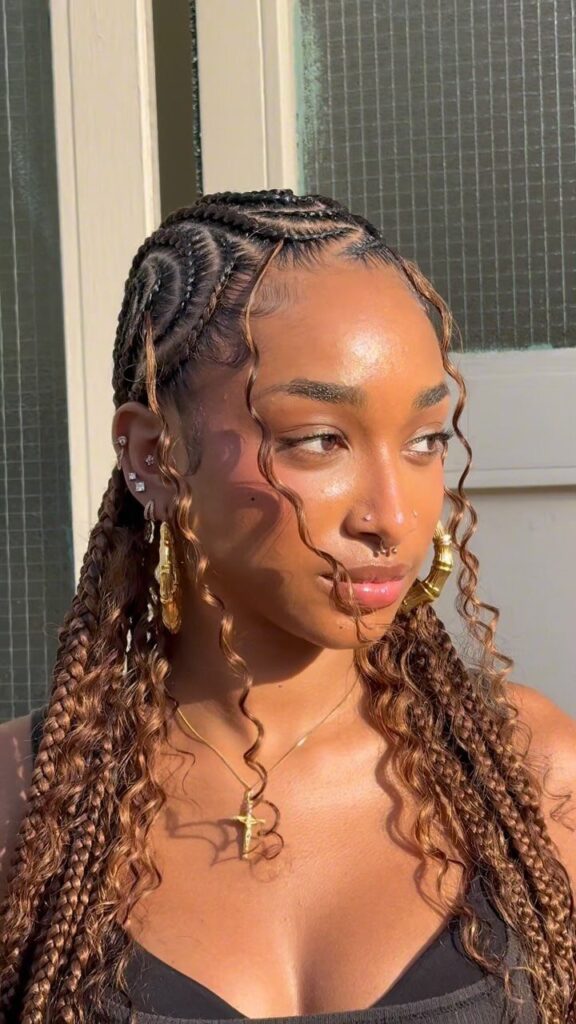
Which of these 6 fits depends on how your hair is doing right now, because braid tension decides whether a protective style helps or hurts, and a snug hold beats a sharp part every time.
The range runs from classic cornrows that continue straight into box braids to curved parting, twisted lengths, curly ends, a few gold beads or a low bun.
Synthetic extensions fed into the cornrows add length and volume, while braiding with just the hair that grows from your scalp makes a lighter, minimal base.
1. Creative Braid Patterns
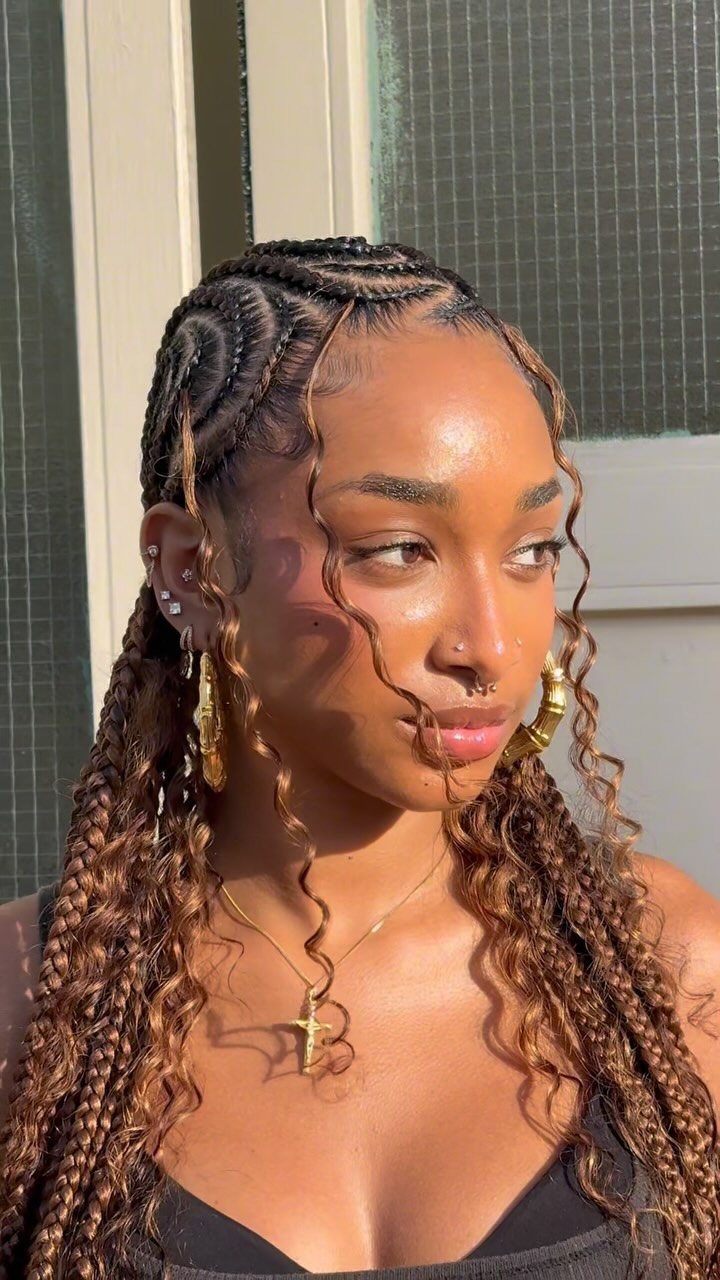
Curved parting is what turns a standard cornrow-to-box-braid set into something people ask about. The scalp lines sweep in arcs instead of running straight back, and the braids hang long and brown below them.
Ask your braider for the curve by name, since a freehand pattern depends entirely on the stylist’s hand, and a saved reference image makes that request much easier to follow.
2. Cornrows to Curly Box Braids
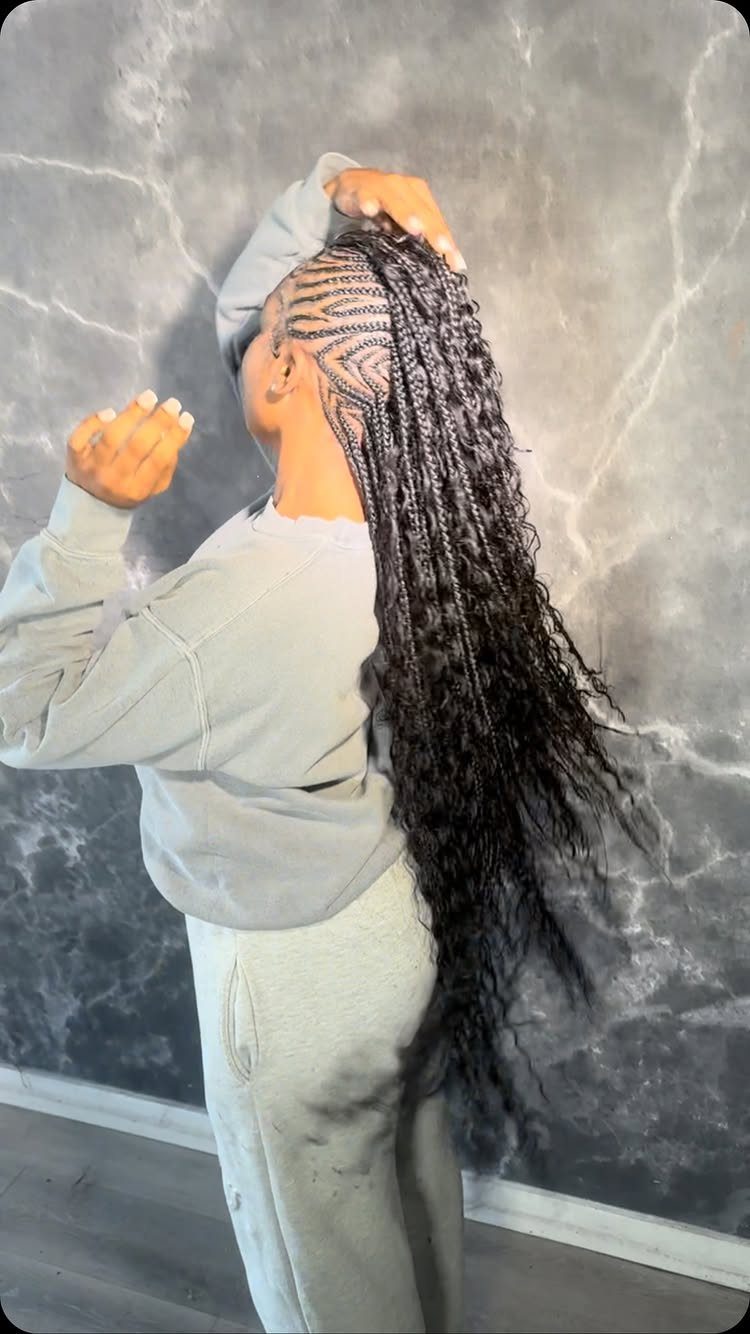
Long dark cornrows run along the scalp, then release into individual box braids that end in loose curls. I like this version for anyone who wants the neatness of cornrows up top and some softness at the ends.
Ask for the curly finish specifically, because it changes how the braids hang and move. Curly ends also tend to look fuller at the bottom than a blunt braid tip.
3. Classic Cornrows Into Box Braids
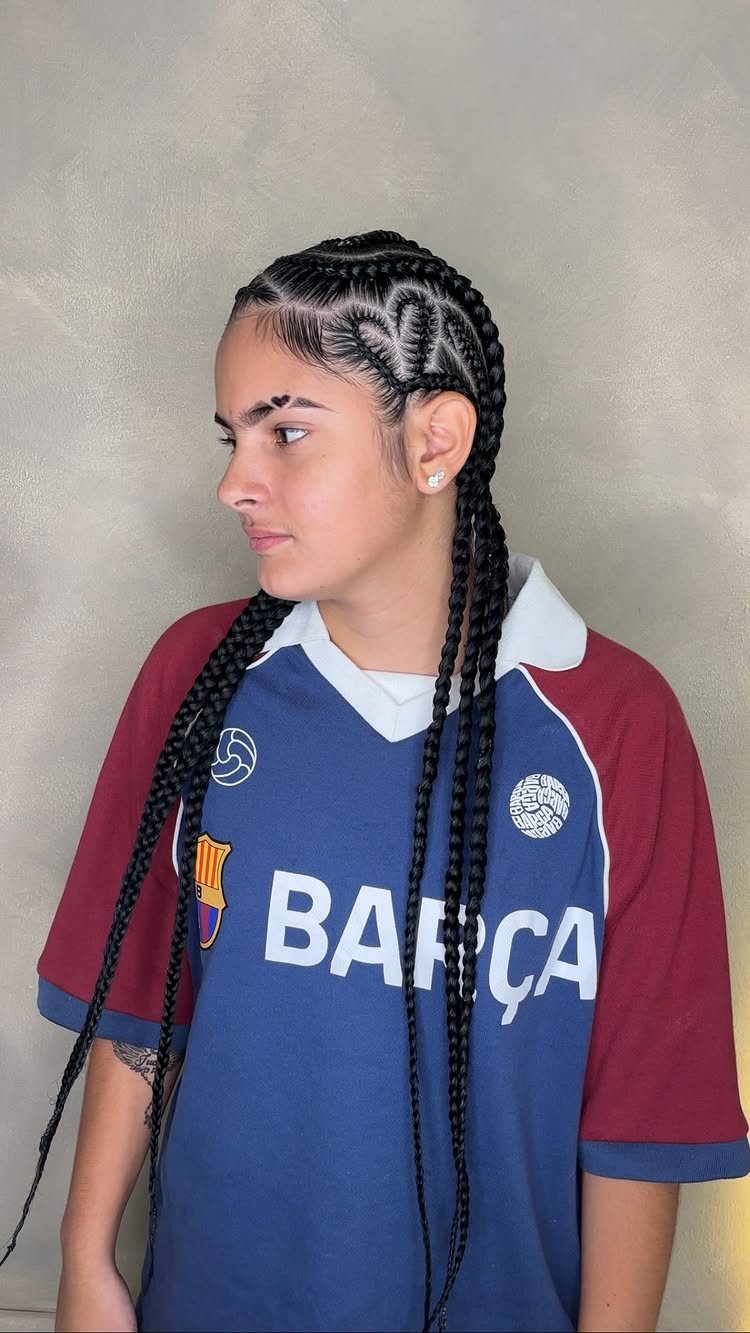
Tight, even cornrows at the scalp that continue straight into hanging box braids: this is the version to ask for if you are new to the style. Nothing fancy is going on, and that is why it works.
Point out exactly where you want the cornrow to stop and the box braid to begin. A clean handoff, with no visible bump at the join, is what separates a good install from an average one.
4. Cornrows Into Twisted Braids
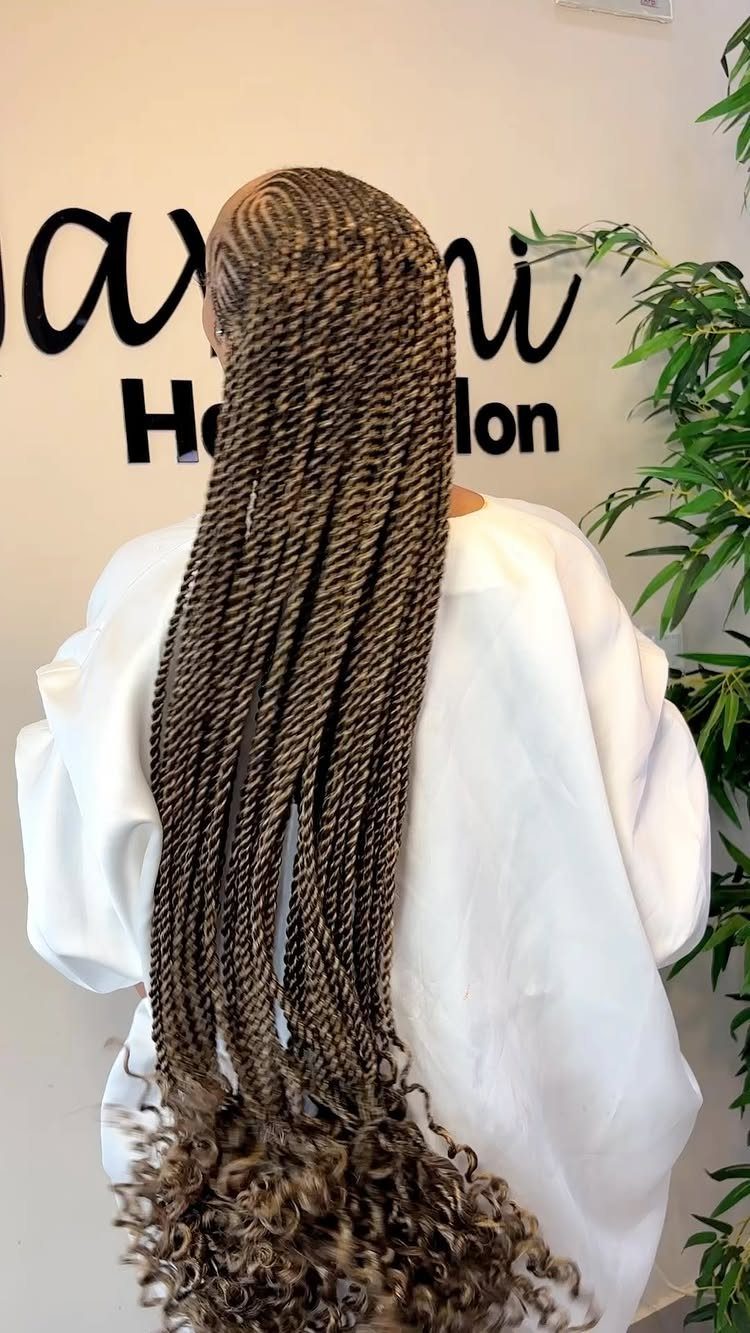
Twists swap the rounded look of a box braid for a rope-like texture, and here they hang long from brown cornrows. Two-strand twists give a slightly more dimensional line than a plain braid does.
If you cannot decide between the two, this is my pick for a change of pace while keeping the same cornrow base.
Tell your stylist you want twisted lengths, not braided ones, so there is no mix-up once you are in the chair.
5. Gold Bead Accents
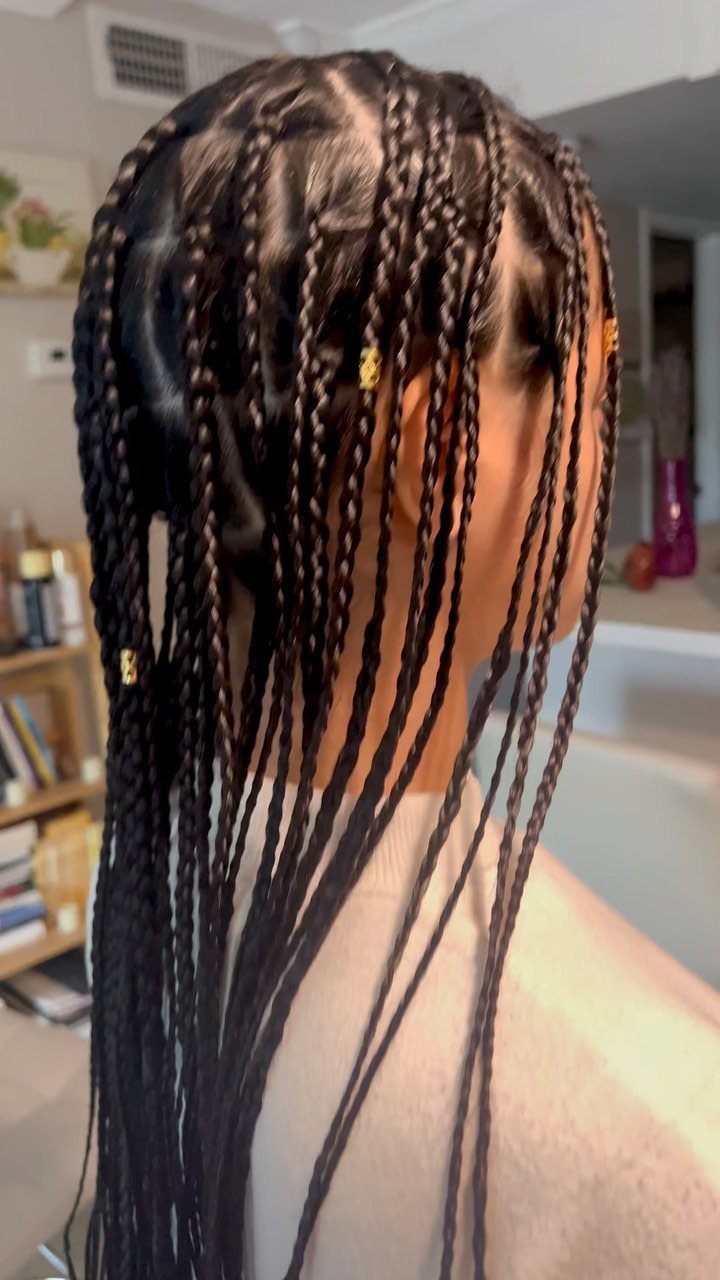
Small gold beads threaded onto long black box braids add shine without changing the shape of the style. The cornrows stay clean at the scalp, and the beads sit lower where they catch light.
Keep them sparse.
A few beads on select braids read as an accent, while a full set can look busy. Ask your braider to place them, since spacing matters more than quantity.
6. Low Bun with Curved Parts
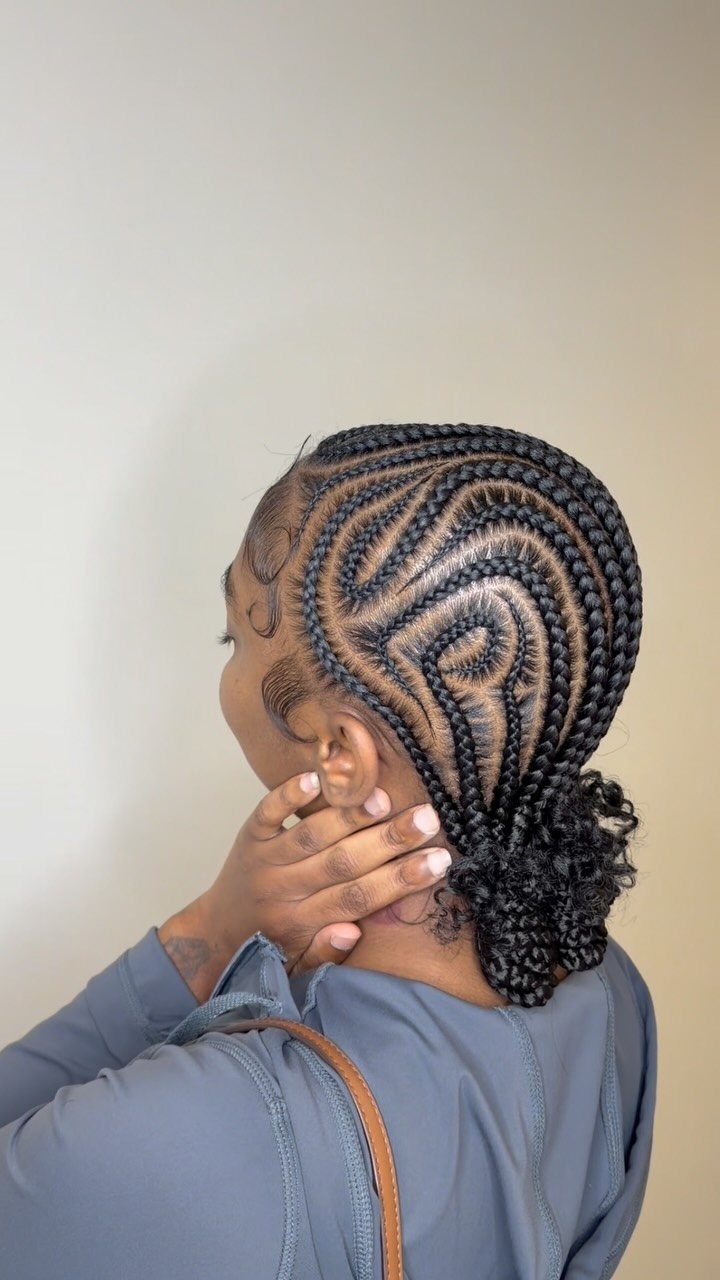
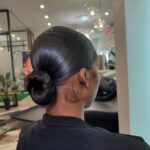
Gathering the box braids into a low bun at the nape keeps the length off your shoulders and shows off the curved cornrows on top.
A low bun with curved parts is the tidiest option for work, the gym or hot days.
Use a soft elastic or a wrap so the braids are not pulled tight against the neck. Let the curved parts stay the focus, and skip heavy accessories that would compete with them.
Hair Growth and Protection
Braid tension decides whether this style helps your hair or hurts it.
Both cornrows and box braids work as protective styles, since they keep your strands away from heat tools and daily friction, but only when the install is done right.
Tell your braider at the start that you want a snug hold, not a tight one.
If your scalp stings, your edges look pulled, or you see small bumps at the roots, ask for those braids to be redone that day.
Well-installed and well-kept braids can support hair growth. Overly tight ones can damage the hair instead, so comfort in the chair matters more than how sharp the parts look.
Choosing Hair Material
The braiding hair you pick sets both how the finished style looks and how well it blends with the roots and lengths underneath.
Natural hair blends more smoothly into the braid. Synthetic hair gives you more options for length and volume, and a good-quality synthetic holds up well against humidity.
Synthetic extensions also add length, volume, or color variation without needing braiding tensioners, which helps keep the install lighter.
The cornrow section works on your own hair alone if you want a minimal, low-maintenance base.
Want more length or drama? Ask the braider to feed synthetic extensions into the cornrows as well.
I’d pick based on the look you want and how your hair is doing right now. Whichever you choose, plan to care for it as you would any braided style.
Frequently Asked Questions
Are box braids healthier than cornrows?
Neither one wins on health; tension and upkeep decide it.
Neither style is automatically safer: cornrows and box braids both keep hair off heat tools and out of daily friction, and both depend on an install that feels snug rather than pulled.
Stinging, tugged-looking edges, or little bumps along the roots all mean the tension is too high, so ask for a redo the same day instead of waiting it out.
Can I get cornrows on top and box braids in the back?
Yes, and it is the whole idea behind this style. Point to the exact spot on your head where the cornrow should end and the hanging braid should start, and a good braider can make that join lie flat.