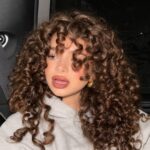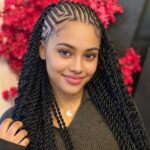
Curl pattern decides which of these fits you faster than length, face shape or budget: tighter curls hold up in voluminous shapes and wash-and-gos, while looser curls suit beachy, boho cuts.
The list covers a lot of ground, from a quick high curly ponytail to cornrows with a curly ponytail that take real time in the chair, and from a textured pixie cut that needs regular trims to natural curls you simply leave alone.
Nearly every cut here asks for the same thing, though: have it shaped dry, curl by curl, so shrinkage doesn’t surprise you.
1. Curly Bangs
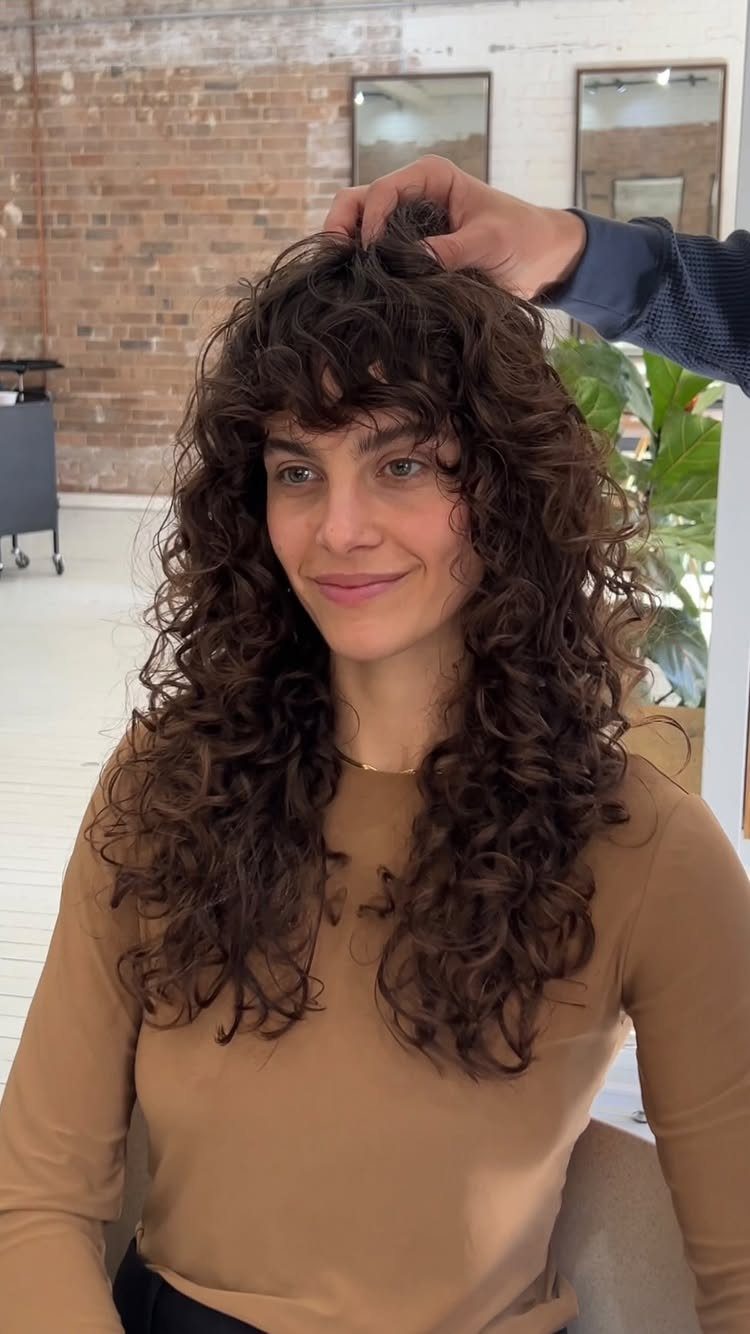
Cut dry, curl by curl, is how I would ask for them.
Curls spring up once they dry, so bangs trimmed wet end up shorter than planned, and a stylist who sees the hair in its natural shape can place the length where you want it.
Long hair with curly bangs gives the face a soft frame without losing length. Ask for the bangs to blend into the sides rather than sit as a blunt block.
Expect a trim between full cuts to keep them from drifting into your eyes.
2. Curly Shag
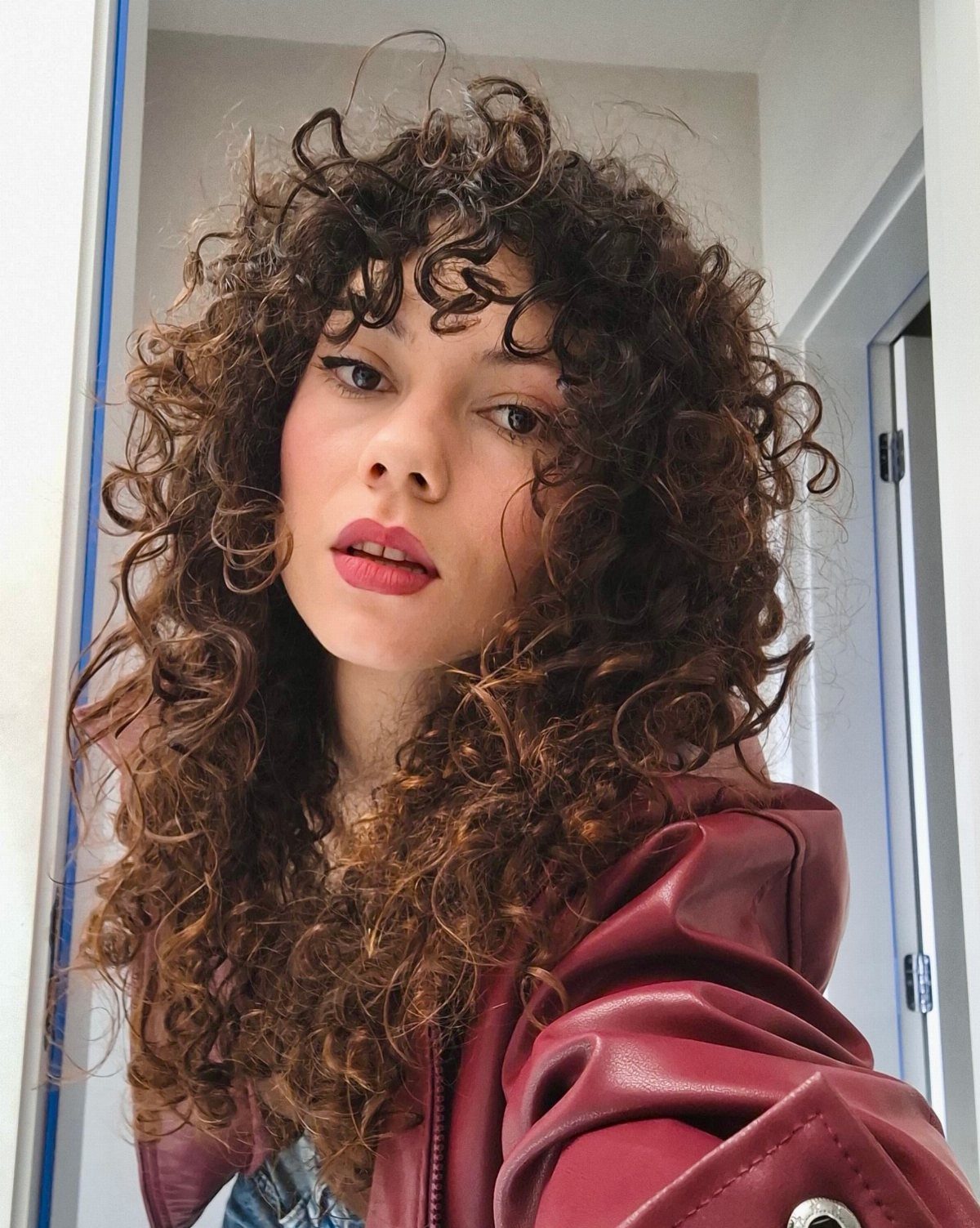
Movement is the whole reason to pick a shag. Choppy layers let each curl sit at its own height, so the shape stops stacking into a triangle, and the bangs tie the top layers into the face.
Bring the photo and ask for a shag cut for curls, with layers worked in around the crown. I would wear it with a light curl cream and air-dry or diffuse.
The trade-off: the layers need regular shaping to hold their outline, and a too-short top can puff out.
3. Half-Up Half-Down
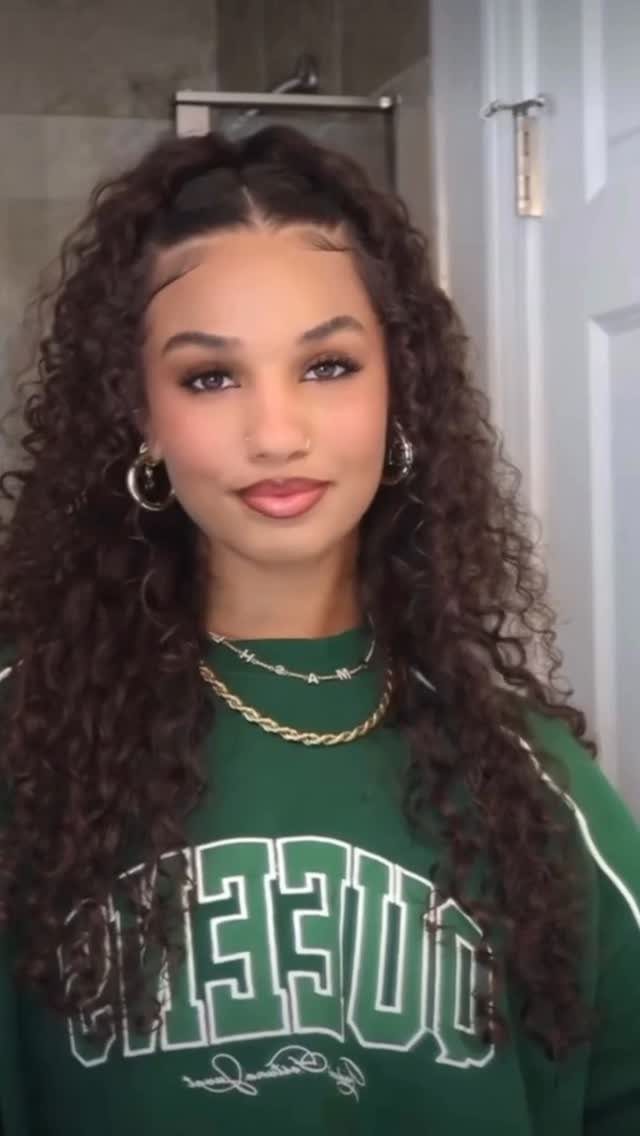
Pulling back only the crown section keeps curls off your face while the length stays loose, which is why this style has outlasted most trends. Use a soft clip or an elastic that will not snag.
Gather the hair from temple to temple, secure it at the crown, and leave the rest alone. A little height at the crown looks better than a flat, tight pull.
It works on nearly any length, and it hides a day-two hair mood without any work.
4. Long Layers
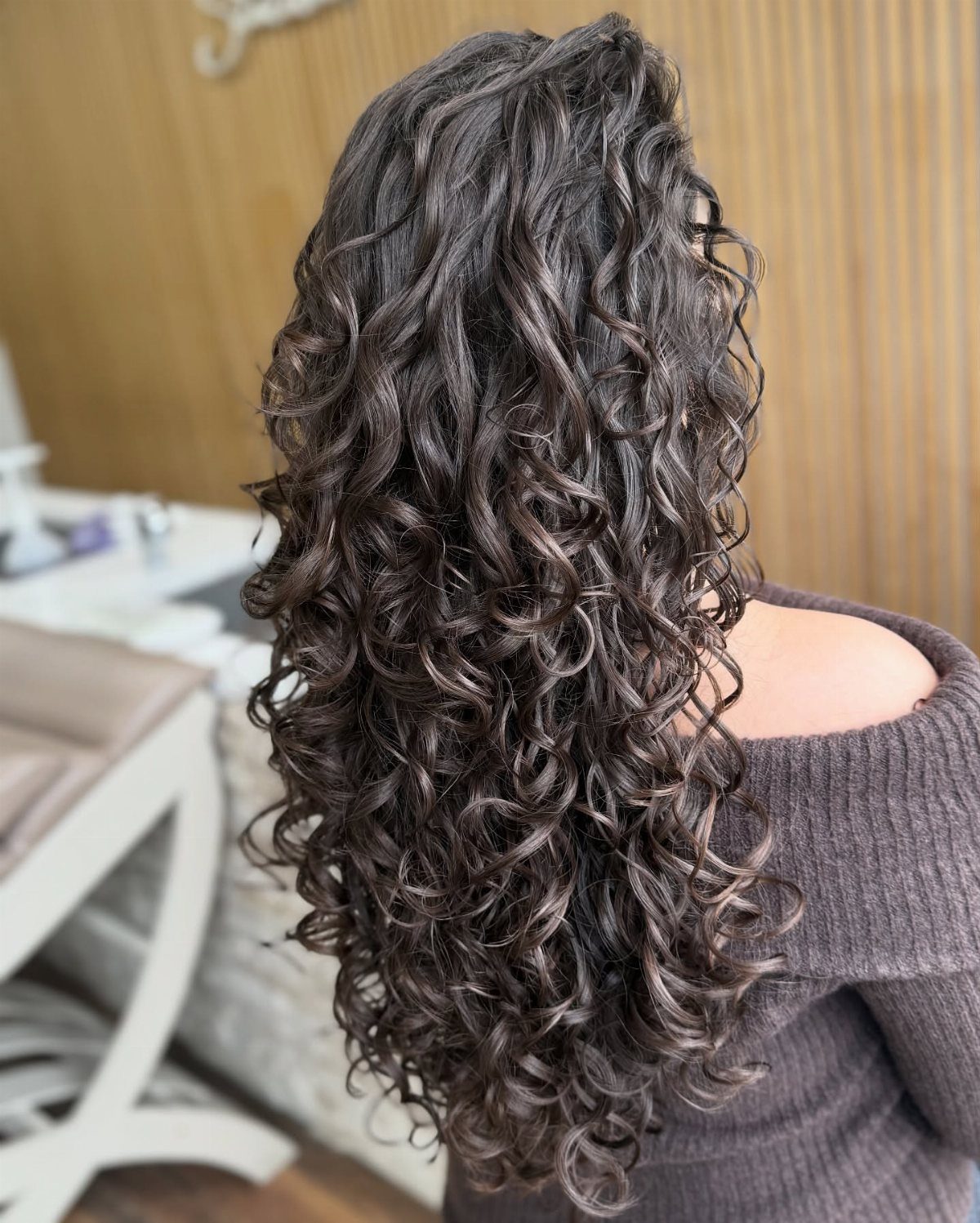
Thick curls get heavy at the bottom, and layers are the quickest fix. Cutting shorter pieces through the interior lets the weight lift, so the hair swings instead of hanging in one dense block.
I would ask for long layers rather than short ones, so you keep length while losing bulk. Have them cut with the curls dry and in their natural pattern.
Skip heavy layering if your ends are fine or thin; too many can leave the bottom looking sparse.
5. Textured Pixie Cut
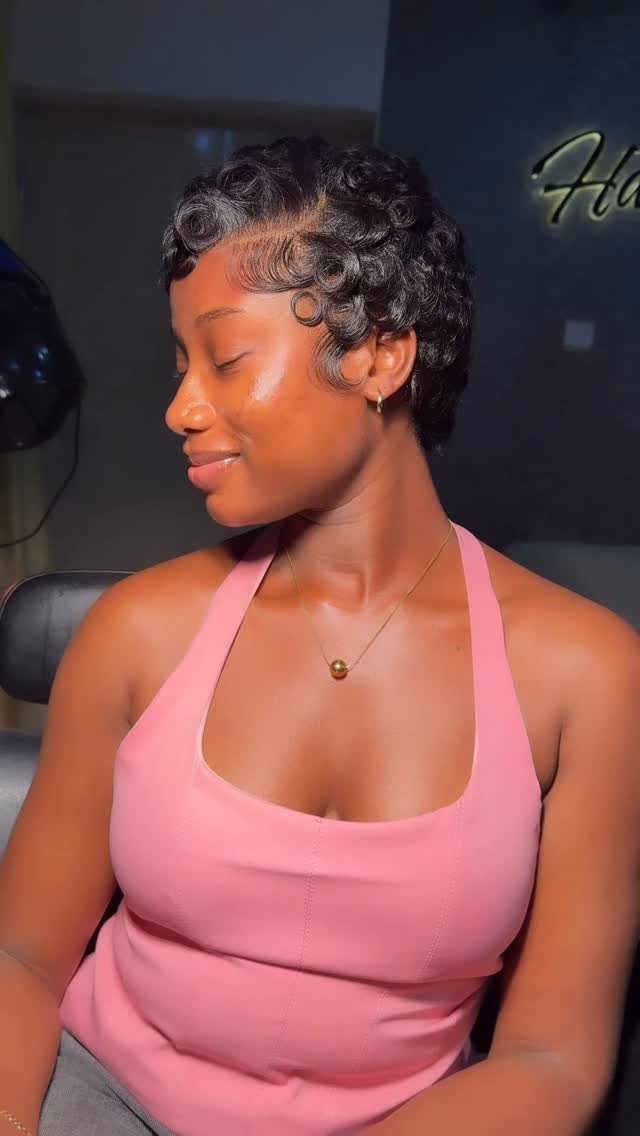
Leave length on top and taper the sides: that single instruction defines this cut. The curls up top stay soft and defined while the short sides keep the outline sharp and the face open.
Have the top cut with your curl pattern in mind, so the length falls where it springs. Define with a light gel or cream and let it dry undisturbed.
Plan on frequent trims to keep the sides clean. Growing it out takes patience, since the top and sides lengthen at different speeds.
6. Curly Bob
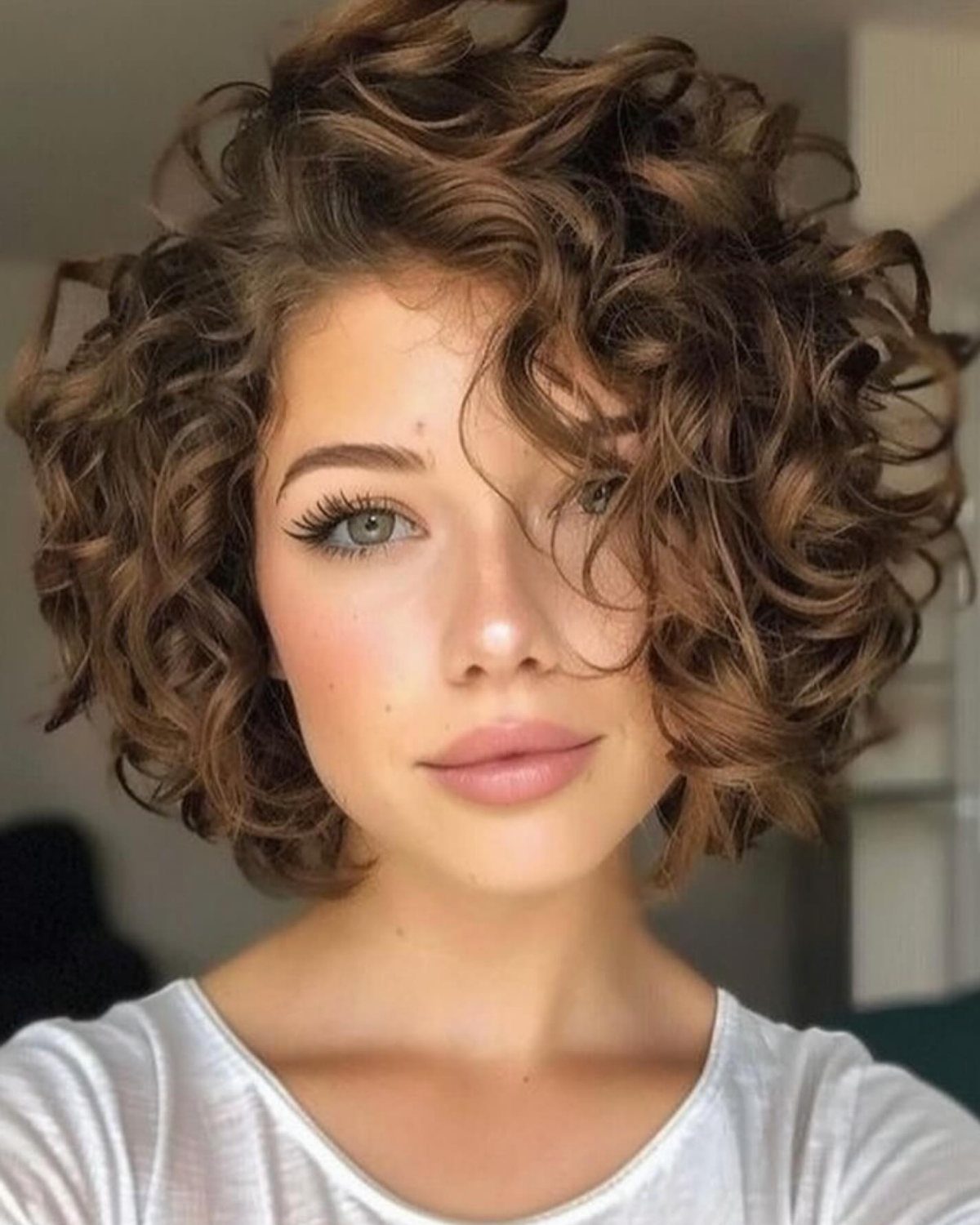
A bob is where curls get a chance to show off shape, because short hair lets the spiral pattern stand out instead of stretching under its own weight.
It is voluminous by nature, so the cut matters more than any product.
Ask for it shaped dry, with the stylist rounding the outline curl by curl. Cutting it too short is the usual mistake, since curls shrink up as they dry.
Mornings are quick: apply product to damp hair, scrunch, and let it dry.
7. Braided Updo
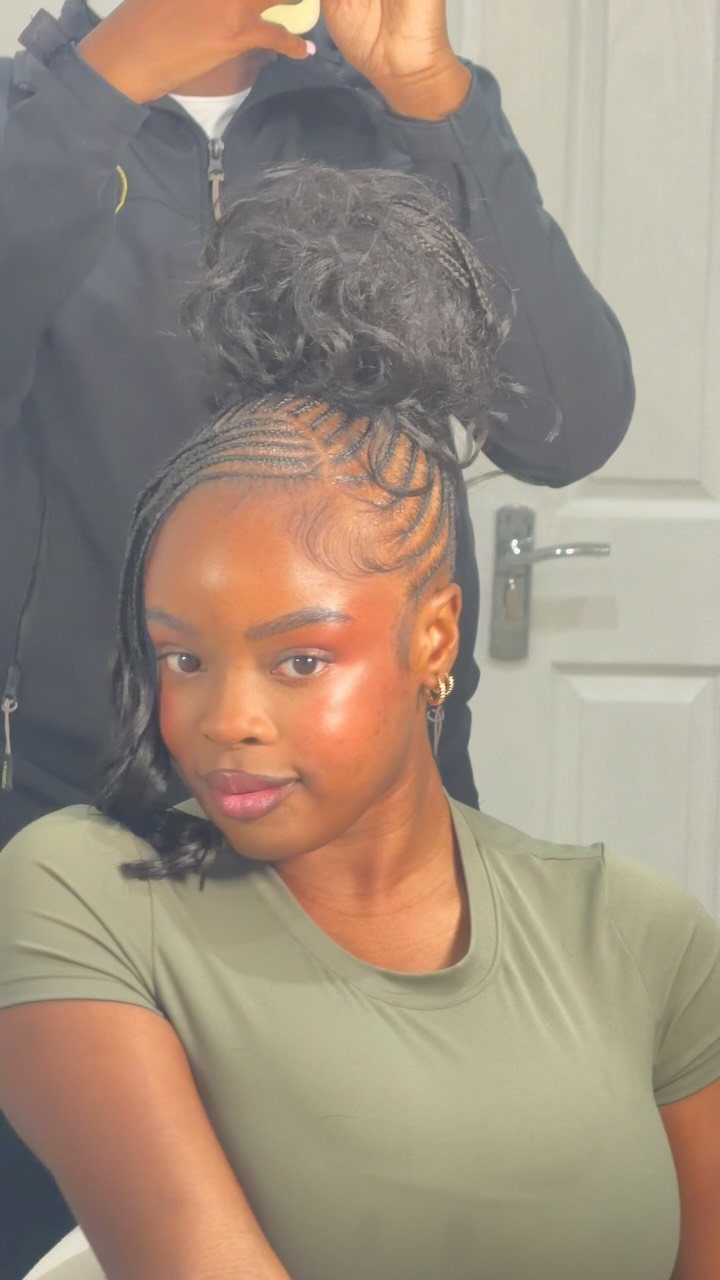
Braids that feed into a high curly bun give you structure and softness in one style, and the loose tendrils around the face keep it from looking stiff. I would save this one for weddings, dinners and photos.
Braid first, then gather everything into the bun and pull a few curls free at the front. Expect it to take longer than a ponytail, so book a stylist or practice the braids once before the day.
8. Natural Curls
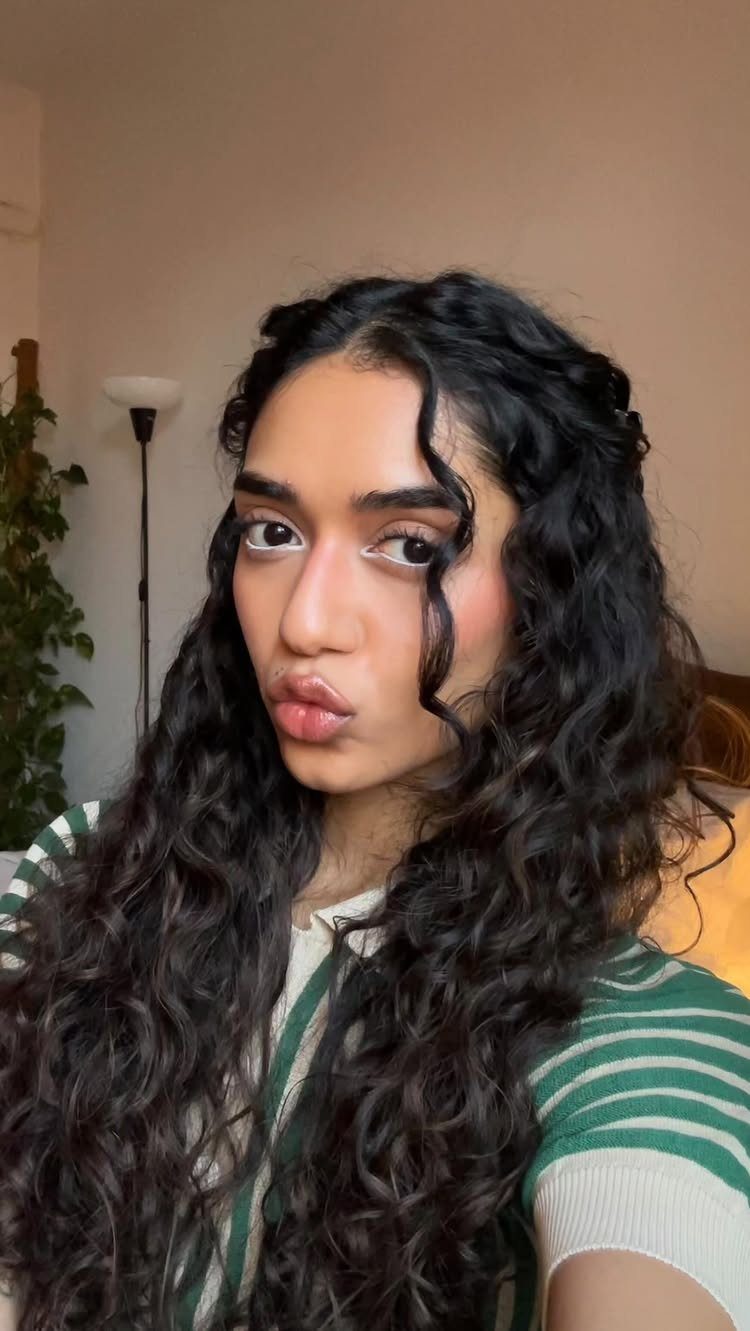
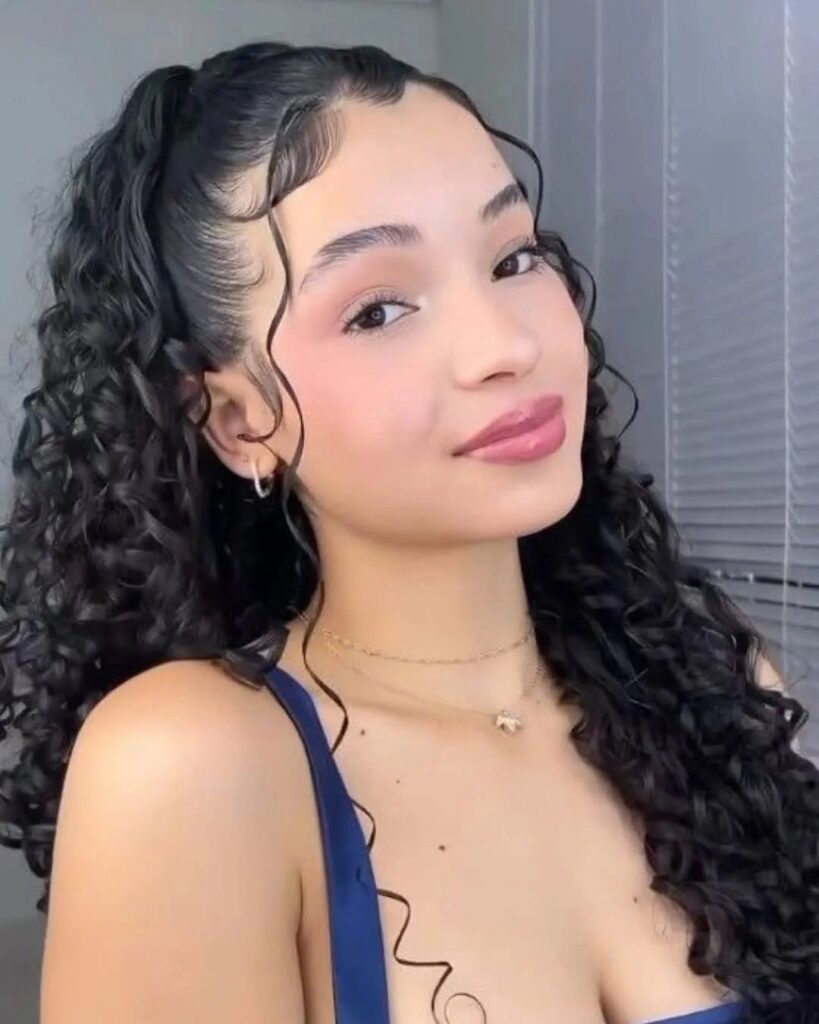
Wearing your curls as they grow, parted in the middle with the top pulled half back, takes almost no effort, and I’d call it the easiest curly style to live with.
A middle part splits the weight evenly, so long curls fall on both sides of the face.
Work product through damp hair, scrunch upward once, and then keep your hands out of it until it dries. Touching curls mid-dry breaks up the pattern and adds frizz.
Pinning the top back also keeps the hair out of your face all day.
9. Cornrows with Curly Ponytail
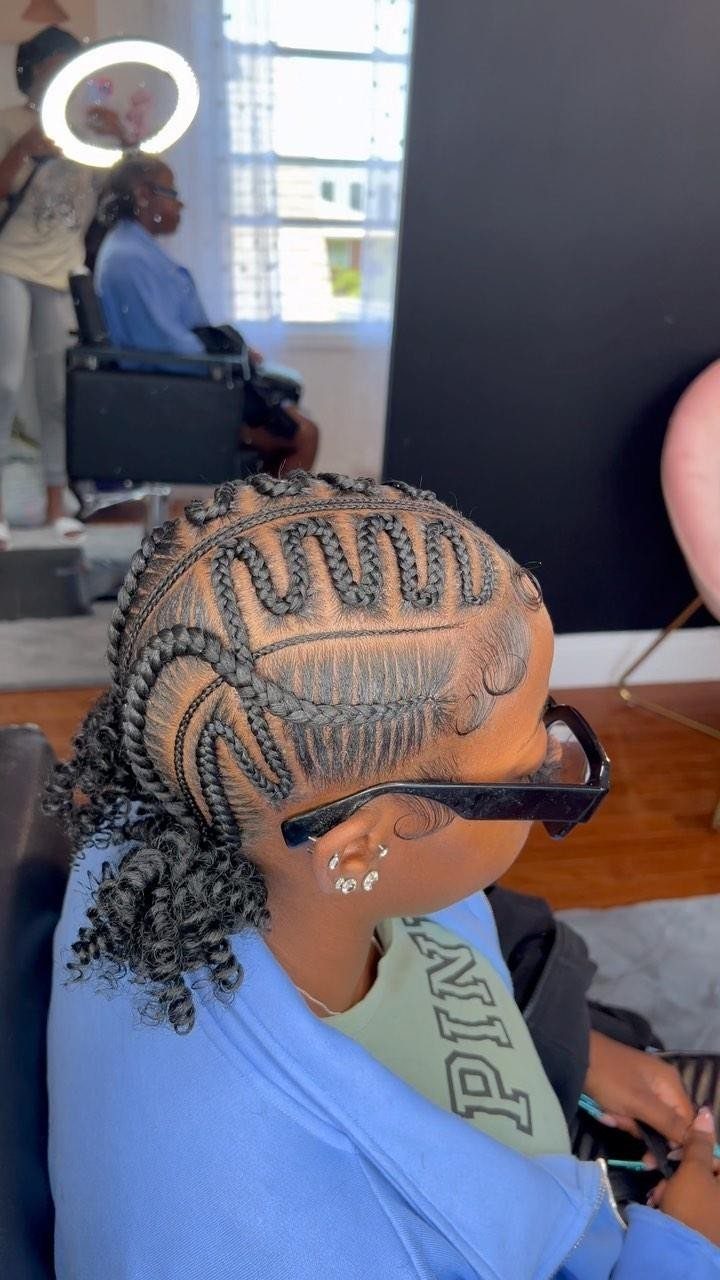
Wavy cornrows that run back into a curly ponytail at the nape pair a flat, graphic top with a full, soft finish. I like that the braids stay put while the curls get all the volume.
Bring the photo and ask for the cornrows to be done in a wavy pattern, not straight lines, with the ponytail left as your natural curl. Allow plenty of time in the chair, since detailed braiding is slow.
A low placement keeps the style easy to wear with sunglasses or a hat.
10. High Curly Updo with Tendrils
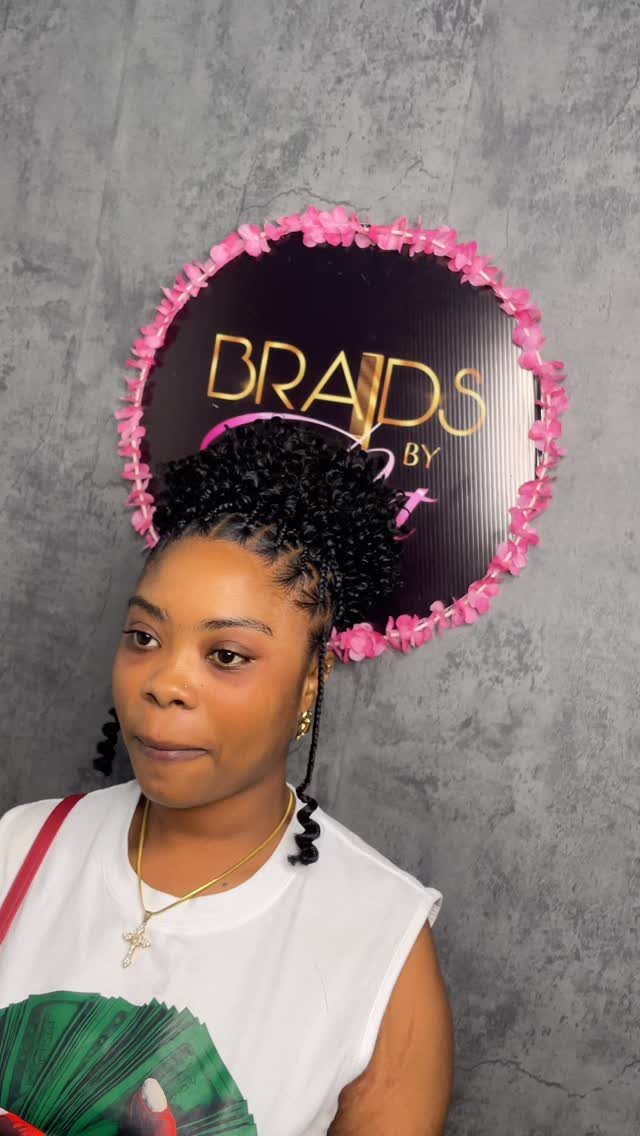
Piled high on the head, with a few curls left hanging at the front and sides, this updo shows off volume instead of hiding it. The loose tendrils soften the face and take the edge off a tight pull.
Gather the curls at the crown, secure them with an elastic that will not snag, and then tug out the pieces you want to hang. Pull gently so the pattern stays intact.
It suits nights out and events, and it keeps hair off your neck.
11. High Curly Ponytail
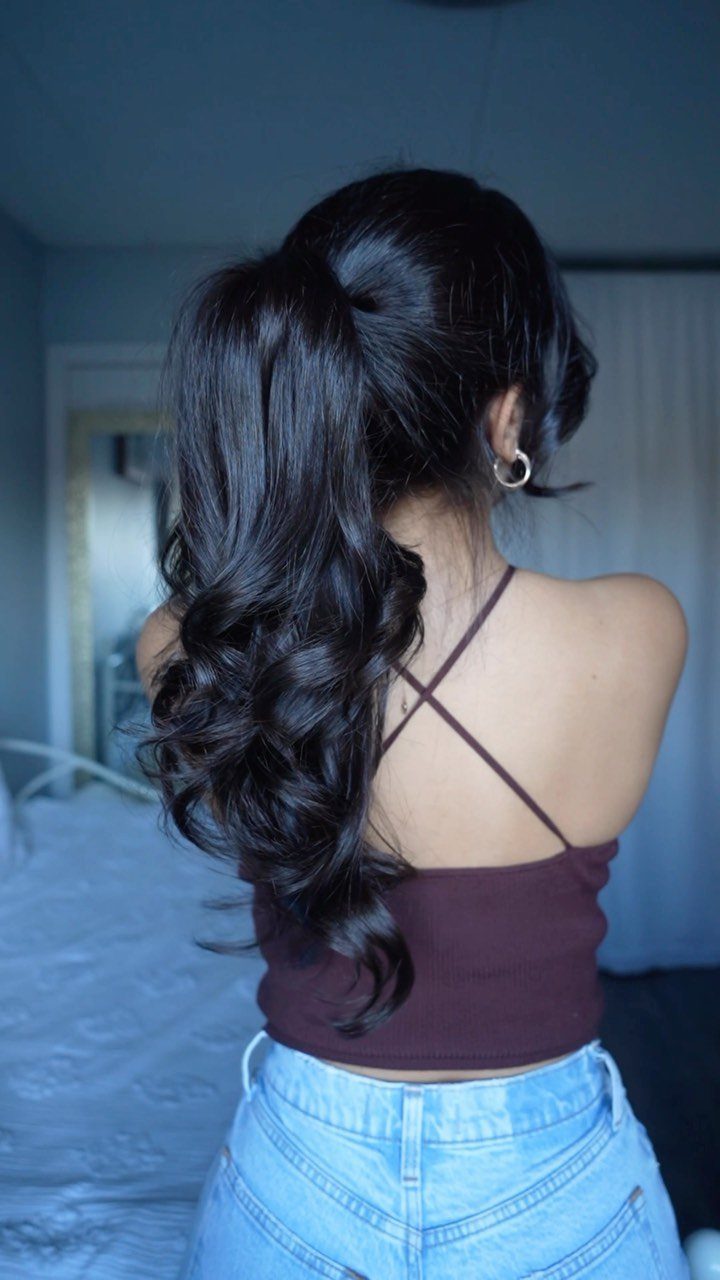
Height is the point here: gather long curls at the crown and the ponytail fans out into a full, springy shape. Keep the hold gentle, since a tight pull flattens the curls near the root.
Use a soft elastic or scrunchie, and flip your head upside down to gather the hair for extra lift. A light cream on damp hair before you tie it up helps the curls clump.
It takes about a minute, which is why I reach for it on busy mornings.
12. Curly Hair with Accent Braids
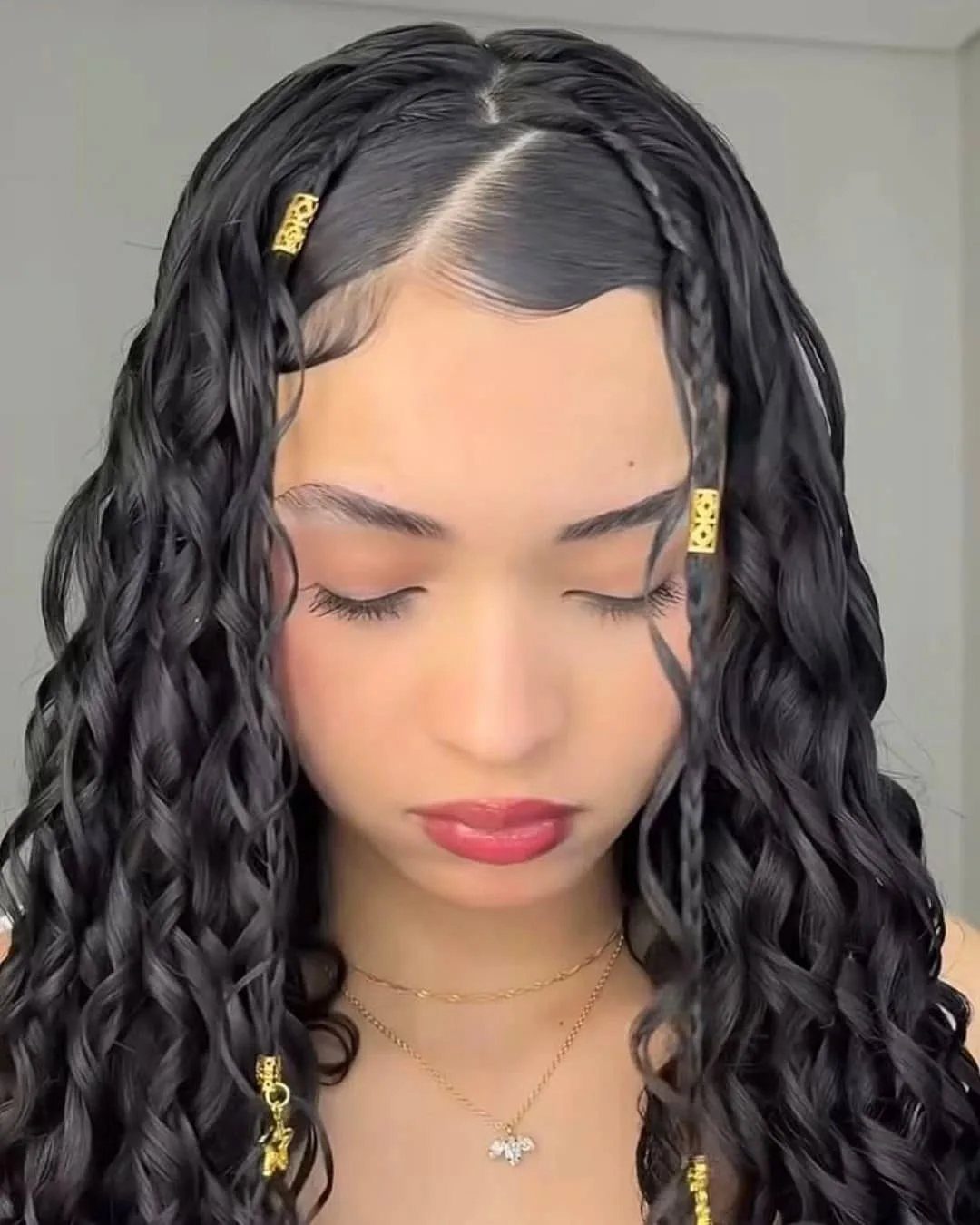
Thin accent braids woven through loose curls add detail without hiding the length. Gold clips set along the braids give the style a finished, jewelry-like touch, and the curls around them stay free.
Ask for a few small braids placed near the face or scattered through the sections, then pin the ends with clips. Keep the number low; too many braids can pull the curls out of shape.
Clips are the easy part, since you can swap them in and out to suit an outfit.
Choosing the Right Haircut
Curl pattern narrows the field faster than anything else. Tighter curls tend to look best in voluminous shapes, defined curls, or wash-and-go styles, while looser curls suit beachy, boho looks.
A wash-and-go means wearing your natural pattern with no braids, stretching, or heat tools. It works well for hydration and definition, as long as your product mix suits your hair.
Length, texture, and hair health all change how a cut behaves, so judge a photo against your own hair, not the model’s.
A stylist who cuts curly and coily hair every day will read your curl pattern in a way a general salon often can’t, so look for that specialty before you book.
Bring your inspiration photos and be ready to talk about how much upkeep you will actually do each week; a cut you can’t maintain will look worse than a simpler one.
“Wash and go” hairstyles (wearing your hair in a natural curl pattern without the use of styling tools, braids, or stretching) are a great option for naturally curly or afro hair, agrees The Steam Bar Head Stylist Lauralyn Clinton.
— Elle
Hair Care Tips for Curls
Curly hair runs dry because scalp oil has a hard time traveling down the bends to the ends. That dryness is what causes frizz and breakage, so conditioning is the habit to protect.
Condition every time you wash, and add a deep conditioner now and then.
Co-washing, which means cleansing with a conditioner instead of shampoo, is an option, but shampoo every so often to clear build-up. A serum on the ends helps tame frizz and flyaways.
Check the label for hydrolyzed proteins such as wheat, silk or keratin, since these can reinforce weak, stretched-out strands, though too much can leave curls stiff.
Trim dry. Going through your dry curls and snipping off dry, damaged pieces shows you where the damage actually is and avoids the shrinkage surprise of a wet cut.
Styling Techniques for Curls
Wet hair is when curls clump best, so work your products in while the strands are still dripping or at least damp. That locks in moisture and fights frizz better than adding product after the hair has started to dry.
Skip the bath towel, which roughs up the cuticle and adds frizz. Squeeze the water out with your hands or a microfiber wrap instead.
When air-drying drags on, a diffuser attachment is my pick over the bare nozzle, because it spreads the airflow and heat out so curls dry with less frizz and less disturbance.
Over-drying makes curls brittle, so stop while the hair is still a touch damp, and keep the heat low.
Keep brushes away from dry curls; a brush pulls the clumps apart and brings the frizz right back.
Frequently Asked Questions
What is the best hairstyle for curly hair?
No single cut wins for everyone, because curl pattern decides most of it. Tight coils and springy curls hold up best in full, rounded shapes or a simple wash-and-go, and looser waves look right in relaxed, tousled styles.
What are the dos and don’ts of curly hair?
Condition at every wash, use a deep conditioner every so often, and apply products when your hair is soaking or at least damp.
Skip the bath towel, since the rough terry fibers lift the cuticle, and never brush dry curls, because the clumps split apart and frizz returns.
How can I style short curly hair?
A curly bob or a textured pixie cut are the 2 shapes I would try first.
A bob lets the spiral pattern show because short hair doesn’t stretch under its own weight, and it styles in minutes: product on damp hair, scrunch, let it dry.
A pixie leaves some length on top and tapers the sides, which keeps curls defined and the face open; the sides do need a trim every 4–6 weeks to stay neat.
Should curly hair be cut wet or dry?
Dry is the better choice. Curls spring up as they dry, so a wet cut ends up shorter than planned.
What is a good easy hairstyle for curly hair on busy mornings?
A high curly ponytail takes about a minute.
For long curls, a loose scrunchie at the crown works well, as long as it sits gently so your roots keep their lift. Natural curls with a middle part and the top pinned back is another low-effort option.